Post by : Bianca Qureshi
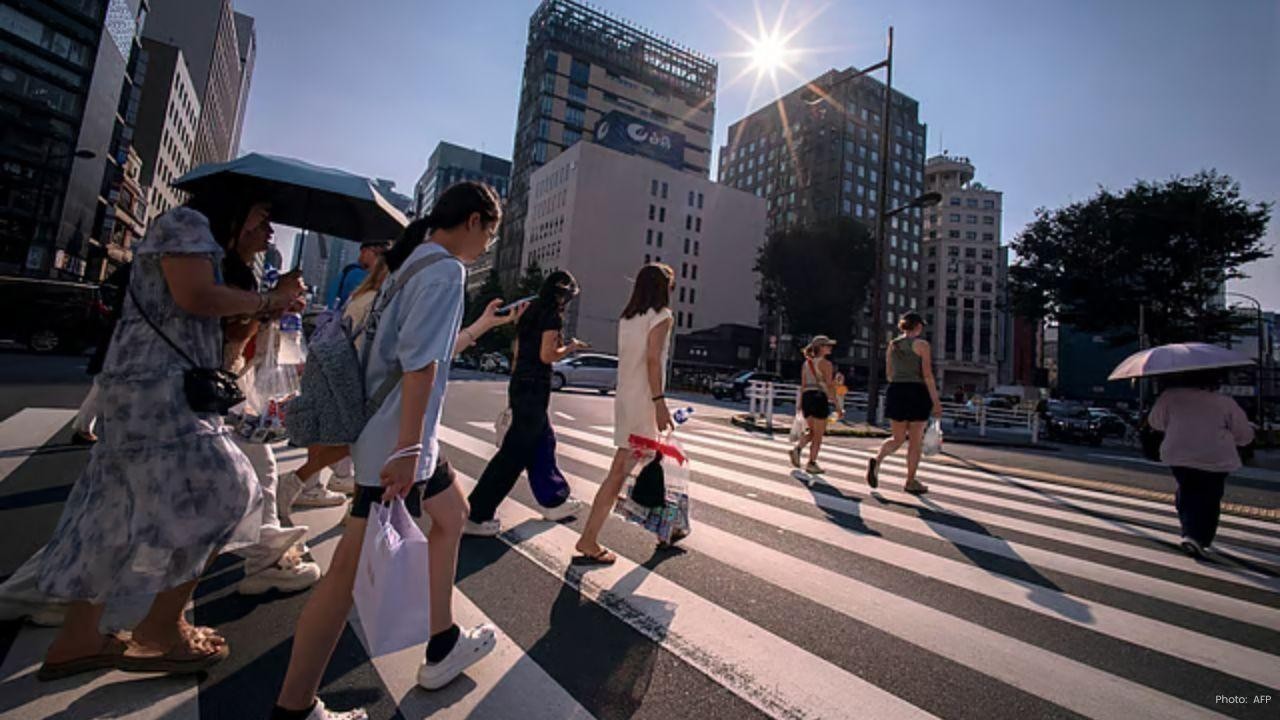
TOKYO — Japan is battling an intense heatwave that continues to break records across the country. On Monday, seventeen cities and towns in Japan experienced their highest-ever temperatures, according to the Japan Meteorological Agency (JMA). This record-breaking day follows what has already been confirmed as the hottest June and July since Japan began recording weather data in 1898.
Unbearable Heat Hits Central Japan
Among the hardest-hit areas was Komatsu, a city located in the central Ishikawa prefecture. There, temperatures soared to 40.3 degrees Celsius, setting a new all-time high for the region. Meanwhile, Toyama city, which lies in Toyama prefecture, also in central Japan, recorded 39.8°C, its highest temperature since records began.
Stay informed with the latest news. Follow DXB News Network on WhatsApp Channel
These temperatures are not only unusual for Japan but also dangerous. Fifteen other locations across Japan reported temperatures between 35.7°C and 39.8°C, setting new all-time highs for those places too. The JMA, which keeps temperature data for over 900 locations, confirmed that this was a historic moment in Japan’s climate records.
The Science Behind the Rising Temperatures
Experts around the world, including Japanese scientists, say this extreme weather is not just a random event. Human-caused climate change is making heatwaves more frequent, more intense, and more dangerous. Burning fossil fuels like coal, oil, and gas releases greenhouse gases into the air. These gases trap heat in our atmosphere, leading to global warming.
Japan, like many other countries, is seeing clear signs of this global trend. Scientists say this year’s record-breaking temperatures are not likely to be the last. In fact, the JMA has already warned that "severe heat" may continue in the coming months.
July’s Blazing Record: 41.2°C
On July 30, Japan saw its hottest temperature ever recorded, a sizzling 41.2°C, in the western Hyogo prefecture. This was a moment of concern for many experts and citizens. Not only does it show that Japan's climate is warming fast, but it also raises questions about how people will cope with such intense heat in the future.
Early End to the Rainy Season
Another surprising development is that Japan’s rainy season ended about three weeks earlier than usual, especially in the western parts of the country. The early end to the rainy season has left less water in the soil and rivers, causing concerns for agriculture and daily life.
Water Shortages Threaten Farmers
Due to the low rainfall and extreme heat, many dams in the northern region of Japan are nearly empty, according to the land ministry. Farmers in these areas are now worried about water shortages, which may affect their crop yields and result in a poor harvest.
Without enough water, it becomes difficult to grow rice, vegetables, and fruits. Farmers are doing their best to protect their crops, but many fear the damage is already done. If this weather continues, it may also lead to higher food prices and less availability of certain crops in the markets.
Cherry Blossoms Affected by Warmer Weather
Japan is famous for its beautiful cherry blossoms, or sakura, which bloom every spring. However, the country’s rising temperatures are affecting even this much-loved symbol of Japanese culture. Experts say that cherry trees are blooming earlier than usual, and in some cases, not blooming fully at all.
This happens because cherry trees need cool autumn and winter temperatures to prepare for their bloom. But now, as Japan’s autumns and winters are getting warmer, the trees are becoming confused, which affects the quality and timing of the blossoms.
Mount Fuji’s Snowcap Disappears Late
Another iconic image of Japan is Mount Fuji covered in snow. But even this snowy symbol is changing due to global warming. Last year, the snowcap on Mount Fuji didn’t appear until early November, the latest ever recorded. In earlier years, the snow usually showed up by early October.
This change not only affects the natural beauty of Japan but also impacts tourism and raises concerns about long-term environmental shifts.
What This Means for Japan and the World
The JMA has confirmed that June and July 2025 have been the hottest ever in Japan’s history. These heatwaves are more than just uncomfortable — they can be life-threatening, especially for the elderly, children, and people with health problems.
The high temperatures can also lead to problems like:
Heatstroke and dehydration
Power outages from high air conditioner use
Crop failure and water shortages
Increased medical emergencies
Global Warming Is Not the Same Everywhere
Interestingly, the speed at which the Earth is warming is not the same in every place. According to data from the US National Oceanic and Atmospheric Administration (NOAA), Europe has warmed the fastest per decade since 1990, with Asia coming in second.
That means countries like Japan, India, and China are heating up quickly, and this could lead to more serious climate problems if action isn’t taken soon.
What Can Be Done?
Experts say that the best way to fight these changes is to reduce greenhouse gas emissions. This includes:
Using clean energy like solar and wind power
Reducing the use of cars and fossil fuels
Protecting and planting more trees
Supporting climate-friendly policies and education
Japan, along with other nations, is now being asked to do more to reduce its carbon footprint. The future of the climate depends on the actions we take today.
Japan is facing an alarming rise in temperature that is breaking records, drying rivers, harming crops, and even changing the blooming patterns of cherry blossoms. Seventeen cities and towns broke all-time heat records in just one day, and more heat is expected.
This extreme weather is a clear sign of climate change, and it affects not only Japan but the entire world. The time to act is now — for nature, for people, and for future generations.

Samsung Launches Galaxy S26 with Smarter Galaxy AI Features
Samsung unveils Galaxy S26 with advanced Galaxy AI, featuring Now Nudge, Now Brief, upgraded Bixby,

Iran Missiles Strike UAE, Dubai’s Calm Shattered
Iran launched missile and drone attacks on UAE, hitting Dubai and Abu Dhabi. Fires broke out at key

UAE Crown Prince Honors Ecuador Independence Heroes
Sheikh Khaled bin Mohamed bin Zayed laid a wreath at Ecuador’s Independence Monument in Quito, honor

UAE Team Shines at Omloop and Ardeche Classic
UAE Team Emirates-XRG secured podium finishes in Belgium and France as Florian Vermeersch finished t

UAE and Ecuador Sign Historic CEPA Agreement
UAE and Ecuador sign a CEPA in Quito, unlock $3B investment talks, $250M defence MoU, and expand tra

Iran–Israel–US Conflict Explained: History, Causes & Middle East Impact
A neutral overview of Iran–Israel–US tensions, covering history, nuclear disputes, proxy conflicts,
UAE and Qatar Targeted in Iran Missile Attacks
Explosions rocked UAE, Qatar and Bahrain as Iran launched missiles and drones after Ayatollah Ali Kh


Bank of Baroda Faces Abu Dhabi Legal Battle over NMC Collapse
Bank of Baroda’s involvement in Abu Dhabi litigation tied to the NMC Healthcare collapse raises repu

Top Museum Openings of 2026 Set to Transform Global Tourism
From Los Angeles to Abu Dhabi and Brussels, 2026 brings major museum launches—Lucas Museum, Guggenhe

UAE Tour Highlights UAE’s Strength in Hosting Global Sports Events
Abu Dhabi Sports Council says the successful UAE Tour reflects the UAE’s leading role in hosting maj

EU Seeks Clarity from US After Supreme Court IEEPA Ruling
European Commission urges full transparency from the US on steps after Supreme Court ruling, emphasi

SpaceX Launches 53 New Satellites for Expanding Starlink Network
SpaceX launches 53 Starlink satellites in two Falcon 9 missions, breaking reuse records and expandin

RTA Awards Contract for Phase II of Hessa Street Upgrade in Dubai
Phase II of Hessa Street Development to add bridges, tunnel, and upgraded intersections, doubling ca

UAE Gold Prices Today, Monday 16 February 2026: Dubai & Abu Dhabi Updated Rates
Gold prices in UAE on 16 Feb 2026 updated: 24K around AED 599.75/gm, 22K AED 555.25/gm, and 18K AED

Over 25 Ahmedabad Schools Receive Bomb Threat Email, Authorities Investigate
More than 25 schools in Ahmedabad evacuated after bomb threat emails mentioning Khalistan. Authoriti