Post by : Anis Karim
For many years, job success hinged primarily on technical abilities. Educational qualifications and specialized skills were regarded as the key metrics for employability. Although these components remain vital, they're insufficient on their own.
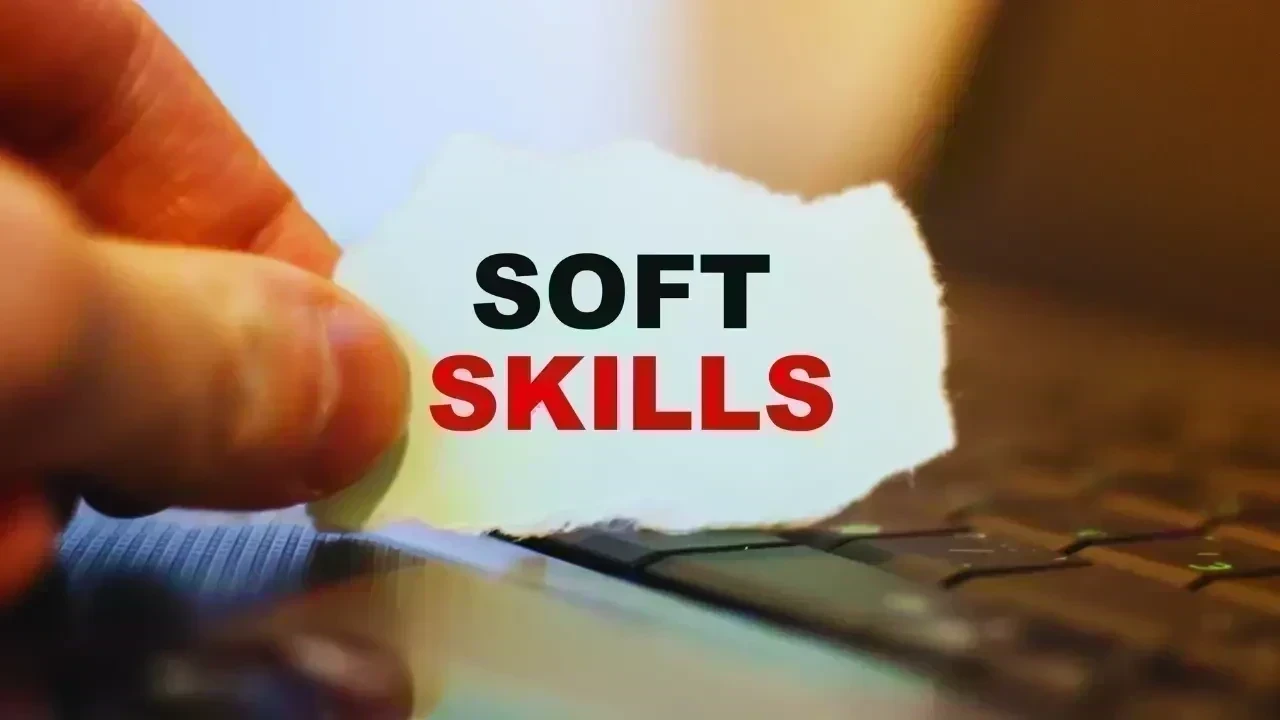
The current job environment requires a broader skill set. Employees must now excel in collaboration, navigate uncertainty, communicate effectively, and adapt swiftly to evolving conditions. This shift has elevated soft skills from mere preferences to essential job prerequisites.
In today’s world, success hinges not merely on knowledge, but on one’s ability to effectively collaborate with others.
With advancements in automation and artificial intelligence, repetitive tasks across various industries are now automated. Machines can efficiently analyse data, generate code, and produce content.
However, machines struggle to replicate distinctly human traits such as empathy, decision-making, negotiation, and ethical reasoning. As mundane tasks are automated, the emphasis for human roles shifts towards problem-solving, collaboration, and leadership—all dependent on soft skills.
Today's organizations function within interconnected networks. Professionals often collaborate with colleagues from diverse departments, cultures, and geographical locations.
Success in these environments relies heavily on effective communication, negotiation, and interpersonal skills. Merely having technical expertise is not enough to secure career advancements.
The rise of remote and hybrid work setups has diminished spontaneous interactions. Consequently, clear, structured, and empathetic communication is now fundamental.
Employees who articulate effectively, listen attentively, and minimize misunderstandings are increasingly valuable in distributed teams. Their written communication, emotional insight, and clarity are now core performance attributes.
In the absence of constant oversight, employees must autonomously handle their time, priorities, and accountability. Characteristics such as discipline, reliability, and adaptability have become crucial in trust-driven workplaces.
These traits fall squarely under the umbrella of soft skills, underscoring their significance in today's roles.
Recruiters are increasingly focusing on candidates' thought processes, communication styles, and reactions to real-life situations rather than solely on technical knowledge.
Interviews now delve into problem-solving approaches, teamwork experiences, conflict resolution, and leadership potential, demonstrating a clearer understanding that skills can be cultivated, but attitudes and behaviors can be more challenging to instill.
Companies are prioritizing cultural compatibility and potential for growth. Employees who demonstrate a willingness to learn, receive constructive feedback, and exhibit emotional maturity are valued as long-term contributors.
In rapidly changing sectors, flexibility often trumps stagnant expertise.
Effective communication serves as the bedrock for teamwork. It involves not only verbal articulation but also active listening and thoughtful responses.
Poor communication fosters delays, mistakes, and disputes, highlighting the importance of communication skills for productivity.
Understanding and managing one’s own emotions, as well as those of others, is vital for effective teamwork and leadership. Emotional intelligence empowers individuals to navigate stress, address conflicts, and foster trust.
As the workplace landscape diversifies, emotional acuity is crucial for maintaining inclusive and respectful environments.
In an ever-evolving professional realm, adaptability is key. Employees who can pivot quickly, remain calm under duress, and continually acquire new skills are favored over those who resist change.
Resilience is especially significant in volatile economic and technological climates.
Old-school hierarchical leadership models are being replaced with more collaborative styles. Leaders are expected to guide, mentor, and enable rather than merely direct.
This evolution places a premium on soft skills such as empathy, communication, and managing conflicts.
Contemporary leaders must grasp individual motivators, mental well-being, and team dynamics. Having technical know-how alone doesn't equip managers for these tasks.
Soft skills play a significant role in how effectively leaders engage teams and enhance performance.
While technical skills might help secure entry-level positions, climbing the career ladder often hinges on behavior and influence.
Individuals who communicate effectively, collaborate productively, and tackle responsibilities confidently are typically favoured for advancement opportunities.
In professional settings, reputation is paramount. How colleagues are treated, ability to manage stress, and contributions to team culture significantly affect long-term career trajectories.
Soft skills form the underlying framework of professional credibility.
Educational institutions and corporate training programs are increasingly integrating communication, teamwork, and emotional intelligence into their offerings.
This acknowledges the fact that employability encompasses more than just academic success.
Soft skills are not fixed attributes; they can be honed through feedback, reflection, and practice. Organizations are pouring resources into coaching and leadership development to strengthen these abilities.
As AI manages data-related tasks, human employees are expected to deliver judgment, creativity, and ethical reasoning.
Soft skills empower professionals to interpret data, make nuanced decisions, and harmonize technology with human ethics.
Trust is not something that can be automated. Clients, teams, and stakeholders depend on human connection and accountability, making interpersonal skills indispensable—even in predominantly digital frameworks.
Unlike technical skills, gauging soft skills via tests or certifications proves more complex. Yet, their impact is readily observable in workplace metrics like team morale and client satisfaction.
This visibility prompts employers to prioritize soft skills despite the difficulties in measuring them.
As industries change, job profiles will continuously transform. The most valuable employees will be those capable of ongoing learning, broad collaboration, and empathetic leadership.
Soft skills lay the groundwork for navigating this uncertain future.
Soft skills have transitioned from being mere enhancements to pivotal competencies that dictate professional success. In a landscape shaped by automation and rapid shifts, human traits like communication, flexibility, and emotional understanding have emerged as vital assets.
In a world where work dynamics are ever-evolving, investing in soft skill development will not only ensure employability but also promote pathways to leadership. Today, soft skills are imperative—not optional.
Disclaimer:
This article aims to inform and educate and does not offer professional or career guidance.

US Stocks Slide as AI Fears, Inflation and Oil Surge Weigh
US stocks dropped as AI disruption fears hit tech firms, inflation rose above forecasts, and oil pri

Pacific Prime Wins Top Honors at Cigna Awards 2026
Pacific Prime secured Top Individual Broker and Top SME Broker awards at Cigna’s Annual Broker Award
QatarEnergy Halts LNG Output After Military Attack
QatarEnergy has stopped LNG production after military attacks hit its facilities in Ras Laffan and M

Strong 6.1 Magnitude Earthquake Hits West Sumatra, No Damage
A 6.1 earthquake struck off West Sumatra, Indonesia. No casualties, damage, or tsunami alert reporte

Saudi Confirms Drone Strike on US Embassy Riyadh
Two drones hit the US Embassy in Riyadh, causing a small fire and minor damage. No injuries were rep

UAE Restarts Limited Flights as Regional Airspace Disruptions Continue
UAE restarts limited flights from Dubai as US-Israel attacks on Iran disrupt regional airspace, forc

Asia Faces Energy Shock After Iran Closes Strait
Iran shuts Strait of Hormuz amid US-Israel strikes, sending oil prices higher and raising serious en


Bank of Baroda Faces Abu Dhabi Legal Battle over NMC Collapse
Bank of Baroda’s involvement in Abu Dhabi litigation tied to the NMC Healthcare collapse raises repu

Top Museum Openings of 2026 Set to Transform Global Tourism
From Los Angeles to Abu Dhabi and Brussels, 2026 brings major museum launches—Lucas Museum, Guggenhe

UAE Tour Highlights UAE’s Strength in Hosting Global Sports Events
Abu Dhabi Sports Council says the successful UAE Tour reflects the UAE’s leading role in hosting maj

EU Seeks Clarity from US After Supreme Court IEEPA Ruling
European Commission urges full transparency from the US on steps after Supreme Court ruling, emphasi

SpaceX Launches 53 New Satellites for Expanding Starlink Network
SpaceX launches 53 Starlink satellites in two Falcon 9 missions, breaking reuse records and expandin

RTA Awards Contract for Phase II of Hessa Street Upgrade in Dubai
Phase II of Hessa Street Development to add bridges, tunnel, and upgraded intersections, doubling ca

UAE Gold Prices Today, Monday 16 February 2026: Dubai & Abu Dhabi Updated Rates
Gold prices in UAE on 16 Feb 2026 updated: 24K around AED 599.75/gm, 22K AED 555.25/gm, and 18K AED

Over 25 Ahmedabad Schools Receive Bomb Threat Email, Authorities Investigate
More than 25 schools in Ahmedabad evacuated after bomb threat emails mentioning Khalistan. Authoriti