
Post by : Sam Jeet Rahman
Many first-time real estate investors enter the market with excitement, confidence, and big expectations. The first property often feels like a milestone—proof of financial maturity and a step toward long-term wealth. Yet, a surprising number of investors struggle or completely exit real estate after just one purchase. This failure rarely happens because real estate is a bad asset. It happens because of poor preparation, unrealistic assumptions, and lack of long-term strategy.
This article explains in detail why many real estate investors fail after their first deal, the common mistakes they make, and how these failures can be avoided with smarter planning and realistic decision-making.
One of the biggest reasons investors fail is unrealistic expectations.
Many first-time investors calculate returns based on:
Best-case rental income
Full occupancy assumptions
Low maintenance estimates
Optimistic appreciation forecasts
In reality, returns are affected by vacancies, repairs, taxes, property management costs, and market cycles. When actual cash flow falls short of expectations, disappointment sets in quickly.
When the first investment does not generate “easy money,” investors lose confidence and motivation, leading them to exit instead of adjusting strategy.
Buying property without strong financial planning is one of the most damaging mistakes.
Many investors focus only on the purchase price and EMI, ignoring:
Maintenance charges
Property taxes
Insurance
Repairs and wear-and-tear
Vacancy periods
These costs slowly eat into profits and strain monthly cash flow.
Without a reserve fund, even a single unexpected repair or vacancy can create financial stress, forcing rushed decisions or property sales at a loss.
Not every property is a good investment, even if it looks attractive.
First-time investors often choose properties based on:
Personal liking
Developer marketing
Friends’ opinions
Fear of missing out
Instead of rental demand, location fundamentals, and long-term usability.
Properties in weak rental markets, overdeveloped areas, or poorly connected locations struggle to attract quality tenants, leading to inconsistent income.
Many investors believe appreciation will solve everything.
Appreciation is market-dependent and unpredictable
It does not help with monthly expenses
It may take years to materialize
Negative or weak cash flow creates ongoing stress, even if the property value rises on paper.
Sustainable investors prioritize monthly cash flow stability, not just future price growth.
Debt magnifies both gains and losses.
Many first-time investors:
Max out loan eligibility
Choose longer tenures for affordability
Ignore interest rate risks
When interest rates rise or rental income drops, EMIs become difficult to manage.
High debt creates constant anxiety, turning investment into a burden rather than a wealth-building tool.
Managing property is a business, not a passive hobby.
Choosing tenants without proper verification often leads to:
Late payments
Property damage
Legal disputes
These issues consume time, money, and mental energy.
Ignoring regular maintenance reduces property value, increases long-term repair costs, and discourages good tenants.
Real estate involves legal responsibilities.
Incomplete documentation
Ignoring local rental laws
Improper lease agreements
Delayed tax filings
Legal complications can freeze income, create penalties, or lead to disputes that last years.
Blindly following advice is a common trap.
Many investors rely on:
Friends’ success stories
Online influencers
Sales agents’ promises
Without verifying whether the advice suits their financial capacity, risk tolerance, or local market conditions.
Real estate rewards patience and planning.
Many first-time investors:
Buy without clear goals
Don’t plan exit strategies
Don’t align property choice with life stage
Without clarity, even a good property feels like a mistake.
Clear goals around rental income, appreciation, or portfolio expansion determine success more than market timing.
Market cycles are normal.
When prices stagnate or rentals soften, inexperienced investors panic and sell early, often at losses.
Stress from EMIs, tenants, and slow returns leads many to conclude that real estate “doesn’t work,” when the issue is poor execution.
Successful investors operate professionally.
No performance tracking
No cost optimization
No long-term asset planning
Real estate requires systems, discipline, and periodic reviews.
They budget for worst-case scenarios, not best-case outcomes.
Monthly income stability is prioritized over speculative gains.
Loans are used carefully with buffers for rate hikes and vacancies.
Decisions are driven by data, not emotion.
They commit to learning, adapting, and improving with each property.
The first property teaches lessons that books and videos cannot. Many fail because they expect perfection instead of education. Those who succeed view early mistakes as tuition fees, not failure.
Most real estate investors don’t fail because real estate is flawed. They fail because expectations exceed preparation. With realistic planning, controlled debt, strong cash flow focus, and patience, the first investment can become the foundation of long-term wealth rather than a cautionary tale.
This article is intended for informational and educational purposes only and does not constitute financial, legal, or real estate investment advice. Property markets, returns, and risks vary based on location, market conditions, and individual financial situations. Readers are advised to consult qualified professionals before making real estate investment decisions.

US Stocks Slide as AI Fears, Inflation and Oil Surge Weigh
US stocks dropped as AI disruption fears hit tech firms, inflation rose above forecasts, and oil pri

Pacific Prime Wins Top Honors at Cigna Awards 2026
Pacific Prime secured Top Individual Broker and Top SME Broker awards at Cigna’s Annual Broker Award

QatarEnergy Halts LNG Output After Military Attack
QatarEnergy has stopped LNG production after military attacks hit its facilities in Ras Laffan and M

Strong 6.1 Magnitude Earthquake Hits West Sumatra, No Damage
A 6.1 earthquake struck off West Sumatra, Indonesia. No casualties, damage, or tsunami alert reporte

Saudi Confirms Drone Strike on US Embassy Riyadh
Two drones hit the US Embassy in Riyadh, causing a small fire and minor damage. No injuries were rep

UAE Restarts Limited Flights as Regional Airspace Disruptions Continue
UAE restarts limited flights from Dubai as US-Israel attacks on Iran disrupt regional airspace, forc
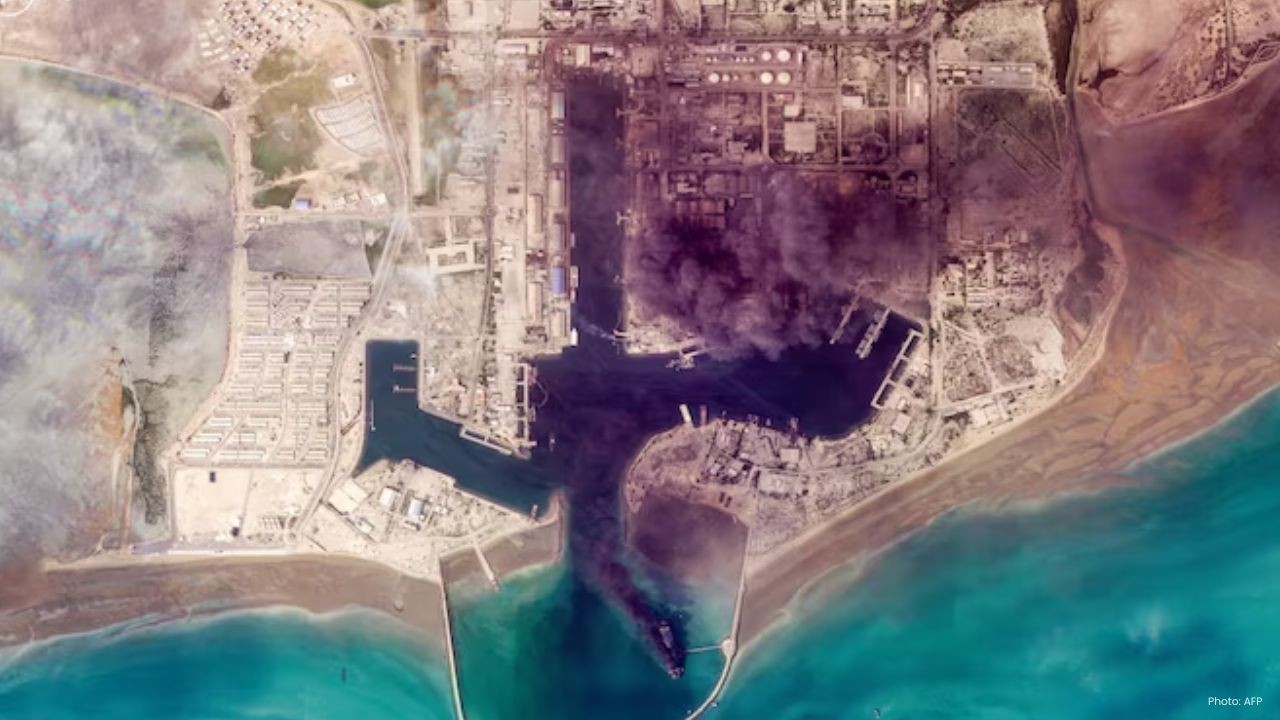
Asia Faces Energy Shock After Iran Closes Strait
Iran shuts Strait of Hormuz amid US-Israel strikes, sending oil prices higher and raising serious en


Bank of Baroda Faces Abu Dhabi Legal Battle over NMC Collapse
Bank of Baroda’s involvement in Abu Dhabi litigation tied to the NMC Healthcare collapse raises repu

Top Museum Openings of 2026 Set to Transform Global Tourism
From Los Angeles to Abu Dhabi and Brussels, 2026 brings major museum launches—Lucas Museum, Guggenhe

UAE Tour Highlights UAE’s Strength in Hosting Global Sports Events
Abu Dhabi Sports Council says the successful UAE Tour reflects the UAE’s leading role in hosting maj

EU Seeks Clarity from US After Supreme Court IEEPA Ruling
European Commission urges full transparency from the US on steps after Supreme Court ruling, emphasi
SpaceX Launches 53 New Satellites for Expanding Starlink Network
SpaceX launches 53 Starlink satellites in two Falcon 9 missions, breaking reuse records and expandin

RTA Awards Contract for Phase II of Hessa Street Upgrade in Dubai
Phase II of Hessa Street Development to add bridges, tunnel, and upgraded intersections, doubling ca

UAE Gold Prices Today, Monday 16 February 2026: Dubai & Abu Dhabi Updated Rates
Gold prices in UAE on 16 Feb 2026 updated: 24K around AED 599.75/gm, 22K AED 555.25/gm, and 18K AED

Over 25 Ahmedabad Schools Receive Bomb Threat Email, Authorities Investigate
More than 25 schools in Ahmedabad evacuated after bomb threat emails mentioning Khalistan. Authoriti