Post by : Sam Jeet Rahman
Butter chicken is not just a popular menu item—it is a national food phenomenon. Decades after its creation, it continues to dominate restaurant orders across India, from roadside dhabas to luxury fine-dining spaces. Even with changing food trends, global cuisines, and health-conscious eating habits, butter chicken remains India’s most consistently ordered dish.
This enduring popularity is not accidental. It is the result of flavor balance, emotional connection, adaptability, and cultural relevance. To understand why butter chicken still rules Indian menus, we need to look beyond taste and examine how history, psychology, accessibility, and modern dining habits all contribute to its unmatched status.
Butter chicken, also known as Murgh Makhani, originated in Delhi in the mid-20th century. It was born out of practicality rather than planned innovation.
Leftover tandoori chicken was simmered in a tomato-based gravy enriched with butter and cream to prevent dryness. What began as a solution to food waste became a culinary breakthrough.
It was designed to be comforting and indulgent
It used familiar Indian spices in a mild, balanced way
It suited both North Indian palates and wider audiences
From the start, butter chicken was built to please, not challenge.
Butter chicken’s biggest strength is balance.
It is not too spicy, not too bland, not too tangy, and not too heavy on any single flavor note. This makes it universally appealing.
Creaminess that softens spices
Tomato acidity that keeps the dish fresh
Butter richness that enhances mouthfeel
Smoky tandoor notes from the chicken
This balance allows butter chicken to appeal to children, adults, spice lovers, and those sensitive to heat alike.
Butter chicken is deeply associated with celebration, indulgence, and reward.
People often order it:
During family dinners
On special occasions
When hosting guests
As a “safe choice” while dining out
The brain associates butter chicken with satisfaction and familiarity, reducing decision fatigue when choosing food.
In uncertain or stressful moments, people gravitate toward foods that feel emotionally reliable—and butter chicken delivers that comfort every time.
India’s food culture is diverse and regional, but butter chicken acts as a neutral bridge.
Older generations appreciate its roots in traditional cooking
Younger diners enjoy its richness and restaurant-style indulgence
Urban professionals see it as a premium yet familiar choice
Tourists find it approachable and iconic
Butter chicken adapts effortlessly to modern dining habits without losing its traditional essence.
Butter chicken exists at every price level.
Budget eateries serve simplified versions
Mid-range restaurants offer classic preparations
Luxury hotels refine it with premium ingredients
Despite differences, the core identity remains intact.
This adaptability ensures butter chicken stays accessible to:
Students
Families
Corporate diners
Tourists
Few dishes manage to scale so effectively without losing popularity.
Butter chicken pairs well with almost everything.
Naan
Butter naan
Tandoori roti
Jeera rice
Plain rice
This versatility makes it easy for groups with different preferences to agree on a single order. In group dining, agreement matters more than experimentation, and butter chicken consistently wins.
Most diners exhibit risk-avoidance behavior when ordering food.
They prefer dishes that:
Are predictable
Have low chances of disappointment
Are widely accepted
Butter chicken fits perfectly into this behavior pattern. Even if the restaurant is new or unfamiliar, butter chicken feels like a safe bet.
This psychological safety plays a major role in repeat ordering.
India’s restaurant culture is often occasion-based.
People dine out to:
Celebrate
Treat themselves
Entertain others
Butter chicken aligns with this mindset because it feels special but not intimidating.
Unlike everyday home-cooked meals, butter chicken signals indulgence without feeling excessive.
Butter chicken has become India’s global culinary ambassador.
It is featured in:
International Indian restaurants
Food festivals
Travel shows
Global food rankings
This global validation reinforces domestic pride and familiarity. Indians continue to order butter chicken because it represents India’s food identity worldwide.
No matter where you are—Delhi, Mumbai, Bengaluru, or a small town—ordering butter chicken delivers a familiar experience.
While taste may vary slightly, the core flavor profile remains consistent.
This consistency builds long-term trust between diners and the dish itself.
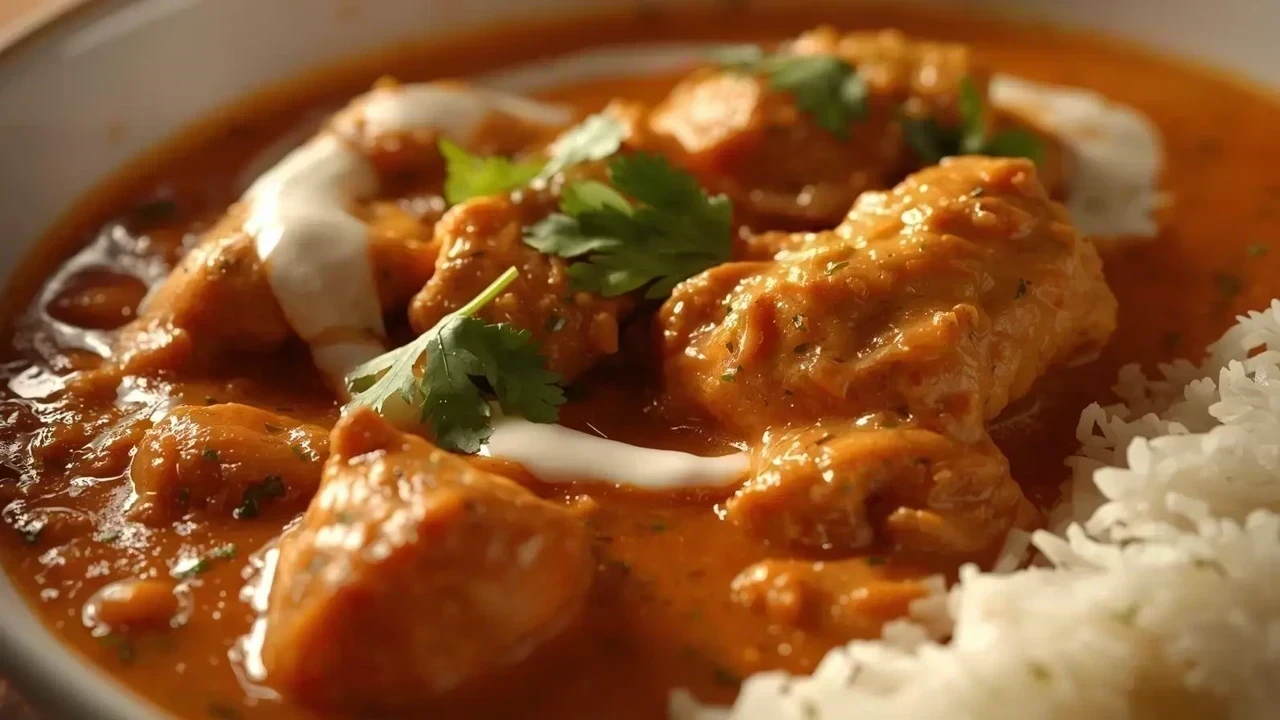
Butter chicken looks appetizing.
Rich orange-red gravy
Cream swirls
Glossy texture
Visual appeal increases perceived taste even before the first bite.
In an age of food photography and social media, butter chicken remains camera-friendly, further reinforcing its popularity.
Even as people become health-conscious, butter chicken remains relevant.
Portion control allows indulgence without guilt
Protein-rich chicken appeals to fitness-focused diners
Restaurants offer lighter or less creamy versions
Instead of being rejected, butter chicken has evolved with dietary awareness.
Many new dishes trend temporarily, but few achieve longevity.
Butter chicken succeeds because:
It has emotional roots
It delivers consistent satisfaction
It adapts without losing identity
It suits group dining
Trends fade, but dishes with emotional and cultural depth endure.
For many Indians, butter chicken is the default non-vegetarian dish.
When someone says “order something nice,” butter chicken is often the unspoken answer.
It is not just food—it is a shared understanding.
From a restaurant’s perspective, butter chicken is profitable.
Ingredients are widely available
Preparation can be standardized
Demand is predictable
Restaurants promote what sells reliably, and butter chicken consistently delivers volume.
This creates a cycle where availability reinforces popularity.
Despite being a North Indian dish, butter chicken is embraced nationwide.
South Indian, Eastern, and Western India have all adopted it as a mainstream option.
Few dishes achieve such pan-India acceptance without regional resistance.
Food decisions are emotional decisions.
Butter chicken reduces anxiety by offering:
Familiar flavor
Predictable satisfaction
Social acceptance
In group settings, choosing butter chicken rarely invites criticism.
Birthdays, anniversaries, office parties, and family gatherings often include butter chicken.
Over time, it becomes associated with positive memories, reinforcing emotional attachment.
Butter chicken’s dominance is unlikely to fade soon.
It will continue to evolve through:
Ingredient refinement
Health-conscious versions
Regional twists
But its core identity will remain unchanged.
Butter chicken remains India’s most ordered dish because it does something rare—it satisfies taste, emotion, culture, and convenience all at once. It is familiar yet indulgent, traditional yet adaptable, simple yet rich.
In a country with one of the world’s most diverse food cultures, butter chicken stands out not by being extreme, but by being perfectly balanced.
This article is for informational and educational purposes only. Food preferences, dietary needs, and cultural interpretations may vary among individuals and regions. Nutritional content and preparation methods differ across restaurants. Readers should make dietary choices based on personal health requirements and professional guidance where necessary.

US Stocks Slide as AI Fears, Inflation and Oil Surge Weigh
US stocks dropped as AI disruption fears hit tech firms, inflation rose above forecasts, and oil pri

Pacific Prime Wins Top Honors at Cigna Awards 2026
Pacific Prime secured Top Individual Broker and Top SME Broker awards at Cigna’s Annual Broker Award

QatarEnergy Halts LNG Output After Military Attack
QatarEnergy has stopped LNG production after military attacks hit its facilities in Ras Laffan and M

Strong 6.1 Magnitude Earthquake Hits West Sumatra, No Damage
A 6.1 earthquake struck off West Sumatra, Indonesia. No casualties, damage, or tsunami alert reporte

Saudi Confirms Drone Strike on US Embassy Riyadh
Two drones hit the US Embassy in Riyadh, causing a small fire and minor damage. No injuries were rep

UAE Restarts Limited Flights as Regional Airspace Disruptions Continue
UAE restarts limited flights from Dubai as US-Israel attacks on Iran disrupt regional airspace, forc

Asia Faces Energy Shock After Iran Closes Strait
Iran shuts Strait of Hormuz amid US-Israel strikes, sending oil prices higher and raising serious en


Bank of Baroda Faces Abu Dhabi Legal Battle over NMC Collapse
Bank of Baroda’s involvement in Abu Dhabi litigation tied to the NMC Healthcare collapse raises repu

Top Museum Openings of 2026 Set to Transform Global Tourism
From Los Angeles to Abu Dhabi and Brussels, 2026 brings major museum launches—Lucas Museum, Guggenhe

UAE Tour Highlights UAE’s Strength in Hosting Global Sports Events
Abu Dhabi Sports Council says the successful UAE Tour reflects the UAE’s leading role in hosting maj

EU Seeks Clarity from US After Supreme Court IEEPA Ruling
European Commission urges full transparency from the US on steps after Supreme Court ruling, emphasi

SpaceX Launches 53 New Satellites for Expanding Starlink Network
SpaceX launches 53 Starlink satellites in two Falcon 9 missions, breaking reuse records and expandin

RTA Awards Contract for Phase II of Hessa Street Upgrade in Dubai
Phase II of Hessa Street Development to add bridges, tunnel, and upgraded intersections, doubling ca

UAE Gold Prices Today, Monday 16 February 2026: Dubai & Abu Dhabi Updated Rates
Gold prices in UAE on 16 Feb 2026 updated: 24K around AED 599.75/gm, 22K AED 555.25/gm, and 18K AED

Over 25 Ahmedabad Schools Receive Bomb Threat Email, Authorities Investigate
More than 25 schools in Ahmedabad evacuated after bomb threat emails mentioning Khalistan. Authoriti