Post by : Sam Jeet Rahman
Inflation rarely arrives with a clear warning. By the time prices of groceries, fuel, rent, school fees, and healthcare rise sharply, most people are already reacting instead of preparing. The real financial advantage belongs to those who position their money before inflation spikes, not after it has already reduced purchasing power.
This article explains practical, smart, and realistic money moves you can make now to protect your income, savings, and lifestyle before the next inflation wave hits. These strategies focus on stability, flexibility, and long-term security rather than risky shortcuts.
Inflation does not take money directly from your bank account. It reduces what your money can buy.
Savings lose value when returns are lower than inflation
Fixed incomes struggle as expenses rise faster than earnings
Long-term goals become costlier than planned
Emergency funds feel insufficient sooner than expected
Ignoring inflation is one of the most expensive financial mistakes.
An emergency fund is your first line of defense during inflation.
Medical bills, repairs, travel, and daily essentials become more expensive during inflationary periods. What was once a 3-month emergency fund may only last 2 months.
Increase your emergency fund to cover 6 months of essential expenses
Keep it in high-liquidity, low-risk options
Avoid locking emergency funds in long-term instruments
This ensures you don’t rely on debt when costs suddenly spike.
Inflation and debt are a dangerous combination.
Interest rates often rise with inflation
EMIs consume a larger portion of income
Cash flow tightens while expenses increase
Prioritize closing credit card balances and personal loans
Avoid minimum payments that stretch debt longer
Refinance high-interest loans if possible
Lower debt means more flexibility when expenses rise.
When inflation rises, variable expenses hurt the most.
Lock fixed-rate loans instead of floating ones
Prepay annual expenses like insurance or education where discounts apply
Negotiate long-term rent or service contracts
Fixed costs provide predictability, which is extremely valuable during inflation.
Relying on a single income source is risky during inflation.
Salaries often lag behind rising prices
Businesses may face slower growth
Job markets become competitive
Develop a side income aligned with your skills
Invest in scalable income sources
Avoid risky schemes promising fast returns
Even small additional income streams create breathing room.
Traditional savings alone cannot protect against inflation.
If inflation is higher than your savings return, your money is shrinking in real terms.
Balance safety and growth
Avoid keeping long-term savings entirely in low-return instruments
Separate short-term money from long-term wealth-building funds
This helps preserve purchasing power without unnecessary risk.
Most people cut expenses only after inflation hits.
Review expenses proactively
Identify subscriptions, habits, or services that add little value
Create a flexible spending structure
This avoids panic cuts later and makes adjustments smoother.
Strong cash flow matters more than high income during inflation.
Track monthly inflow and outflow clearly
Shorten payment cycles if you run a business
Delay non-essential purchases
Better cash flow equals better control.
Inflation punishes stagnant income.
Invest in future-ready skills
Choose skills that improve productivity or leadership value
Focus on skills that increase bargaining power
Higher earning capacity is the strongest long-term inflation hedge.
Lifestyle inflation weakens your ability to handle economic pressure.
Avoid upgrading expenses just because income increased
Keep fixed expenses lower than comfort limits
Use income growth to build buffers, not liabilities
This creates resilience when real inflation arrives.
Inflation impacts long-term goals the most.
Review timelines for education, home purchase, or retirement
Increase contributions gradually before costs rise sharply
Avoid delaying goal planning
Early preparation prevents future financial stress.
Liquidity is often overlooked.
Opportunities appear during uncertainty, but only liquid money can act quickly.
Keep part of your money easily accessible
Avoid locking everything into long-term commitments
Liquidity equals flexibility.
Insurance costs increase with inflation.
Review health and life coverage adequacy
Upgrade coverage early instead of waiting
Avoid underinsurance
Medical inflation rises faster than general inflation.
Waiting for “clear signs”
Keeping excess cash idle
Overreacting with risky investments
Ignoring debt impact
Following fear-based advice
Preparation beats prediction.
Inflation creates fear, but panic decisions damage finances more than inflation itself. The goal is not to eliminate risk but to balance safety, growth, and flexibility.
People who prepare early:
Avoid debt traps
Maintain lifestyle stability
Protect long-term goals
Make confident decisions during uncertainty
Inflation is not an event—it’s a cycle. You cannot stop it, but you can position your money intelligently before it accelerates. Small adjustments made early create powerful protection later.
Smart money moves today reduce stress tomorrow.
Smart Money Moves to Make Before the Next Inflation Spike
Learn smart money moves to protect savings, income, and lifestyle before the next inflation spike. Practical, low-risk strategies for financial stability and control.
This article is intended for informational and educational purposes only and should not be considered financial, investment, or legal advice. Financial decisions depend on individual circumstances, goals, and risk tolerance. Readers are advised to consult a qualified financial advisor before making significant financial changes.
What Actually Drives Customer Trust in Online Brands , give article for 1200> words & meta title for 65> characters
Customer trust is the real currency of online business. In a digital world where buyers cannot touch products, meet sellers, or physically verify claims, trust becomes the deciding factor between a conversion and abandonment. Discounts may attract first-time visitors, but trust determines whether customers stay, return, and recommend.
Many online brands assume trust comes automatically from having a website, social media presence, or good pricing. In reality, trust is built through consistent signals, transparent behavior, and reliable experiences over time. This article breaks down what truly drives customer trust in online brands and how businesses can strengthen it sustainably.
Offline businesses benefit from physical presence. Customers can see the store, interact with staff, and judge credibility instantly. Online brands must compensate for this absence.
Lack of trust online leads to:
Cart abandonment
Low repeat purchases
High refund and chargeback rates
Negative reviews
Poor brand recall
Trust is not emotional fluff. It directly impacts revenue, customer lifetime value, and brand stability.
Trust begins with clarity.
When customers see mismatched messaging, designs, or tone, it signals instability. Consistency communicates professionalism and reliability.
Strong online brands maintain:
Consistent logo and color usage
Uniform tone across website, emails, and social media
Clear brand positioning and promise
Customers trust brands that know who they are and communicate it confidently.
One of the biggest trust killers online is vagueness.
Clear “About Us” information
Visible contact details
Physical address or registered business details
Customer support access
Brands that hide behind anonymous pages or generic content create suspicion.
Transparency reassures customers that:
The business is real
Support exists if something goes wrong
Accountability is present
Overpromising destroys trust faster than almost anything else.
Customers today cross-check information across platforms. If product claims don’t match reality, trust collapses permanently.
Trust-building product content includes:
Accurate descriptions
Real specifications
Clear usage expectations
Transparent limitations
Brands that under-promise and over-deliver build long-term loyalty.
People trust people, not marketing slogans.
Reviews reduce uncertainty. They answer questions buyers hesitate to ask brands directly.
Trustworthy review signals:
Verified customer reviews
Balanced feedback (not only perfect ratings)
Recent and consistent reviews
Brand responses to negative feedback
Fake or filtered reviews reduce credibility more than having no reviews at all.
A poorly built website signals risk.
Slow loading pages, broken links, confusing navigation, or poor mobile experience suggest:
Low professionalism
Possible security issues
Poor after-sales support
A clean, fast, intuitive website signals operational maturity and care for users.
Security is non-negotiable for trust.
Secure payment gateways
SSL encryption
Recognized payment options
Clear privacy and data policies
Any friction or uncertainty during checkout creates immediate doubt.
Customers trust brands that protect their financial and personal data visibly.
Policies reveal a brand’s true intent.
Simple return and refund processes
Clear shipping timelines
Transparent pricing without hidden charges
Easy cancellation options
Complicated or hidden policies suggest the brand is prepared for conflict, not service.
Trust grows when customers know help is available.
Fast response times
Human, respectful communication
Clear resolution processes
Multiple contact channels
Brands that disappear after payment destroy trust instantly.
Even one positive support experience significantly increases repeat purchase probability.
Trust is reinforced when brands do what they promise.
Late deliveries, wrong items, or poor packaging break trust even if the product itself is good.
Trustworthy brands focus on:
Accurate delivery estimates
Reliable logistics partners
Proactive communication during delays
Operational consistency matters more than speed alone.
Customers can sense forced marketing.
Educational content
Honest answers to common problems
Practical guides instead of hype
Clear expertise demonstration
Brands that help before selling earn credibility.
Price plays a psychological role in trust.
Inflated original prices with fake discounts
Sudden price changes during checkout
Unclear taxes or charges
Transparent pricing creates confidence and reduces buyer hesitation.
Customers are willing to pay more when they trust the brand.
Trust grows when a brand exists consistently across platforms.
Social media activity
Content consistency
Brand mentions
Community engagement
A silent or inactive brand raises doubts.
Active, responsive presence reinforces legitimacy.
Mistakes happen. How brands respond defines trust.
Admit mistakes clearly
Apologize without excuses
Offer fair solutions
Improve visibly
Brands that handle issues openly often earn more trust than those that never acknowledge problems.
Short-term tactics damage long-term trust.
Customer satisfaction metrics
Repeat engagement
Feedback loops
Sustainable growth
Trust is built transaction by transaction.
Trust cannot be rushed.
First visit builds awareness
First purchase builds confidence
Repeat purchases build loyalty
Advocacy builds brand authority
Consistency over time matters more than aggressive marketing bursts.
Fake urgency tactics
Hidden fees
Poor post-purchase communication
Inconsistent messaging
Ignoring customer complaints
Avoiding these is as important as building trust signals.
In crowded online markets, products can be copied and prices matched. Trust cannot.
Brands with strong trust:
Spend less on advertising
Enjoy higher conversion rates
Retain customers longer
Survive market downturns better
Trust compounds quietly but powerfully.
Customer trust is not created by one feature or campaign. It is the sum of every interaction, promise, and experience a brand delivers.
Online brands that commit to transparency, consistency, service quality, and customer respect do not chase trust—they earn it.
In the long run, trust is what turns customers into advocates and businesses into lasting brands.
This article is intended for informational purposes only and does not constitute professional business, marketing, or legal advice. Trust-building strategies may vary based on industry, audience, and market conditions. Readers should evaluate and adapt the insights according to their specific business needs and consult professionals where necessary.

US Stocks Slide as AI Fears, Inflation and Oil Surge Weigh
US stocks dropped as AI disruption fears hit tech firms, inflation rose above forecasts, and oil pri

Pacific Prime Wins Top Honors at Cigna Awards 2026
Pacific Prime secured Top Individual Broker and Top SME Broker awards at Cigna’s Annual Broker Award

QatarEnergy Halts LNG Output After Military Attack
QatarEnergy has stopped LNG production after military attacks hit its facilities in Ras Laffan and M

Strong 6.1 Magnitude Earthquake Hits West Sumatra, No Damage
A 6.1 earthquake struck off West Sumatra, Indonesia. No casualties, damage, or tsunami alert reporte

Saudi Confirms Drone Strike on US Embassy Riyadh
Two drones hit the US Embassy in Riyadh, causing a small fire and minor damage. No injuries were rep

UAE Restarts Limited Flights as Regional Airspace Disruptions Continue
UAE restarts limited flights from Dubai as US-Israel attacks on Iran disrupt regional airspace, forc
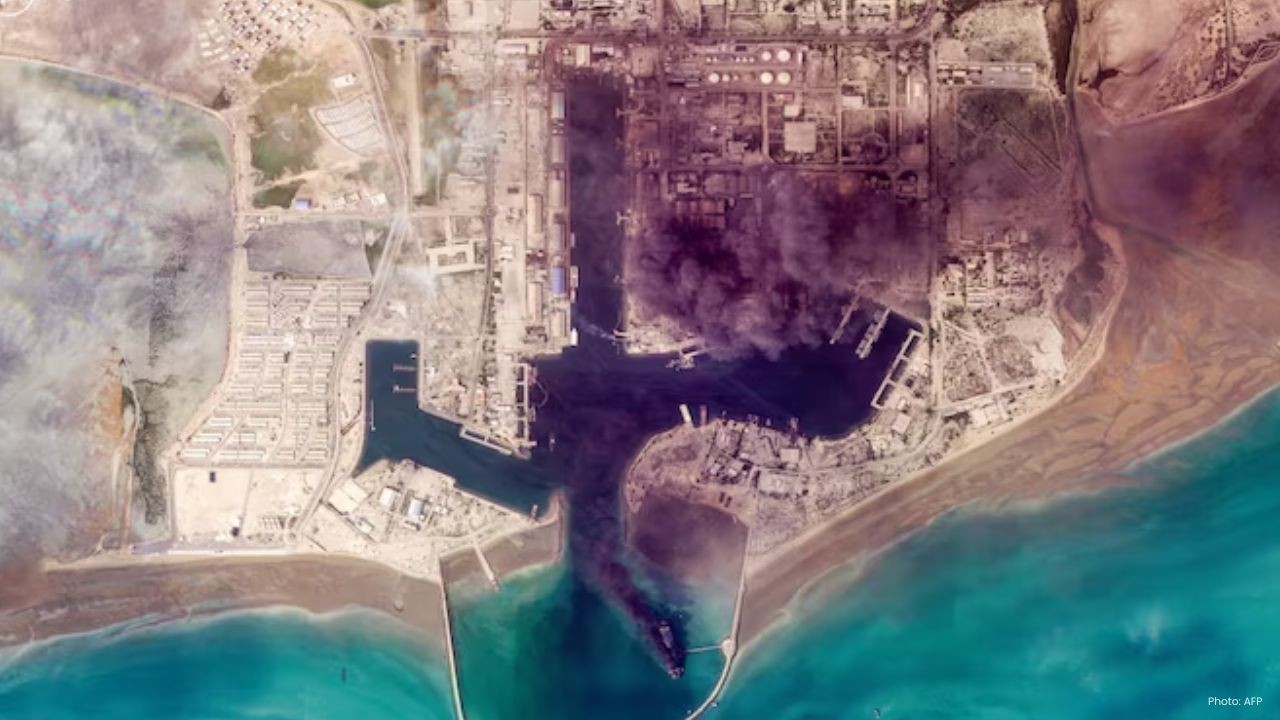
Asia Faces Energy Shock After Iran Closes Strait
Iran shuts Strait of Hormuz amid US-Israel strikes, sending oil prices higher and raising serious en


Bank of Baroda Faces Abu Dhabi Legal Battle over NMC Collapse
Bank of Baroda’s involvement in Abu Dhabi litigation tied to the NMC Healthcare collapse raises repu

Top Museum Openings of 2026 Set to Transform Global Tourism
From Los Angeles to Abu Dhabi and Brussels, 2026 brings major museum launches—Lucas Museum, Guggenhe

UAE Tour Highlights UAE’s Strength in Hosting Global Sports Events
Abu Dhabi Sports Council says the successful UAE Tour reflects the UAE’s leading role in hosting maj

EU Seeks Clarity from US After Supreme Court IEEPA Ruling
European Commission urges full transparency from the US on steps after Supreme Court ruling, emphasi

SpaceX Launches 53 New Satellites for Expanding Starlink Network
SpaceX launches 53 Starlink satellites in two Falcon 9 missions, breaking reuse records and expandin

RTA Awards Contract for Phase II of Hessa Street Upgrade in Dubai
Phase II of Hessa Street Development to add bridges, tunnel, and upgraded intersections, doubling ca

UAE Gold Prices Today, Monday 16 February 2026: Dubai & Abu Dhabi Updated Rates
Gold prices in UAE on 16 Feb 2026 updated: 24K around AED 599.75/gm, 22K AED 555.25/gm, and 18K AED

Over 25 Ahmedabad Schools Receive Bomb Threat Email, Authorities Investigate
More than 25 schools in Ahmedabad evacuated after bomb threat emails mentioning Khalistan. Authoriti