Post by : Anis Karim
For decades, wave and tidal energy sat on the fringes of global renewable development. Their potential was enormous, but technical limitations, high costs, and harsh marine conditions slowed progress. Today, that barrier has finally been breached. The world is witnessing a rise in commercial-scale wave and tidal projects, with governments, researchers, and clean-tech companies aligning to accelerate adoption.
Unlike solar and wind — which depend on sunlight and weather — marine energy offers consistent, predictable power. This reliability is making wave and tidal systems one of the most promising renewable solutions for countries with long coastlines and strong ocean currents.
Several global pressures are driving the shift toward ocean-based power:
demand for stable clean energy sources
climate targets requiring near-zero emissions
need to diversify renewable portfolios
desire to reduce reliance on fossil-fuel backup systems
coastal nations seeking energy independence
Wave and tidal energy stand out because their patterns can be forecast years in advance, giving grid operators a dependable power flow — a rare advantage in the renewable landscape.
Wave energy harnesses the movement of surface waves, while tidal energy captures the gravitational pull of the moon and sun, which drives predictable tidal flows.
Key features include:
predictability: tides follow precise cycles
consistency: waves are influenced by global wind systems
high energy density: ocean water is far denser than air
low visual impact: most devices remain underwater
strong night-time output: unlike solar, generation doesn’t stop at sunset
These characteristics make ocean energy a powerful complement to wind and solar, offering balance to national energy grids.
In the past year, marine energy technology has advanced at remarkable speed. Devices today are more durable, efficient, and cost-effective. Innovation spans every part of the system — from design to materials to installation.
corrosion-resistant materials extending equipment life
flexible floating platforms that reduce installation cost
compact turbines requiring minimal seabed construction
modular components for easier repair
AI-based maintenance prediction
energy capture devices that work in low-wave regions
underwater robotics improving installation and monitoring
These improvements remove many historic barriers that once held ocean energy back.
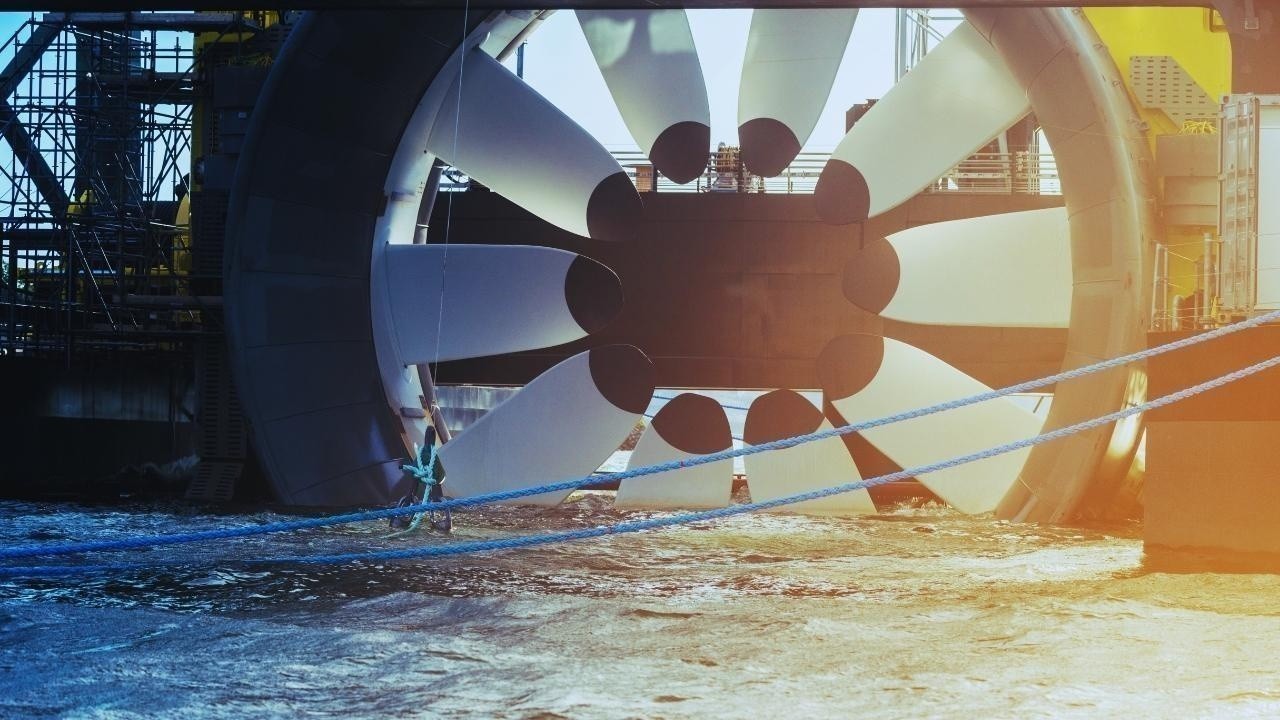
Tidal stream turbines operate similarly to underwater wind turbines. They are currently the most commercialized marine power technology.
Why they’re gaining rapid adoption:
predictable power generation
compact, modular build
ability to operate in strong currents
minimal disruption to shipping
lower maintenance due to enclosed components
Countries with natural tidal corridors — such as the UK, Canada, France, South Korea, and parts of Southeast Asia — are steadily increasing capacity.
Wave energy converters come in various forms: point absorbers, oscillating water columns, attenuators, and overtopping devices.
Recent engineering breakthroughs include:
flexible membranes that mimic marine organisms
multi-directional energy collection
hybrid WEC-solar platforms
small-scale devices for island communities
These innovations make wave energy viable in places where earlier prototypes failed.
Marine hybrids are one of the most exciting advancements. Instead of installing wave or tidal tech alone, companies are pairing them with:
offshore wind turbines
floating solar farms
underwater storage systems
This consolidation shares infrastructure and cuts cost. Hybrid platforms also stabilize total energy output — when wind is low, waves may be high, and vice versa.
Wave and tidal energy used to be extremely expensive. But costs are dropping rapidly due to:
better materials
mass manufacturing
more efficient supply chains
longer device lifespans
refined installation techniques
optimized designs reducing drag and wear
As scale increases, costs are projected to fall further, mirroring the trend seen with solar and wind.
Early critics warned that marine devices might harm marine life or disrupt ocean ecosystems. But recent studies paint a different story.
Ocean energy systems can:
create artificial reefs
attract new marine species
avoid seabed drilling
reduce carbon-heavy coastal power generation
operate quietly compared to shipping or oil infrastructure
When designed responsibly, wave and tidal systems contribute to healthier ocean ecosystems.
Wave and tidal projects often power remote coasts and island communities where land-based renewables are limited.
Benefits include:
stable, clean electricity
reduced need for diesel generators
new jobs in marine industries
improved energy independence
year-round predictability
Communities in regions such as the North Atlantic, the Pacific Islands, and Nordic coastlines are seeing these benefits firsthand.
One of the biggest challenges with renewable energy is variability. Ocean energy solves this by offering:
predictable daily power cycles
energy generation even in storms
less seasonal fluctuation compared to wind and solar
This makes tidal and wave power valuable for balancing national grids.
To stay on track for climate goals, nations must deploy multiple renewable sources. Wave and tidal power offer:
high reliability
strong compatibility with storage systems
excellent performance during nighttime
solutions for nations with large marine zones
As governments intensify decarbonization efforts, ocean energy is now part of official energy roadmaps in several countries.
Governments and private investors are increasing funding for marine energy projects. Coastal nations are offering:
tax incentives
green infrastructure grants
simplified permitting
pilot-zone approvals
research partnerships
These policies are accelerating deployment.
Despite progress, ocean energy faces obstacles:
high upfront cost
harsh marine conditions
limited supply chains
slow regulatory processes
difficulty scaling manufacturing
complex maintenance logistics
However, each challenge is being actively addressed through engineering innovation and international collaboration.
Experts believe wave and tidal energy will grow exponentially due to:
global electrification
climate urgency
declining cost curves
improved device durability
strong government support
investor interest in stable renewable assets
As these forces align, marine energy is poised to become a mainstream power source.
Over the next decade, expect:
multi-tech ocean energy parks
modular tidal turbines for rivers
underwater storage systems
floating hydrogen production
ocean-based charging hubs for ships
AI-managed marine microgrids
Ocean energy may soon power not just homes — but industries, transport networks, and offshore infrastructure.
Wave and tidal energy have moved beyond experimentation. With more robust technology, improved environmental compatibility, falling costs, and stronger policy support, these marine renewables are finally scaling. Coastal nations and island communities stand to benefit immensely as ocean power becomes a core part of global clean-energy systems.
This shift marks a crucial step in the world’s journey toward resilient, sustainable, and diversified renewable energy portfolios.
This article provides an overview of global clean-energy developments. Actual deployment and technological performance vary by region and infrastructure. Readers should consult local energy authorities for region-specific details.

US Stocks Slide as AI Fears, Inflation and Oil Surge Weigh
US stocks dropped as AI disruption fears hit tech firms, inflation rose above forecasts, and oil pri

Pacific Prime Wins Top Honors at Cigna Awards 2026
Pacific Prime secured Top Individual Broker and Top SME Broker awards at Cigna’s Annual Broker Award
QatarEnergy Halts LNG Output After Military Attack
QatarEnergy has stopped LNG production after military attacks hit its facilities in Ras Laffan and M
Strong 6.1 Magnitude Earthquake Hits West Sumatra, No Damage
A 6.1 earthquake struck off West Sumatra, Indonesia. No casualties, damage, or tsunami alert reporte

Saudi Confirms Drone Strike on US Embassy Riyadh
Two drones hit the US Embassy in Riyadh, causing a small fire and minor damage. No injuries were rep

UAE Restarts Limited Flights as Regional Airspace Disruptions Continue
UAE restarts limited flights from Dubai as US-Israel attacks on Iran disrupt regional airspace, forc
Asia Faces Energy Shock After Iran Closes Strait
Iran shuts Strait of Hormuz amid US-Israel strikes, sending oil prices higher and raising serious en


Bank of Baroda Faces Abu Dhabi Legal Battle over NMC Collapse
Bank of Baroda’s involvement in Abu Dhabi litigation tied to the NMC Healthcare collapse raises repu

Top Museum Openings of 2026 Set to Transform Global Tourism
From Los Angeles to Abu Dhabi and Brussels, 2026 brings major museum launches—Lucas Museum, Guggenhe

UAE Tour Highlights UAE’s Strength in Hosting Global Sports Events
Abu Dhabi Sports Council says the successful UAE Tour reflects the UAE’s leading role in hosting maj

EU Seeks Clarity from US After Supreme Court IEEPA Ruling
European Commission urges full transparency from the US on steps after Supreme Court ruling, emphasi

SpaceX Launches 53 New Satellites for Expanding Starlink Network
SpaceX launches 53 Starlink satellites in two Falcon 9 missions, breaking reuse records and expandin

RTA Awards Contract for Phase II of Hessa Street Upgrade in Dubai
Phase II of Hessa Street Development to add bridges, tunnel, and upgraded intersections, doubling ca

UAE Gold Prices Today, Monday 16 February 2026: Dubai & Abu Dhabi Updated Rates
Gold prices in UAE on 16 Feb 2026 updated: 24K around AED 599.75/gm, 22K AED 555.25/gm, and 18K AED

Over 25 Ahmedabad Schools Receive Bomb Threat Email, Authorities Investigate
More than 25 schools in Ahmedabad evacuated after bomb threat emails mentioning Khalistan. Authoriti