Post by : Bianca Qureshi
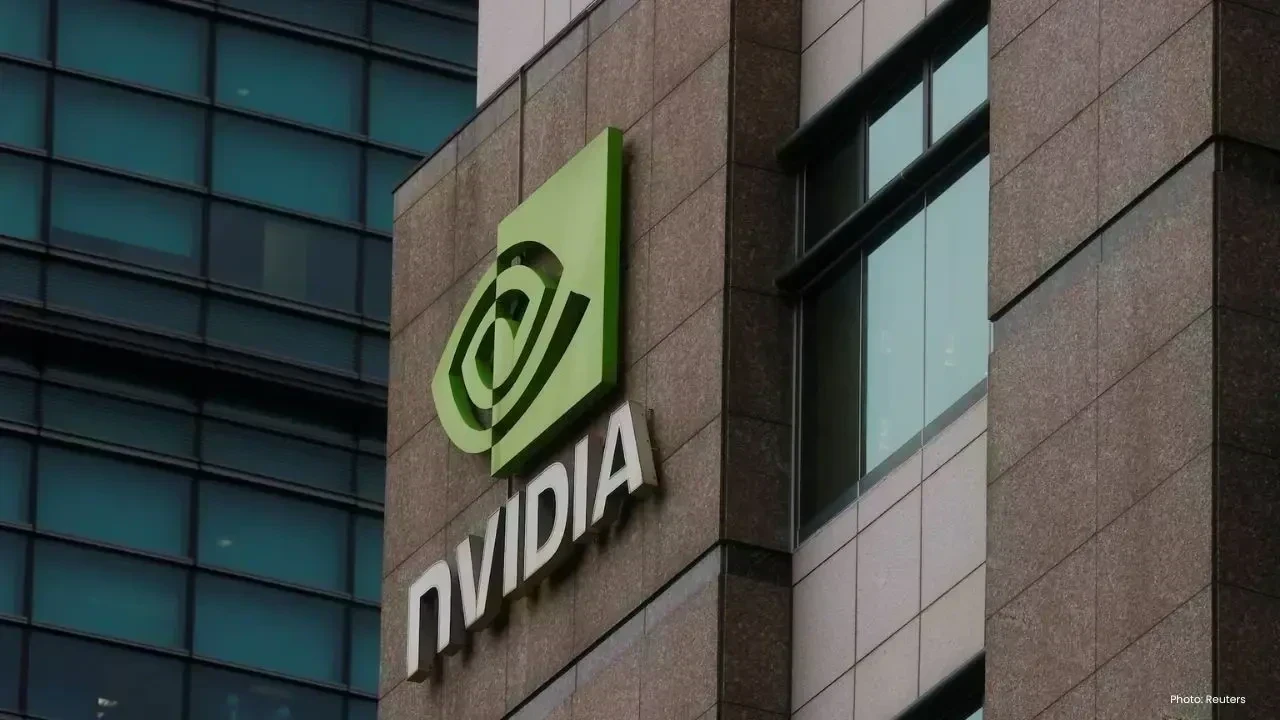
The Trump administration has begun a formal review that could pave the way for the first approved shipments of Nvidia’s H200 chips to China, according to several sources familiar with the matter. The move follows President Donald Trump’s recent public commitment to permit limited chip sales to Chinese buyers in exchange for a 25% fee paid to the U.S. government.
If ultimately authorized, the decision would mark a significant policy shift and introduce a new chapter in the long-running debate over how far the U.S. should go in protecting its technological edge while still allowing American firms to maintain commercial access to the world’s second-largest economy.
A Controversial Opening in Chip Exports
The H200 chip, though not as cutting-edge as Nvidia’s latest Blackwell line, remains a powerful processor widely used in training and running advanced computing models across industries. Until now, the H200 has been barred from the Chinese market under previous export control restrictions.
Trump’s decision to consider opening the channel has triggered criticism from lawmakers, analysts, and national security advocates who argue that even slightly older U.S. chips could strengthen China’s technological capabilities, including in areas with military value. Detractors contend that easing restrictions could undercut Washington’s long-term competitive stance and blunt the effect of earlier bans aimed at slowing China’s domestic semiconductor progress.
The administration, however, argues the opposite. Supporters of the decision say that permitting controlled shipments could dampen incentives for Chinese firms — including major competitors like Huawei — to accelerate development of domestic alternatives. By allowing access only to chips that are no longer the most advanced, policymakers believe they can preserve strategic advantages while keeping China reliant on U.S. suppliers.
The Licensing Review Process
According to the sources, the Commerce Department has officially sent export license applications to three key agencies: the State Department, the Energy Department, and the Department of Defense. These agencies will evaluate the potential security implications, economic impact, and geopolitical considerations associated with the proposed shipments.
Under existing export rules, the agencies have 30 days to respond. If they fail to reach a consensus, the decision would ultimately fall to President Trump. The start of this inter-agency review had not been publicly disclosed prior to these revelations.
Neither the Commerce Department nor Nvidia commented on the development. The White House also declined specific comment on the review but reiterated its broader commitment to strengthening American technology leadership while safeguarding national security.
China’s Demand and Nvidia’s Production Situation
Interest in the H200 among Chinese firms is already high. Nvidia has reportedly explored boosting production after early inquiries from Chinese customers exceeded current manufacturing capacity. At the same time, the company continues to prioritize its more advanced Blackwell chips for markets where restrictions do not apply.
The potential easing comes at a time when Nvidia remains central to the global race for high-performance computing. While the H200 is technically a generation behind, it is still capable of powering demanding workloads, making it attractive to industries ranging from scientific research to commercial applications.
A Reversal From Trump’s First-Term Position
This move stands in contrast to Trump’s policy during his first term, when he oversaw a sweeping clampdown on Chinese access to U.S. technologies. His administration then argued that Beijing was leveraging legally acquired commercial technologies for military and strategic purposes and frequently accused China of stealing American intellectual property — charges China denied.
Several senior officials involved in the current deliberations, including White House technology adviser David Sacks, have taken a more pragmatic stance. Their view is that controlled exports, combined with a revenue-sharing mechanism benefiting the U.S. Treasury, can simultaneously support domestic companies and influence China’s reliance on American suppliers.
National Security Debate Intensifies
The proposal has triggered widespread debate in Washington. Lawmakers who oppose the plan warn that even older chips could bring measurable gains to China’s computing muscle. Critics fear that Beijing could redirect commercial hardware for defense or state-run initiatives. For them, any loosening risks undermining years of bipartisan efforts aimed at preventing U.S. technology from bolstering China’s military.
Supporters counter that total isolation is unrealistic and could ultimately backfire, pushing China to rapidly scale domestic chip production. They argue that strategic engagement coupled with strict oversight may be more effective than absolute bans, especially if it keeps American companies competitive and slows the emergence of alternatives in China’s technology ecosystem.
Industry, Economics, and Strategy
The stakes are high for Nvidia. China represents a large potential market, and even partial access could deliver substantial revenue. At the same time, U.S. policymakers must weigh economic benefits against long-term security risks.
If the licenses are approved, the U.S. could set a precedent for differentiating between chip generations — allowing older products while retaining bans on cutting-edge technology. This balancing act may shape future semiconductor policy, particularly as global demand for advanced computing expands and as governments seek influence over supply chains.
The inter-agency review is only the beginning. Over the coming month, policymakers will evaluate technical specifications, end-user risks, and possible safeguards. Beijing’s stance is also a variable; it remains uncertain whether China will accept purchases tied to a 25% fee that benefits the U.S. government.
For now, the process underscores a broader shift in the administration’s approach: rather than blanket restrictions, the White House is testing a model that seeks economic advantage while maintaining select guardrails. Whether this strategy will satisfy security concerns or encourage compromise in the broader U.S.–China technology rivalry remains an open question.
As the review unfolds, businesses, regulators, and global markets will watch closely. The outcome may influence not only the future of U.S.–China technology trade but also the tone of American semiconductor policy for years to come.

US Stocks Slide as AI Fears, Inflation and Oil Surge Weigh
US stocks dropped as AI disruption fears hit tech firms, inflation rose above forecasts, and oil pri

Pacific Prime Wins Top Honors at Cigna Awards 2026
Pacific Prime secured Top Individual Broker and Top SME Broker awards at Cigna’s Annual Broker Award

QatarEnergy Halts LNG Output After Military Attack
QatarEnergy has stopped LNG production after military attacks hit its facilities in Ras Laffan and M

Strong 6.1 Magnitude Earthquake Hits West Sumatra, No Damage
A 6.1 earthquake struck off West Sumatra, Indonesia. No casualties, damage, or tsunami alert reporte

Saudi Confirms Drone Strike on US Embassy Riyadh
Two drones hit the US Embassy in Riyadh, causing a small fire and minor damage. No injuries were rep

UAE Restarts Limited Flights as Regional Airspace Disruptions Continue
UAE restarts limited flights from Dubai as US-Israel attacks on Iran disrupt regional airspace, forc

Asia Faces Energy Shock After Iran Closes Strait
Iran shuts Strait of Hormuz amid US-Israel strikes, sending oil prices higher and raising serious en


Bank of Baroda Faces Abu Dhabi Legal Battle over NMC Collapse
Bank of Baroda’s involvement in Abu Dhabi litigation tied to the NMC Healthcare collapse raises repu

Top Museum Openings of 2026 Set to Transform Global Tourism
From Los Angeles to Abu Dhabi and Brussels, 2026 brings major museum launches—Lucas Museum, Guggenhe

UAE Tour Highlights UAE’s Strength in Hosting Global Sports Events
Abu Dhabi Sports Council says the successful UAE Tour reflects the UAE’s leading role in hosting maj

EU Seeks Clarity from US After Supreme Court IEEPA Ruling
European Commission urges full transparency from the US on steps after Supreme Court ruling, emphasi
SpaceX Launches 53 New Satellites for Expanding Starlink Network
SpaceX launches 53 Starlink satellites in two Falcon 9 missions, breaking reuse records and expandin
RTA Awards Contract for Phase II of Hessa Street Upgrade in Dubai
Phase II of Hessa Street Development to add bridges, tunnel, and upgraded intersections, doubling ca

UAE Gold Prices Today, Monday 16 February 2026: Dubai & Abu Dhabi Updated Rates
Gold prices in UAE on 16 Feb 2026 updated: 24K around AED 599.75/gm, 22K AED 555.25/gm, and 18K AED
Over 25 Ahmedabad Schools Receive Bomb Threat Email, Authorities Investigate
More than 25 schools in Ahmedabad evacuated after bomb threat emails mentioning Khalistan. Authoriti