Post by : Bianca Qureshi
American economist Richard Wolff has expressed strong opinions on the recent trade tensions between the United States and India, calling the US actions “counterproductive” and warning that they might actually benefit India and the BRICS nations. According to Wolff, the United States is acting like the “world’s tough guy” against India, but in reality, it is harming itself by attempting to pressure one of the fastest-growing economies in the world.
Speaking in an interview with Russia Today, Wolff explained that India has now become, according to the United Nations, the most populous country in the world. He likened the US attempt to control India to a mouse trying to strike an elephant, emphasizing that India is far too significant a player on the global stage for threats or tariffs to have the intended effect.
Stay informed with the latest news. Follow DXB News Network on WhatsApp Channel
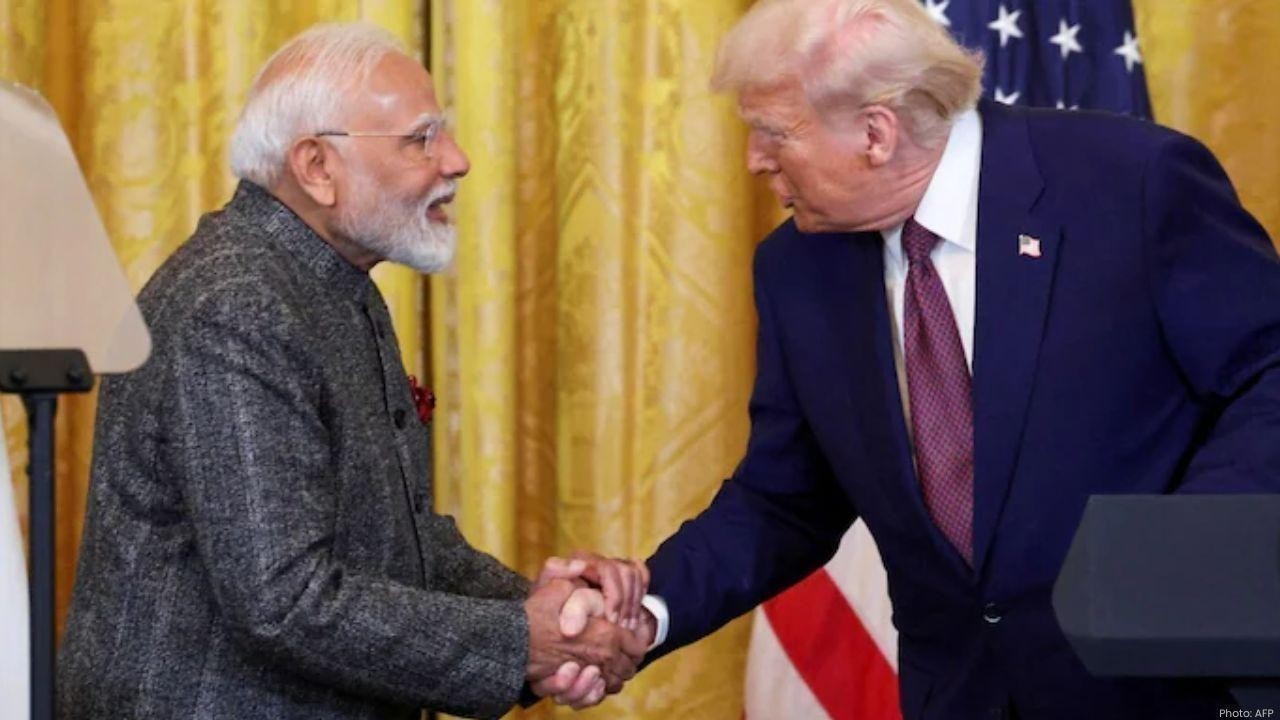
The current dispute centers around US tariffs on Indian products. On Wednesday, the US government implemented a 50 percent tariff on a wide range of Indian goods, doubling an existing duty. This move comes as part of US President Donald Trump’s efforts to penalize India for purchasing Russian oil. Trump has repeatedly pressured India to reduce its energy dealings with Russia, pointing out that these transactions provide crucial revenue to Moscow, which is using it to continue the war in Ukraine.
Richard Wolff explained that the US strategy might not work as planned. He said that if India finds its exports blocked in the US market, it will simply seek other markets to sell its goods. According to Wolff, India will increasingly turn to other BRICS nations as buyers for its products. He drew a parallel with Russia, which, despite US and Western sanctions, managed to find alternative buyers for its energy exports. Wolff’s message was clear: rather than isolating India, the US actions could actually push India closer to the BRICS countries, strengthening their economic influence.
The BRICS bloc, which currently includes ten nations—Brazil, Russia, India, China, South Africa, Egypt, Ethiopia, Indonesia, Iran, and the United Arab Emirates—was formed to provide a counterbalance to Western financial dominance. These countries are exploring economic alternatives to challenge the current dominance of the US dollar. Wolff highlighted the growing economic strength of the BRICS nations, stating that if you combine China, India, Russia, and the rest of the BRICS members, they now account for approximately 35 percent of global output. In comparison, the G7 nations collectively produce around 28 percent of the world’s output. This, according to Wolff, signals a shift in the global economic landscape.
Wolff warned that the US tariffs on India could inadvertently help the BRICS nations grow stronger. “By imposing these tariffs, the US is effectively pushing India to deepen its economic ties with the BRICS,” Wolff said. “Instead of weakening India, these measures are likely to create a more integrated and successful economic alternative to the West.” He added that the current situation represents a “historic moment” in global economic history, as new economic powers continue to challenge traditional Western dominance.
President Trump, however, has repeatedly dismissed the BRICS bloc. In public statements, he has referred to it as a “little group” that is “fading out fast” and even said in February that “BRICS is dead.” Trump has also threatened to impose even higher tariffs, up to 100 percent, on BRICS nations if they move forward with plans to create a common currency. “They can go find another sucker nation,” Trump said, referring to countries considering joining or supporting the bloc. Despite these remarks, many analysts, including Wolff, believe that BRICS continues to grow in influence and economic power.
Wolff further noted that India’s relationship with the United States is long-standing, dating back to the Soviet era. He reminded viewers that India has historically navigated complex international relationships and is not easily pressured by external powers. “You are playing with a very different adversary,” Wolff said, highlighting India’s experience and resilience in international politics and trade negotiations.
Wolff also added a touch of humor to his commentary, noting the irony of the US attempting to act as the “world’s tough guy” while the reality is that such actions may backfire. “It will be a spectacle,” he said. “The United States may look strong in the short term, but it is actually shooting itself in the foot.”
India has officially criticized the US move, calling the tariffs “unfair, unjustified, and unreasonable.” Indian officials have emphasized that the tariffs disrupt a long-standing trade relationship between the two countries and could hurt not only Indian exporters but also US businesses that rely on imports from India.
The broader context of this dispute lies in the ongoing war in Ukraine. The United States has taken a strong stance against nations that continue to buy Russian energy, seeing it as a key source of funding for Moscow’s military actions. India, however, has maintained its position, arguing that it must secure energy supplies to meet the demands of its growing population and economy. This clash of priorities has led to the current imposition of tariffs.
Experts like Wolff argue that instead of isolating India, the US actions could accelerate the shift toward a multipolar global economy. The rise of BRICS nations represents a challenge to the Western-dominated economic order, particularly the dominance of the US dollar. By attempting to punish India, the US may inadvertently strengthen the group’s cohesion and influence.
Wolff also emphasized the economic logic behind India’s response. If US markets are closed due to tariffs, Indian exporters will naturally seek alternative markets where their goods can be sold. The BRICS nations, which are working together to reduce dependence on Western economies, could become primary buyers for Indian products. In this way, the US strategy may be counterproductive, strengthening the very bloc it seeks to weaken.
The economist’s warning comes amid broader geopolitical tensions. While the US continues to focus on pressuring countries like India and Russia, BRICS nations are taking steps to deepen cooperation in trade, finance, and development. The bloc’s efforts include exploring alternatives to the US dollar for international trade, creating development banks, and enhancing economic collaboration among member countries. Wolff suggested that these moves indicate a long-term trend in which BRICS could emerge as a major economic and political counterweight to the West.
In conclusion, Richard Wolff’s perspective highlights the complexity of global trade and diplomacy. While the US seeks to use tariffs as leverage against India, the move may not achieve its intended goals. Instead, it could encourage India to strengthen its ties with BRICS nations, contributing to a shift in the global economic balance. The situation underscores the growing influence of emerging economies and the limitations of traditional Western strategies in managing international trade and geopolitics.
In the words of Wolff, the current moment is not just about tariffs or trade disputes—it is about the beginning of a new economic era. “The US may think it is acting tough,” he said, “but history will show that it has unintentionally helped create a stronger, more integrated BRICS bloc, with India at its center.”
This development serves as a reminder that in today’s interconnected world, economic power is shifting, and nations like India are becoming increasingly important players on the global stage. The ongoing tensions between the US and India over trade and energy are just one part of this larger story, which will likely have significant implications for global economics, diplomacy, and the future of international alliances.

US Stocks Slide as AI Fears, Inflation and Oil Surge Weigh
US stocks dropped as AI disruption fears hit tech firms, inflation rose above forecasts, and oil pri

Pacific Prime Wins Top Honors at Cigna Awards 2026
Pacific Prime secured Top Individual Broker and Top SME Broker awards at Cigna’s Annual Broker Award

QatarEnergy Halts LNG Output After Military Attack
QatarEnergy has stopped LNG production after military attacks hit its facilities in Ras Laffan and M

Strong 6.1 Magnitude Earthquake Hits West Sumatra, No Damage
A 6.1 earthquake struck off West Sumatra, Indonesia. No casualties, damage, or tsunami alert reporte

Saudi Confirms Drone Strike on US Embassy Riyadh
Two drones hit the US Embassy in Riyadh, causing a small fire and minor damage. No injuries were rep

UAE Restarts Limited Flights as Regional Airspace Disruptions Continue
UAE restarts limited flights from Dubai as US-Israel attacks on Iran disrupt regional airspace, forc

Asia Faces Energy Shock After Iran Closes Strait
Iran shuts Strait of Hormuz amid US-Israel strikes, sending oil prices higher and raising serious en


Bank of Baroda Faces Abu Dhabi Legal Battle over NMC Collapse
Bank of Baroda’s involvement in Abu Dhabi litigation tied to the NMC Healthcare collapse raises repu

Top Museum Openings of 2026 Set to Transform Global Tourism
From Los Angeles to Abu Dhabi and Brussels, 2026 brings major museum launches—Lucas Museum, Guggenhe

UAE Tour Highlights UAE’s Strength in Hosting Global Sports Events
Abu Dhabi Sports Council says the successful UAE Tour reflects the UAE’s leading role in hosting maj

EU Seeks Clarity from US After Supreme Court IEEPA Ruling
European Commission urges full transparency from the US on steps after Supreme Court ruling, emphasi

SpaceX Launches 53 New Satellites for Expanding Starlink Network
SpaceX launches 53 Starlink satellites in two Falcon 9 missions, breaking reuse records and expandin

RTA Awards Contract for Phase II of Hessa Street Upgrade in Dubai
Phase II of Hessa Street Development to add bridges, tunnel, and upgraded intersections, doubling ca

UAE Gold Prices Today, Monday 16 February 2026: Dubai & Abu Dhabi Updated Rates
Gold prices in UAE on 16 Feb 2026 updated: 24K around AED 599.75/gm, 22K AED 555.25/gm, and 18K AED

Over 25 Ahmedabad Schools Receive Bomb Threat Email, Authorities Investigate
More than 25 schools in Ahmedabad evacuated after bomb threat emails mentioning Khalistan. Authoriti





