Post by : Anis Karim
The night sky has always captured our imagination, but in 2026, it will enchant us like never before. As geomagnetic storms and auroras become more common, scientists and governments are on high alert. This phenomenon is linked to the Sun’s critical activity cycle, which is nearing its peak.
With a rise in solar flares and coronal mass ejections, 2026 is set to bring the wonders of space closer to our daily lives. While auroras mesmerize observers, geomagnetic storms present potential hazards, making it imperative to understand their underpinnings.
The Sun operates on an approximately 11-year cycle, oscillating between phases of minimum and maximum activity. During the solar maximum phase, the Sun's surface displays increased sunspots and larger solar flares.
With the peak of this current cycle approaching, scientists note a rise in solar tumult, resulting in auroras observed at lower latitudes and increasingly potent geomagnetic storms.
This stage makes the Sun's magnetic field more volatile, raising the chances of eruptions that impact Earth's magnetic environment.
A geomagnetic storm arises when a surge of charged particles from the Sun collides with Earth's magnetic field, disturbing the magnetosphere and resulting in rapid changes to the magnetic conditions surrounding our planet.
These storms can vary in severity, causing everything from minor disturbances to significant electronic disruptions.
Geomagnetic storms only occur when solar eruptions are finely directed at Earth and possess sufficient strength to breach the magnetosphere. The speed and orientation of these particles are crucial.
Earth is wrapped in a magnetic field produced by its molten core, which acts as a shield against harmful solar radiation and charged particles.
When facing solar storms, the magnetosphere absorbs excess energy, though intense events can overwhelm this protective barrier, leading to geomagnetic disruptions.
The magnetic field lines converge at the poles, allowing charged particles to penetrate the upper atmosphere, which explains why auroras are predominantly visible in Arctic and Antarctic areas.
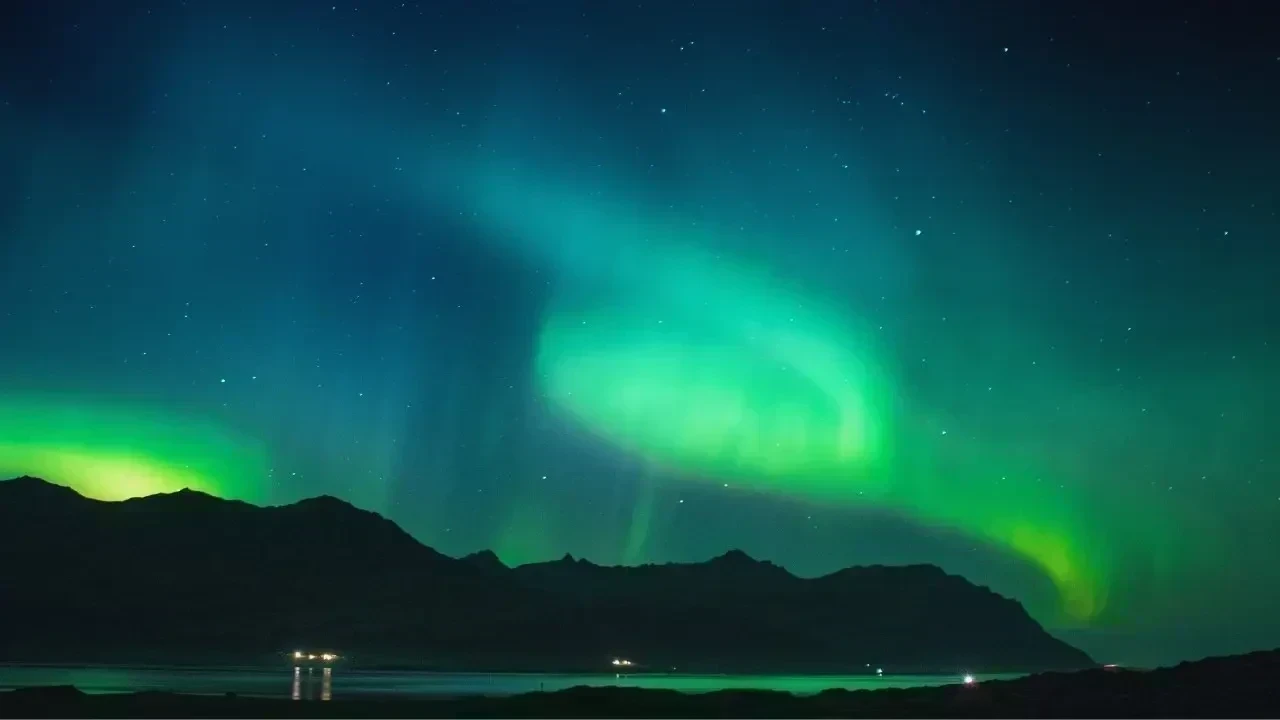
Auroras emerge when charged solar particles interact with atmospheric gases. This interaction leads to energy release in the form of stunning light displays.
Oxygen yields green and red hues
Nitrogen produces blue and purple shades
These reactions create the breathtaking aurora borealis in the northern hemisphere and the aurora australis in the south.
As geomagnetic storms become stronger, charged particles can travel further from the poles, allowing auroras to appear in regions where they are rarely seen.
Monitoring agencies report an increase in solar flares and coronal mass ejections, showing an upward trend consistent with the peak of the solar cycle.
Organizations like NASA and NOAA are ramping up their surveillance due to the rising geomagnetic activity risk.
Geomagnetic storms can disrupt satellite functions, damage solar panels, and change orbital trajectories, while navigation systems such as GPS could face temporary problems.
Significant storms can induce electric currents in power lines, risking transformer overloads. Historical incidents have led to blackouts, emphasizing the need for robust grid protections in 2026.
Airlines may reroute flights operating near the poles during severe geomagnetic storms to avoid communication issues and radiation exposure.
High-frequency radio communication, utilized by aviation and maritime services, may experience interruptions when solar activity destabilizes the ionosphere.
For individuals on Earth, the immediate risk from geomagnetic storms is minimal, thanks to our atmosphere and magnetic field.
Astronauts operating beyond Earth's magnetic protection are more susceptible to radiation exposure during solar storms.
Though geomagnetic storms primarily impact high altitudes, there’s research exploring their effects on atmospheric heating and potential influences on climatic trends.
Modern forecasting employs satellites positioned between Earth and the Sun to detect incoming solar storms in advance.
This allows industries and agencies to implement preventive measures ahead of time.
Improved solar observation, data modeling, and AI technologies are enhancing predictive capabilities, making 2026 one of the most closely monitored years for space weather.
As auroras venture into unexpected areas, public interest has soared. Social media swells with images of rare displays from mid-latitude regions.
Auroras provide a visual cue of Earth's place in a dynamic solar system, where cosmic forces are at play.
The 1859 Carrington Event stands as the strongest recorded geomagnetic storm, a reminder of the potential technological impact of such occurrences.
This historical context emphasizes the importance of ongoing observations of solar activity in 2026.
Governments and utility providers are prioritizing grid resilience and satellite protection to mitigate vulnerabilities.
Tackling space weather challenges requires international data-sharing to bolster effective forecasting and response.
In a society reliant on satellites and digital networks, geomagnetic storms challenge the strength of our modern systems.
Understanding these events is crucial—it's about being prepared for the technological realities we face today.
In 2026, expect significant events in space weather. As geomagnetic storms and auroras light up the night sky, the Sun reaffirms its pivotal role in our lives.
These celestial displays combine beauty and peril, awe and accountability. Through research and preparation, scientists seek to safeguard modern infrastructure and expand our understanding of the dynamic star fueling life on Earth.
This article serves informational and editorial purposes. Space weather activity varies, and forecasts may evolve based on real-time solar data. Refer to official advisories from space agencies and scientific bodies for alerts and safety recommendations.

US Stocks Slide as AI Fears, Inflation and Oil Surge Weigh
US stocks dropped as AI disruption fears hit tech firms, inflation rose above forecasts, and oil pri

Pacific Prime Wins Top Honors at Cigna Awards 2026
Pacific Prime secured Top Individual Broker and Top SME Broker awards at Cigna’s Annual Broker Award

QatarEnergy Halts LNG Output After Military Attack
QatarEnergy has stopped LNG production after military attacks hit its facilities in Ras Laffan and M

Strong 6.1 Magnitude Earthquake Hits West Sumatra, No Damage
A 6.1 earthquake struck off West Sumatra, Indonesia. No casualties, damage, or tsunami alert reporte

Saudi Confirms Drone Strike on US Embassy Riyadh
Two drones hit the US Embassy in Riyadh, causing a small fire and minor damage. No injuries were rep

UAE Restarts Limited Flights as Regional Airspace Disruptions Continue
UAE restarts limited flights from Dubai as US-Israel attacks on Iran disrupt regional airspace, forc

Asia Faces Energy Shock After Iran Closes Strait
Iran shuts Strait of Hormuz amid US-Israel strikes, sending oil prices higher and raising serious en


Bank of Baroda Faces Abu Dhabi Legal Battle over NMC Collapse
Bank of Baroda’s involvement in Abu Dhabi litigation tied to the NMC Healthcare collapse raises repu

Top Museum Openings of 2026 Set to Transform Global Tourism
From Los Angeles to Abu Dhabi and Brussels, 2026 brings major museum launches—Lucas Museum, Guggenhe

UAE Tour Highlights UAE’s Strength in Hosting Global Sports Events
Abu Dhabi Sports Council says the successful UAE Tour reflects the UAE’s leading role in hosting maj

EU Seeks Clarity from US After Supreme Court IEEPA Ruling
European Commission urges full transparency from the US on steps after Supreme Court ruling, emphasi

SpaceX Launches 53 New Satellites for Expanding Starlink Network
SpaceX launches 53 Starlink satellites in two Falcon 9 missions, breaking reuse records and expandin

RTA Awards Contract for Phase II of Hessa Street Upgrade in Dubai
Phase II of Hessa Street Development to add bridges, tunnel, and upgraded intersections, doubling ca

UAE Gold Prices Today, Monday 16 February 2026: Dubai & Abu Dhabi Updated Rates
Gold prices in UAE on 16 Feb 2026 updated: 24K around AED 599.75/gm, 22K AED 555.25/gm, and 18K AED

Over 25 Ahmedabad Schools Receive Bomb Threat Email, Authorities Investigate
More than 25 schools in Ahmedabad evacuated after bomb threat emails mentioning Khalistan. Authoriti





