Post by : Anis Karim
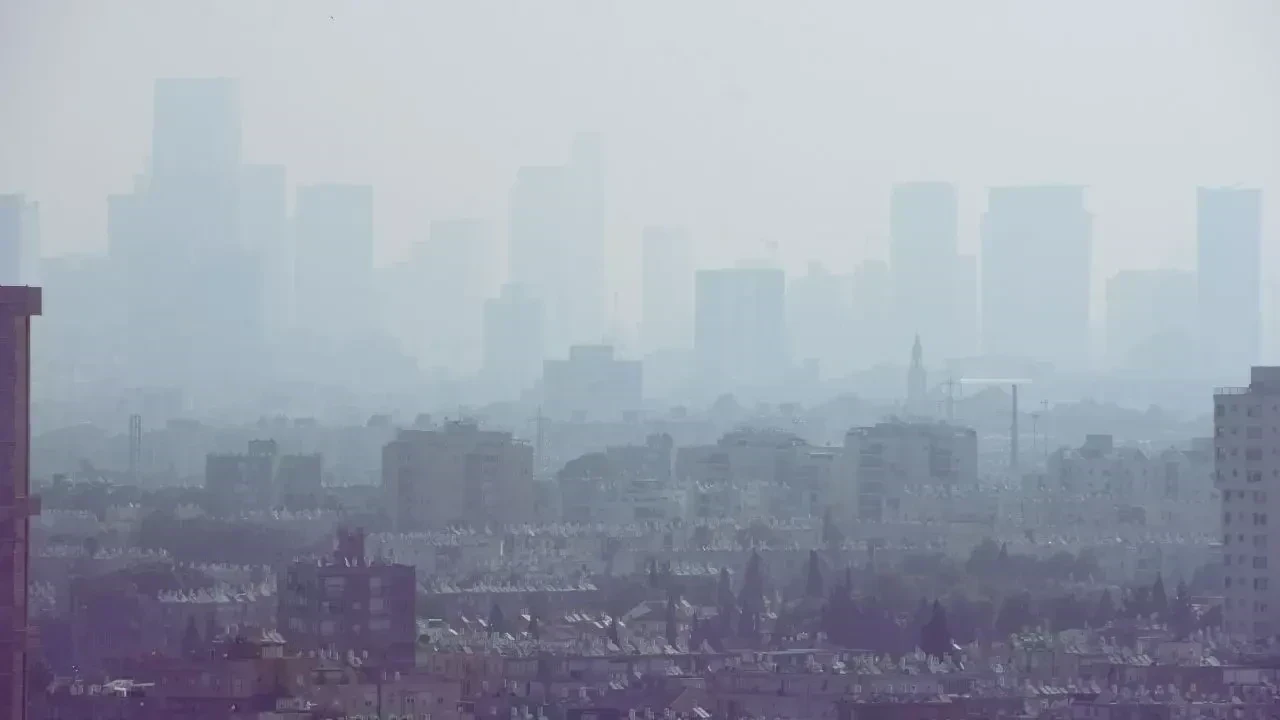
As winter envelops Dubai, the skies transform unpredictably. Some mornings greet you with a refreshing feel but might be shrouded in cloudiness, while others unleash a sharp, distinctive scent. Occasionally, poor visibility can obscure buildings just down the road.
Terms like mist, haze, and smog are often misused in conversation, yet they have unique characteristics. Each phenomenon originates from different sources, poses distinct risks, and affects your day in varying ways.
Understanding the air you breathe goes beyond mere curiosity — it’s a matter of personal safety.
Because not all chilly mornings signify the same hazard — they come with their own signals.
Mist can be described as nature’s low-lying fog.
It occurs when warm air meets cooler temperatures, condensing moisture into tiny water droplets that float near the ground, crafting a soft white layer typical of Dubai’s winter mornings.
Mist comprises water, devoid of pollutants.
It’s a natural weather occurrence, not an air quality concern.
While mist reduces visibility, it does not harm lungs or precipitate severe health issues.
It simply clouds your vision and adds moisture to the air.
Drivers might struggle with visibility, and early risers may notice damp clothing. However, health risks during pure mist are minimal.
Mist doesn’t irritate the eyes.
Mist doesn’t hinder breathing.
Mist carries no odor.
It dissipates swiftly with the sunrise as warmth disperses moisture into the atmosphere.
Though harmless on its own, mist can become harmful when mixed with pollution.
If the air becomes heavy or dense, or if coughing arises, it signals that conditions have shifted from mere mist.
Haze results from fine dust particles, smoke remnants, automotive emissions, and industrial exhaust lingering in the air.
Unlike mist, haze does not comprise water.
It’s dry pollution that overshadows urban areas.
Haze creates a bleached sky, diminished visibility, and a muted yellow or gray tone.
Cool air tends to trap pollution near the ground.
During winter:
Wind speeds wane
Pollutants cease to rise
Cold air holds particles down
Increased emissions in congested traffic
Crop burning effects increase
Construction dust remains airborne
Haze does not ascend; it settles – often... into our lungs.
While haze may appear lighter than smog, it still poses health risks.
Common repercussions include:
Itchy eyes
Scratchy throat
End-of-day fatigue
Headaches
Shallow breathing
Reduced stamina during physical activities
Those with allergies and asthma will feel haze sooner, while others may take longer.
Look out for:
Bluish-grey sky by day
No visible fog on the ground
Distant structures fading to gray
Pale sun instead of vivid orange
Chest discomfort post-activity
No moisture forms on surfaces during haze.
That’s the key indicator.
Smog is not just a weather phenomenon.
It represents a detrimental mix of pollution and mist.
It contains:
Vehicle emissions
Industrial waste particles
Construction debris
Smoke from combustion
Water vapor encapsulating all pollutants
You can think of smog as pollution enveloped in moisture.
Thus, it:
Carries a sharp odor
Feels dense
Causes instant discomfort
Persists longer
Spreads effectively
Sticks around stubbornly
Smog doesn’t float; it presses down.
Within smog exist microscopic threats known as fine particles.
These particles:
Penetrate deeply into the lungs
Enter the bloodstream
Inflame brain nerves
Stress the heart
Diminish immunity
Trigger asthma episodes
Exacerbate cough and bronchitis
Smog silently reaches the organs.
The consequences are often unseen.
Yet, the threat is very real.
Smog flourishes when:
Cold air traps warm pollutants
Lack of wind prevents smoke dispersion
Crop burning combines with fog
Visibility dims as pollution accumulates unnoticed
Once smog settles, it lingers.
Unlike mist, it doesn’t vanish by 9 AM.
If you experience:
Burning eyes
Pressure in the chest
Metallic taste in your mouth
Throat irritation
Persistent coughing without illness
Headaches after being outdoors
You’re facing pollution, not the weather.
You’re confronting smog.
The misunderstanding arises because all three reduce visibility.
Yet, their effects are vastly different.
| Weather Element | Danger Level | Composition | Duration |
|---|---|---|---|
| Mist | Low | Water | Brief |
| Haze | Medium | Dust | Days |
| Smog | High | Toxic Combination | Weeks |
Mist dissipates under sunlight.
Haze lingers feebly.
Smog stubbornly holds its ground.
Visibility is limited, but manageable with fog lights and reduced speed.
Road safety remains mostly in control during mere mist conditions.
Distances may appear misleading.
Vehicles might seem distant yet are closer than they appear.
Fatigue can heighten.
Response time may decrease.
Danger multiplies exponentially.
Light scatters awkwardly.
Headlights flicker.
Judgment falters.
Accidents increase.
With smog, navigating roads becomes perilous.
Children are particularly vulnerable to smog and haze exposure.
They breathe in more air relative to their body weight.
Breathing challenges increase.
Their immunity can weaken.
Common colds become more severe.
Quick onset of fatigue is common.
Overall productivity may decline.
Eye strain may escalate.
Mental focus reduces.
Heart strain intensifies due to these conditions.
Asthma attacks may rise.
Blood pressure can fluctuate more.
Smog days can lead to an increase in hospital visits.
Drive with caution
Ensure a clear windshield
Minimal health concerns exist
Minimize outdoor physical activity
Use cloth masks when needed
Keep windows shut during pollution spikes
Stay hydrated with warm fluids
Limit outdoor exposure
Wear protective masks if going out
Refrain from exercising outdoors
Keep windows and doors closed
Avoid air circulation from the outside
Shower after being outdoors
Drink plenty of water
Utilize indoor plants
Consistently monitor your breathing
Addressing smog requires lifestyle adjustments — not just tolerance.
Smog can infiltrate homes easily.
Once inside, it:
Settles in draperies
Lingers in carpets
Adheres to furniture surfaces
Hangs out in corners
Resides in mattresses
Sealing homes during smog days isn’t paranoia — it’s prudent.
Exposure during crucial stages can damage children’s lung development.
Timely action can prevent chronic wheezing.
Resistance to common ailments can drop.
Parents should consider smog exposure like they would any disease.
It’s not just a weather inconvenience.
Thin fabric only blocks larger dust particles.
Given that smog harbors tiny, invisible particles, quality masks become imperative.
While better masks can filter harmful particles, their limits exist. Thus, exposure remains a concern.
Smog isn’t merely a transient issue.
Continuous exposure may lead to:
Cardiac ailments
Stroke risks
Lung scarring
Cognitive decline
Reduced oxygen absorption
Chronic bronchial illnesses
These effects aren’t immediate; they accumulate slowly.
Day after day.
Sometimes the sky might appear clear while harboring dangers.
Pollution doesn’t need thick fog to manifest.
Smog can remain undetectable.
Never assume you’re safe based on visibility.
Heed your body’s signals:
Burning = danger
Coughing = alert
Pressure = harm
Fatigue = possible toxicity
Chilly air can trap contaminants.
Sunlight doesn't aid in their dispersion.
Calm winds further exacerbate the pollution situation.
Urban areas become pollution bowls.
Smog settles and persists.
Weather conditions and air quality aren’t synonymous.
Temperature apps don’t register pollution.
Monitoring air quality alerts should be your priority.
Don’t depend solely on cloud cover for insight.
Pay attention to air metrics and personal symptoms.
Damp mop the floors
Clean curtains regularly
Avoid burning incense indoors
Keep indoor smoking to a minimum
Limit cooking fumes
Seal waste properly
Ventilate during safe segments
Monitor air quality daily
Stay hydrated
Small acts collectively reduce long-term damage.
Children should understand:
Why the air feels heavy
The importance of staying indoors
Masks act as protection
Timing outdoor activities matters
Awareness promotes health.
Mist dampens your clothes.
Haze brings irritation.
Smog threatens your health.
The color of the sky can forecast your day.
Interpreting it wisely is essential.
Breathe clean air isn’t just about luck; it’s about awareness.
Gaze at the sky.
Inhale the atmosphere.
Tune into your body’s signals.
Then venture out cautiously.
Disclaimer:
The information provided is for educational purposes only and should not substitute professional medical or environmental advice. Individuals with respiratory conditions are advised to adhere to guidance from healthcare practitioners during adverse air quality days.

US Stocks Slide as AI Fears, Inflation and Oil Surge Weigh
US stocks dropped as AI disruption fears hit tech firms, inflation rose above forecasts, and oil pri

Pacific Prime Wins Top Honors at Cigna Awards 2026
Pacific Prime secured Top Individual Broker and Top SME Broker awards at Cigna’s Annual Broker Award

QatarEnergy Halts LNG Output After Military Attack
QatarEnergy has stopped LNG production after military attacks hit its facilities in Ras Laffan and M
Strong 6.1 Magnitude Earthquake Hits West Sumatra, No Damage
A 6.1 earthquake struck off West Sumatra, Indonesia. No casualties, damage, or tsunami alert reporte
Saudi Confirms Drone Strike on US Embassy Riyadh
Two drones hit the US Embassy in Riyadh, causing a small fire and minor damage. No injuries were rep

UAE Restarts Limited Flights as Regional Airspace Disruptions Continue
UAE restarts limited flights from Dubai as US-Israel attacks on Iran disrupt regional airspace, forc
Asia Faces Energy Shock After Iran Closes Strait
Iran shuts Strait of Hormuz amid US-Israel strikes, sending oil prices higher and raising serious en


Bank of Baroda Faces Abu Dhabi Legal Battle over NMC Collapse
Bank of Baroda’s involvement in Abu Dhabi litigation tied to the NMC Healthcare collapse raises repu

Top Museum Openings of 2026 Set to Transform Global Tourism
From Los Angeles to Abu Dhabi and Brussels, 2026 brings major museum launches—Lucas Museum, Guggenhe

UAE Tour Highlights UAE’s Strength in Hosting Global Sports Events
Abu Dhabi Sports Council says the successful UAE Tour reflects the UAE’s leading role in hosting maj

EU Seeks Clarity from US After Supreme Court IEEPA Ruling
European Commission urges full transparency from the US on steps after Supreme Court ruling, emphasi
SpaceX Launches 53 New Satellites for Expanding Starlink Network
SpaceX launches 53 Starlink satellites in two Falcon 9 missions, breaking reuse records and expandin

RTA Awards Contract for Phase II of Hessa Street Upgrade in Dubai
Phase II of Hessa Street Development to add bridges, tunnel, and upgraded intersections, doubling ca

UAE Gold Prices Today, Monday 16 February 2026: Dubai & Abu Dhabi Updated Rates
Gold prices in UAE on 16 Feb 2026 updated: 24K around AED 599.75/gm, 22K AED 555.25/gm, and 18K AED

Over 25 Ahmedabad Schools Receive Bomb Threat Email, Authorities Investigate
More than 25 schools in Ahmedabad evacuated after bomb threat emails mentioning Khalistan. Authoriti