Post by : Anis Karim
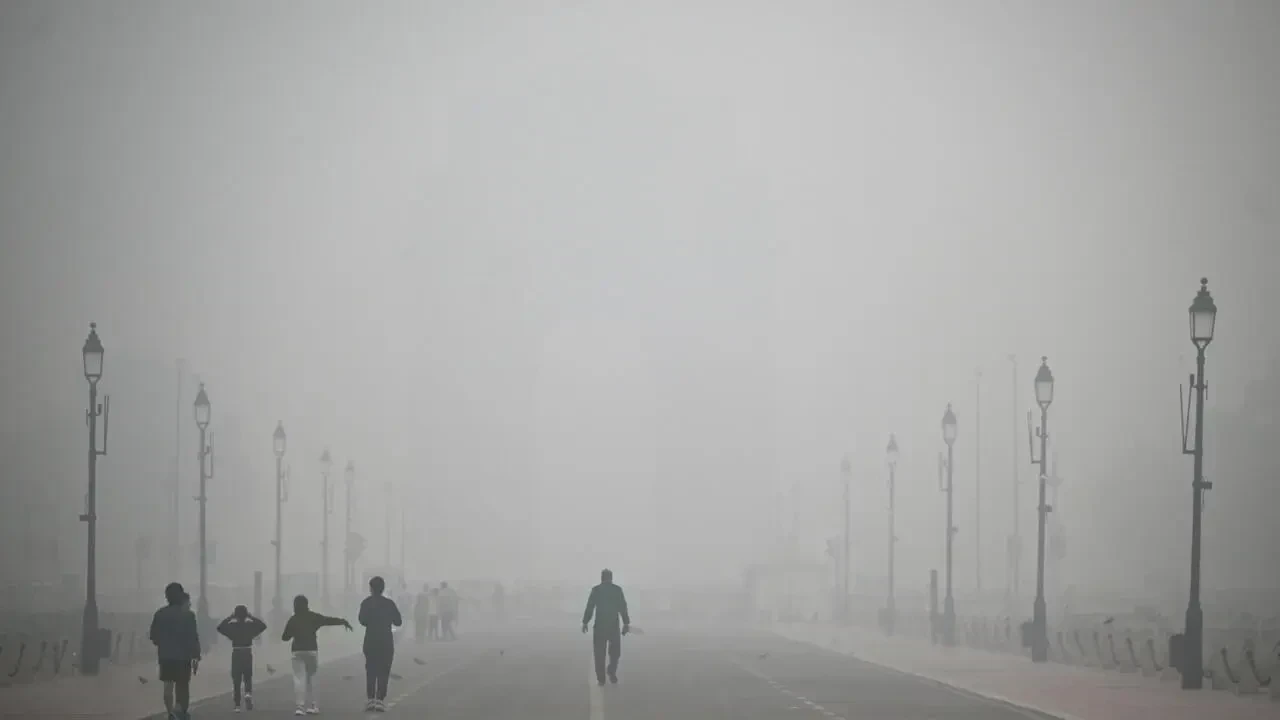
As winter approaches, Delhi finds itself grappling with a familiar but alarming situation. The city is shrouded in a dense grey haze, making the sun appear as a dim orange blur and causing discomfort with each breath taken. This once termed “poor air quality” has progressed into a severe public health crisis.
The smog enveloping Delhi is a result of various intertwined factors—geographical conditions, urban expansion, and human activities. For many, this toxic atmosphere is now an unavoidable reality, influencing every aspect of their lives.
With air quality indices reaching unsafe thresholds regularly, the pressing question is not whether Delhi has a smog issue, but the extent of its severity and how residents cope in these circumstances.
Smog is a toxic blend of smoke and fog, becoming increasingly intricate in Delhi. The city’s atmosphere is filled with hazardous particulate matter, particularly microscopic particles that infiltrate deeply into the lungs and bloodstream.
These harmful particles often remain unseen but have profound health implications. Meteorological conditions that trap them near the ground exacerbate the situation, forming a dense, suffocating layer over the metropolis.
The winter climate and geographical layout significantly contribute to Delhi's pollution problem. Colder temperatures cause warm air to be trapped, keeping pollutants close to the ground and minimizing dispersion, transforming everyday emissions into a perilous smog.
Delhi’s growing vehicle population plays a substantial role in its air quality deterioration. Traffic congestion from numerous cars leads to prolonged idling, releasing exhaust fumes. Despite tighter emission regulations, the scale of vehicles exceeds compliance capabilities.
Diesel trucks and older vehicles are substantial offenders.
Rapid urbanization has turned construction dust into a frequent pollutant. Major infrastructure developments release fine particulate matters into the air, and inadequate dust control during dry winters exacerbates this issue.
Industries and power plants surrounding Delhi release significant pollutants, compounding the air quality challenges. Many facilities continue to contribute to pollution, often ignoring environmental regulations.
A heavily debated contributor is the crop residue burning from neighboring regions. Smoke traveling from burning fields affects Delhi’s air quality, leading to sharply increased pollution levels during this period.
Delhi hospitals report escalating cases of respiratory distress, persistent coughing, and tightening in the chest during smog phases. Vulnerable populations, especially children and the elderly, experience spikes in asthma and bronchitis cases.
Even those in prime health notice dips in lung capacity following sustained exposure.
Prolonged exposure to polluted air raises the dangers of heart ailments, strokes, and chronic respiratory diseases. Experts warn that repeated exposure can result in permanent health damage, particularly for those in heavily polluted zones.
Living amidst perpetual environmental hurdles impacts mental health, leaving residents anxious and fatigued due to limited outdoor activities and consistent health worries. Families with young children face added stress in their daily decisions.
Severe smog often results in school closures, work-from-home mandates, and the cancellation of outdoor events. Outdoor exercise routines and open-air markets become infrequently seen activities.
Visibility issues caused by smog hinder road, rail, and aviation travel, leading to delays and increased accident rates. Commuting becomes perilous and burdensome.
Facemasks have become a necessity in Delhi during smog seasons, with many households investing in air purifiers to ensure a safe indoor environment, especially for vulnerable family members.
Individuals limit time spent outdoors, particularly in the morning or evening when pollution peaks. Fitness regimens are confined to indoor spaces, and balconies are unused for extended periods.
Many turn to nutrition-rich diets, herbal remedies, and routine health checkups to fend off harmful effects. Healthcare providers recommend hydration and specific nutrients to ameliorate the body’s response to pollution.
Authorities often implement urgent measures like vehicle restrictions and industrial shutdowns during smog peaks. However, these are seen as temporary fixes without robust long-term solutions.
Efforts to promote carpooling and pollution awareness have increased. Nonetheless, changing behavior remains sluggish due to weak enforcement and support systems.
The rise in medical expenses and diminished productivity poses a heavy financial burden. Businesses see a rise in sickness-related absences as employees hesitate to commute.
Severe smog negatively impacts Delhi’s global image, leading tourists to alter or cancel plans, resulting in dwindling visitors to outdoor sites.
Children increasingly remain indoors, restricting essential outdoor activities. This shift brings long-lasting effects on their health and lifestyle.
Regular school disruptions and online learning sessions hinder academic progress. Parents find it challenging to maintain a balance between safety and continuous education.
Residents express mixed feelings; some reluctantly accept smog as part of city life, while others demand accountability and sustainable actions.
Despite ongoing struggles, discussions around sustainability are intensifying, with more residents engaging in eco-friendly practices, promoting electric transport, and urban planning.
Experts assert the importance of consistent efforts beyond short-term fixes. Transitioning to cleaner energy sources, improving public transport, and enforcing stricter industry regulations are vital.
Collective individual actions, such as less driving and better waste management, can significantly impact the situation. Real change hinges on systemic reforms paired with public commitment.
Climate shift predictions suggest that pollution episodes may escalate in frequency and severity, posing an enduring threat to urban air quality.
Delhi’s challenges highlight the dangers that face other rapidly urbanizing locales. Without proactive strategies, pollution hazards can spiral uncontrollably.
Delhi’s smog crisis transcends mere seasonal difficulties; it represents a serious urban dilemma. Millions navigate life within this polluted reality—parents concerned for their children's health, workers braving commutes, and patients filling hospitals.
While the resilience of residents is commendable, surviving should not be equated with accepting this state of affairs. Clean air is a fundamental need rather than a luxury. Increased awareness and public pressure signal that change is plausible—provided actions are equally urgent.
Until then, Delhi awakens daily beneath grey skies, hoping for cleaner air amidst the onslaught of pollution.
Disclaimer:
This article is intended solely for informative purposes and is based on environmental observations, trends, and health insights. It does not substitute for professional medical advice. Readers are encouraged to follow official guidelines and seek expert advice for health-related issues.

US Stocks Slide as AI Fears, Inflation and Oil Surge Weigh
US stocks dropped as AI disruption fears hit tech firms, inflation rose above forecasts, and oil pri

Pacific Prime Wins Top Honors at Cigna Awards 2026
Pacific Prime secured Top Individual Broker and Top SME Broker awards at Cigna’s Annual Broker Award

QatarEnergy Halts LNG Output After Military Attack
QatarEnergy has stopped LNG production after military attacks hit its facilities in Ras Laffan and M

Strong 6.1 Magnitude Earthquake Hits West Sumatra, No Damage
A 6.1 earthquake struck off West Sumatra, Indonesia. No casualties, damage, or tsunami alert reporte

Saudi Confirms Drone Strike on US Embassy Riyadh
Two drones hit the US Embassy in Riyadh, causing a small fire and minor damage. No injuries were rep

UAE Restarts Limited Flights as Regional Airspace Disruptions Continue
UAE restarts limited flights from Dubai as US-Israel attacks on Iran disrupt regional airspace, forc

Asia Faces Energy Shock After Iran Closes Strait
Iran shuts Strait of Hormuz amid US-Israel strikes, sending oil prices higher and raising serious en


Bank of Baroda Faces Abu Dhabi Legal Battle over NMC Collapse
Bank of Baroda’s involvement in Abu Dhabi litigation tied to the NMC Healthcare collapse raises repu

Top Museum Openings of 2026 Set to Transform Global Tourism
From Los Angeles to Abu Dhabi and Brussels, 2026 brings major museum launches—Lucas Museum, Guggenhe

UAE Tour Highlights UAE’s Strength in Hosting Global Sports Events
Abu Dhabi Sports Council says the successful UAE Tour reflects the UAE’s leading role in hosting maj

EU Seeks Clarity from US After Supreme Court IEEPA Ruling
European Commission urges full transparency from the US on steps after Supreme Court ruling, emphasi

SpaceX Launches 53 New Satellites for Expanding Starlink Network
SpaceX launches 53 Starlink satellites in two Falcon 9 missions, breaking reuse records and expandin

RTA Awards Contract for Phase II of Hessa Street Upgrade in Dubai
Phase II of Hessa Street Development to add bridges, tunnel, and upgraded intersections, doubling ca

UAE Gold Prices Today, Monday 16 February 2026: Dubai & Abu Dhabi Updated Rates
Gold prices in UAE on 16 Feb 2026 updated: 24K around AED 599.75/gm, 22K AED 555.25/gm, and 18K AED

Over 25 Ahmedabad Schools Receive Bomb Threat Email, Authorities Investigate
More than 25 schools in Ahmedabad evacuated after bomb threat emails mentioning Khalistan. Authoriti





