Post by : Mina Saadi
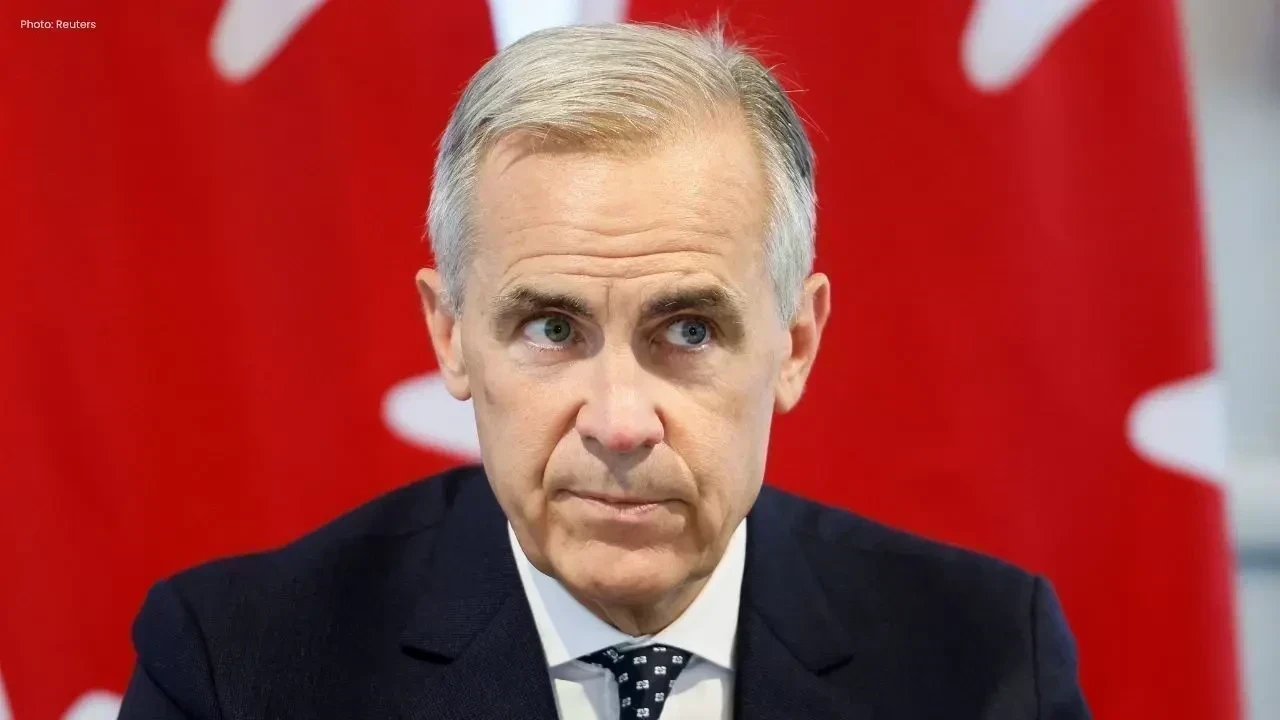
The head of the United Nations’ HIV/AIDS program has called on Prime Minister Mark Carney to reconsider his government’s intended cuts to foreign aid and health funding. She cautioned that such reductions could deepen global inequalities and reverse progress made in combating significant infectious diseases.
Speaking at the G20 leaders’ summit in Johannesburg, UNAIDS executive director Winnie Byanyima appealed to Canada and other donor nations to uphold their international commitments.
“My message to Prime Minister Carney, to Canada, and to all other donors is: stay the course,” Byanyima stated in an interview. “Without global solidarity, inequalities between nations will continue to grow, resulting in a more perilous world.”
These remarks follow Canada's announcement of its first funding reduction to the Global Fund, a crucial financing mechanism for addressing AIDS, tuberculosis, and malaria. The latest pledge from Ottawa is 17 percent lower than what was committed in 2022.
The Global Fund plays a vital role in supplying mosquito nets, HIV treatment, and essential medical supplies in some of the world’s poorest regions. Advocates express concern that Canada’s withdrawal will have the most severe impact on countries with fragile healthcare systems that rely heavily on donor contributions.
The funding cut aligns with a federal budget plan that calls for a $2.7 billion reduction in foreign aid spending over four years, despite Carney's earlier promise during the campaign that no cuts would occur.
Officials from the government argue that the rollback simply returns Canada's aid expenditure to pre-pandemic levels. During the COVID-19 pandemic, Ottawa had increased its contributions to combat rising health crises and past progress against diseases like AIDS and tuberculosis. The U.S. has also significantly reduced its aid this year.
Byanyima arrived at the G20 summit to showcase a comprehensive report commissioned by South Africa, highlighting the growing divide between affluent and impoverished nations. The report warns that economic disparities are breeding public unrest, weakening political stability, and setting the stage for chaos.
It calls on governments to implement policies that narrow income gaps, strengthen social safety nets, and revise global financial regulations that entrap developing nations in debt cycles—exacerbated by rising interest rates and climate-related disasters.
Byanyima highlighted Norway as a positive example of long-term equality investment, referencing Prime Minister Jonas Gahr Støre’s assertion that economically, his country has benefitted more from enhancing opportunities for women in the workforce than from decades of oil extraction.
“Reducing inequality between and within nations ultimately leads to stronger economies,” she asserted, encouraging Canada to join global efforts to tackle tax evasion and illegal financial flows.
When questioned about the backlash to the cuts, Carney defended the decision, stating that while the Canadian pledge to the Global Fund has decreased, its share within the fund's overall budget has actually increased due to the fund's reduced financial capacity.
“We have had to make pragmatic, responsible choices across the government, including reverting our aid budget to pre-COVID levels,” Carney stated in Johannesburg. “Even so, we are still targetting areas where our support will have the most significant impact, particularly on this continent.”
Foreign Affairs Minister Anita Anand backed his comments, reaffirming that Canada remains a noteworthy donor.
“Canada's contribution is still significant and impactful,” Anand remarked. “Africa remains our largest recipient of international assistance, and that backing will persist.”
However, critics express concern that the shift signals a troubling change from Canada’s longstanding commitment to human rights and development. Bloc Québécois MP Alexis Brunelle-Duceppe warned of a “disturbing” trend that closely ties foreign aid to trade motivations.
These funding cuts coincide with advocacy efforts leading up to World AIDS Day on Monday. Advocates emphasize that while the tools to eliminate the HIV epidemic are available, financial backing to provide lifesaving treatments to all those in need remains lacking.
Jayati Ghosh, a prominent Indian economist involved in presenting the inequality report alongside Byanyima, urged Canada to support reforms enabling developing countries to manufacture essential medicines. She stressed that rigid intellectual property regulations continue to keep medication prices high and stymie poorer nations' ability to produce their own treatments.
This issue gained renewed attention during the COVID-19 pandemic, as many low-income countries waited significantly longer for vaccines than wealthier nations, often receiving fewer doses than promised, while lacking consent to manufacture their own.
“Governments need to consider beyond foreign aid,” Ghosh urged, pointing out the need to assess global regulations they help maintain that worsen conditions for developing nations.

US Stocks Slide as AI Fears, Inflation and Oil Surge Weigh
US stocks dropped as AI disruption fears hit tech firms, inflation rose above forecasts, and oil pri

Pacific Prime Wins Top Honors at Cigna Awards 2026
Pacific Prime secured Top Individual Broker and Top SME Broker awards at Cigna’s Annual Broker Award

QatarEnergy Halts LNG Output After Military Attack
QatarEnergy has stopped LNG production after military attacks hit its facilities in Ras Laffan and M

Strong 6.1 Magnitude Earthquake Hits West Sumatra, No Damage
A 6.1 earthquake struck off West Sumatra, Indonesia. No casualties, damage, or tsunami alert reporte

Saudi Confirms Drone Strike on US Embassy Riyadh
Two drones hit the US Embassy in Riyadh, causing a small fire and minor damage. No injuries were rep

UAE Restarts Limited Flights as Regional Airspace Disruptions Continue
UAE restarts limited flights from Dubai as US-Israel attacks on Iran disrupt regional airspace, forc

Asia Faces Energy Shock After Iran Closes Strait
Iran shuts Strait of Hormuz amid US-Israel strikes, sending oil prices higher and raising serious en


Bank of Baroda Faces Abu Dhabi Legal Battle over NMC Collapse
Bank of Baroda’s involvement in Abu Dhabi litigation tied to the NMC Healthcare collapse raises repu

Top Museum Openings of 2026 Set to Transform Global Tourism
From Los Angeles to Abu Dhabi and Brussels, 2026 brings major museum launches—Lucas Museum, Guggenhe

UAE Tour Highlights UAE’s Strength in Hosting Global Sports Events
Abu Dhabi Sports Council says the successful UAE Tour reflects the UAE’s leading role in hosting maj

EU Seeks Clarity from US After Supreme Court IEEPA Ruling
European Commission urges full transparency from the US on steps after Supreme Court ruling, emphasi

SpaceX Launches 53 New Satellites for Expanding Starlink Network
SpaceX launches 53 Starlink satellites in two Falcon 9 missions, breaking reuse records and expandin

RTA Awards Contract for Phase II of Hessa Street Upgrade in Dubai
Phase II of Hessa Street Development to add bridges, tunnel, and upgraded intersections, doubling ca

UAE Gold Prices Today, Monday 16 February 2026: Dubai & Abu Dhabi Updated Rates
Gold prices in UAE on 16 Feb 2026 updated: 24K around AED 599.75/gm, 22K AED 555.25/gm, and 18K AED

Over 25 Ahmedabad Schools Receive Bomb Threat Email, Authorities Investigate
More than 25 schools in Ahmedabad evacuated after bomb threat emails mentioning Khalistan. Authoriti





