
Post by : Anis Karim
Currency trading can often seem distant, captured only in financial reports and charts. However, when the rupee fluctuates against the dollar, it has immediate effects on fuel costs, imported goods, foreign investments, and personal finances. Recently, the rupee has returned to the spotlight, raising questions about the underlying causes and potential ramifications.
This current focus is distinct from past sudden shocks; it emerges from a blend of global influences and local economic conditions. It reflects not a crisis, but rather a dynamic equilibrium between growth and stability, international trends and local realities. To understand the current interest in the rupee, one must consider the intricate interactions of economic, geopolitical, and psychological factors.
As the world’s primary reserve currency, the US dollar governs international trade, product pricing, and cross-border investments. Consequently, fluctuations in the dollar ripple across other currencies, affecting the rupee.
The rupee’s exchange rate against the dollar is shaped by the foreign exchange market's supply and demand. A variety of elements, including trade balances, foreign investment trends, interest rate disparities, and market sentiments, significantly influence its trajectory.
The rupee has demonstrated increased volatility in recent sessions, drawing increased analysis and attention from investors. Even slight fluctuations are now subject to scrutiny, as they often reflect broader shifts on the global and domestic fronts.
Certain exchange rates serve as psychological benchmarks, causing heightened market reactions when the rupee approaches them, amplifying media narratives and investor anxieties.
Stronger dollar values are anticipated, driven by expectations for sustained interest rates in the US. Federal Reserve messages focused on inflation management have boosted dollar demand worldwide.
Elevated US bond yields attract global investors to dollar-based assets, decreasing the inflow to emerging market currencies such as the rupee and intensifying downward pressure.
Global tensions often drive investors toward safe-haven assets. In times of uncertainty, the dollar gains at the expense of currencies perceived as riskier.
India remains primarily an importer of resources like crude oil. Escalating import costs that outpace export growth lead to increased dollar demand, resulting in a weakened rupee.
The behavior of foreign portfolio investors significantly impacts currency values. Instances of capital outflows can exert immediate pressure on the rupee, despite long-term stability.
Domestic inflation trends directly influence market expectations about future interest rates. Investors may react to perceived lower rates by shifting their currency preferences.
The Reserve Bank of India focuses on curbing excessive volatility rather than striving for a fixed exchange rate, maintaining order within the currency market.
India’s substantial foreign exchange reserves serve as protection against abrupt shifts, allowing the central bank to stabilize the rupee without pegging it to a specific value.
Clear communication from the central bank is crucial. Signals of stability reassure the market, helping to manage perceptions of volatility.
A depreciating rupee raises the cost of imports, contributing to domestic inflation especially through sectors like fuel, fertilizers, consumer electronics, and edible oils.
While immediate effects may be limited, sustained rupee weakness can eventually influence household costs and purchasing power.
A weaker rupee is advantageous for exporters, as it enhances the competitiveness of Indian goods on the global market. Industries including IT services, textiles, and pharmaceuticals often capitalize on currency depreciation.
Businesses reliant on imported raw materials face financial strains when the rupee weakens, often struggling to pass on increased costs.
Stable currency conditions are vital for foreign investment strategies. Erratic movements can induce caution among investors, influencing stock market performance.
While some sectors may thrive, industries such as aviation, oil, and heavy machinery may encounter challenges due to elevated operational costs.
India’s significant dependence on imported crude oil, especially priced in dollars, means that rising oil prices lead to increased dollar demand.
When oil prices surge alongside a stronger dollar, the rupee may confront dual pressures, heightening current account challenges.
India’s steady growth outlook, manageable external debts, and solid reserves imply stability rather than vulnerability.
Currency valuation is often relative. The rupee’s standing should be evaluated against other emerging currencies undergoing similar pressures.
In risk-averse scenarios, investors typically withdraw to safer assets. Consequently, rupee movements are reflective of overall trends rather than India-specific issues.
Despite short-term fluctuations, India remains attractive for long-term investments, thanks to its growth potential and steady policy implementation.
The rupee has historically faced stress during global financial tightening. Comparatively, stability has usually returned as global conditions stabilized.
Improved reserves and diversified exports have fortified India’s resilience since earlier financial crises.
Future movements will hinge on US inflation data, signals from central banks, oil price directions, and geopolitical events.
Economic growth figures, inflation measures, and regulatory cues will dictate expectations regarding interest rates and capital movements.
A declining rupee raises costs for international travel, education, and foreign购物.
Currency shifts also influence returns from foreign investments and inflation-linked expenses.
While a stronger rupee reduces import expenses, it may hinder export competitiveness. Policymakers strive for a balanced approach.
Most specialists assert that stability is more valuable than outright strength. Predictability fosters trust among investors and businesses.
The renewed attention on the rupee highlights a rapidly changing world rather than economic distress. International monetary tightening, shifts in capital flows, and geopolitical uncertainties are testing currencies globally. In this context, the rupee stands relatively strong, bolstered by robust fundamentals and proactive central bank actions.
Rather than a cause for concern, the recent fluctuations underscore the interconnected nature of the world economy. As long as volatility is kept in check and fundamentals remain sound, the rupee's journey reflects adaptation rather than decline. Investors, businesses, and citizens must grasp this framework to distinguish clarity from chaos.
This piece serves as informational content and does not substitute for financial, investment, or trading advice. Currency markets are influenced by both global and domestic risks, and readers should consult professionals before making financial choices.

US Stocks Slide as AI Fears, Inflation and Oil Surge Weigh
US stocks dropped as AI disruption fears hit tech firms, inflation rose above forecasts, and oil pri

Pacific Prime Wins Top Honors at Cigna Awards 2026
Pacific Prime secured Top Individual Broker and Top SME Broker awards at Cigna’s Annual Broker Award

QatarEnergy Halts LNG Output After Military Attack
QatarEnergy has stopped LNG production after military attacks hit its facilities in Ras Laffan and M
Strong 6.1 Magnitude Earthquake Hits West Sumatra, No Damage
A 6.1 earthquake struck off West Sumatra, Indonesia. No casualties, damage, or tsunami alert reporte

Saudi Confirms Drone Strike on US Embassy Riyadh
Two drones hit the US Embassy in Riyadh, causing a small fire and minor damage. No injuries were rep

UAE Restarts Limited Flights as Regional Airspace Disruptions Continue
UAE restarts limited flights from Dubai as US-Israel attacks on Iran disrupt regional airspace, forc
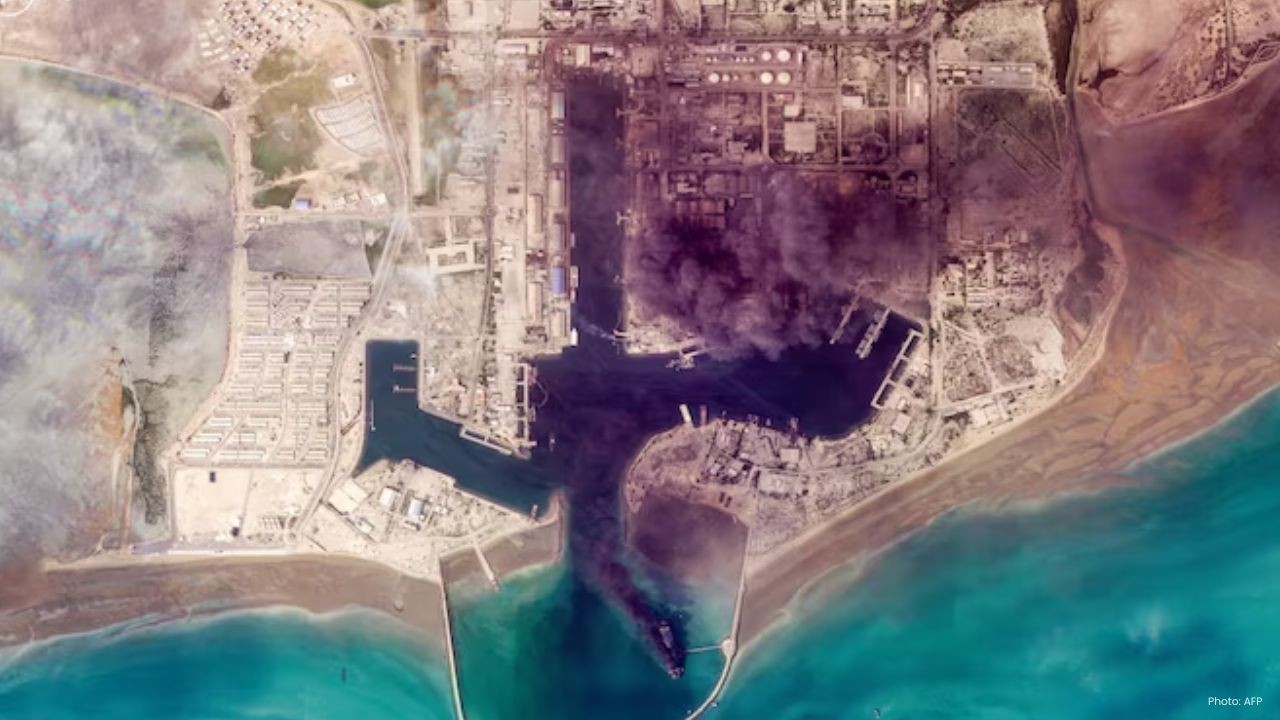
Asia Faces Energy Shock After Iran Closes Strait
Iran shuts Strait of Hormuz amid US-Israel strikes, sending oil prices higher and raising serious en


Bank of Baroda Faces Abu Dhabi Legal Battle over NMC Collapse
Bank of Baroda’s involvement in Abu Dhabi litigation tied to the NMC Healthcare collapse raises repu

Top Museum Openings of 2026 Set to Transform Global Tourism
From Los Angeles to Abu Dhabi and Brussels, 2026 brings major museum launches—Lucas Museum, Guggenhe

UAE Tour Highlights UAE’s Strength in Hosting Global Sports Events
Abu Dhabi Sports Council says the successful UAE Tour reflects the UAE’s leading role in hosting maj

EU Seeks Clarity from US After Supreme Court IEEPA Ruling
European Commission urges full transparency from the US on steps after Supreme Court ruling, emphasi

SpaceX Launches 53 New Satellites for Expanding Starlink Network
SpaceX launches 53 Starlink satellites in two Falcon 9 missions, breaking reuse records and expandin

RTA Awards Contract for Phase II of Hessa Street Upgrade in Dubai
Phase II of Hessa Street Development to add bridges, tunnel, and upgraded intersections, doubling ca

UAE Gold Prices Today, Monday 16 February 2026: Dubai & Abu Dhabi Updated Rates
Gold prices in UAE on 16 Feb 2026 updated: 24K around AED 599.75/gm, 22K AED 555.25/gm, and 18K AED

Over 25 Ahmedabad Schools Receive Bomb Threat Email, Authorities Investigate
More than 25 schools in Ahmedabad evacuated after bomb threat emails mentioning Khalistan. Authoriti