Post by : Anis Karim
The advent of Artificial Intelligence is altering the job market faster than anticipated. Unlike previous waves of technological change that primarily affected manual labor, AI now extends to cognitive tasks, transforming areas like data processing, creative functions, client service, and even healthcare diagnostics.
The transition is swift, with many companies adopting AI technologies in just a few months—resulting in abrupt shifts in employment trends, hiring practices, and organizational structures. This rapid evolution generates widespread apprehension among workers across various sectors.
The disruption caused by AI isn't uniform; certain sectors are being impacted more significantly.
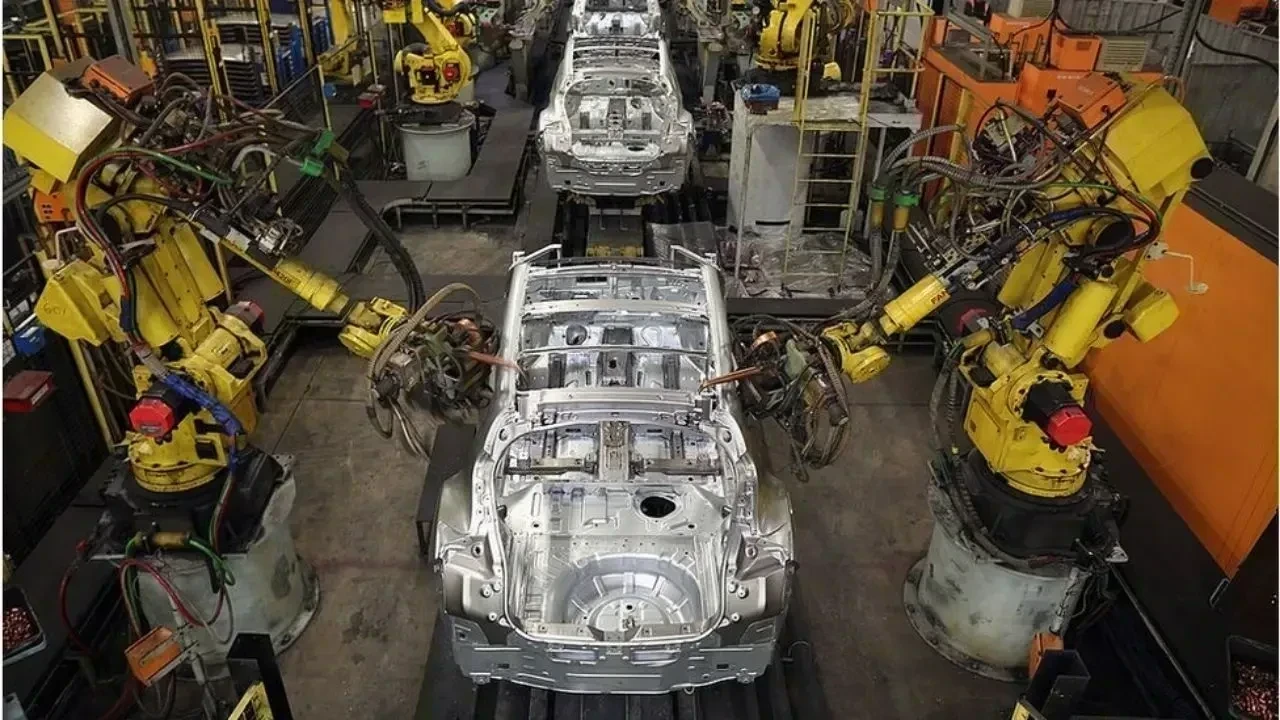
Positions featuring repetitive tasks, like data entry and basic administrative functions, are becoming increasingly automated. In manufacturing, robotics driven by AI are taking over assembly lines, while predictive technologies minimize the need for manual inspection.
Moreover, white-collar jobs are also vulnerable. AI systems now facilitate report generation, contract review, marketing development, and legal research, challenging the traditional notion that higher education ensures job security.
While media narratives often focus on job losses, a quieter phenomenon is job transformation. Many current positions are evolving rather than vanishing.
Workers will increasingly partner with AI tools, overseeing outcomes, making complex decisions, and managing unique problems. This evolution demands a new skillset, emphasizing technical prowess, adaptability, and critical thinking over routine tasks.
However, this change isn't constant—employees lacking training or digital competencies face the risk of being left behind, exacerbating disparities in the labor market.
AI's influence is also giving rise to new job categories. Demand is on the rise for roles related to AI system development, data management, cybersecurity, and oversight functions.
Nevertheless, job creation often lags behind job displacement, leading to skills mismatches—new roles require expertise that those displaced may lack. This underscores the urgent need for reskilling, which can be particularly challenging for mid-career professionals.
AI is not just altering job numbers but also affecting wage structures. Skilled workers harnessing AI often enjoy enhanced productivity and better remuneration. Conversely, those in roles subject to automation may experience wage stagnation due to oversupply.
In several industries, businesses are increasingly relying on gig work or contract positions, leading to diminished job security. This shift raises questions about job quality, benefits, and long-term security, particularly in regions with limited social safety supports.
AI's repercussions on labor markets differ widely based on geography. Economically advanced nations with robust digital infrastructures are better suited to adapt to AI disruptions through innovation and retraining measures. Conversely, developing nations, heavily reliant on manual labor, face substantial risks.
In countries like India, there exists a complex challenge: AI threatens low-skill service roles while simultaneously creating opportunities in tech-centric sectors. The final impacts hinge significantly on the educational framework, policy developments, and access to digital training.
A major challenge lies in the disconnect between education and employment needs. Many educational frameworks were constructed for stable job trajectories, not for rapid technological shifts.
AI necessitates seamless learning, while conventional educational settings often focus on fixed syllabi. This incongruity leaves graduates unprepared, resulting in frustration for employers. Continuous education has become crucial, yet access remains inconsistent.
Beyond economic implications, the human side of AI disruption is critical. Job uncertainty can harm mental health, self-esteem, and future planning. Workers are not just concerned about job loss but also about their relevance in an evolving market.
This anxiety resonates particularly with younger professionals entering unpredictable job markets and older individuals unsure about their ability to adapt. The emotional toll of this technological shift is becoming increasingly evident in workplace dynamics.
Governments struggle to keep pace with rapid technological developments. Existing labor policies, social support systems, and training frameworks were not designed for the disruptions caused by AI.
Current policy efforts are centered on reskilling, ethical considerations surrounding AI, and job protection. Yet, implementation often lags, risking a gap between technological advancements and societal readiness.
A key question remains: Will AI ultimately generate more jobs than it eliminates? Historically, technology has led to net job growth over time, but the transition phases can be tumultuous. AI's impact may mirror this pattern; however, the rapid shift poses unique challenges.
The timing of job creation and reskilling is critical. If the pace lags too far behind job loss, prolonged unemployment and inequality may become entrenched issues.
AI is not merely altering labor markets—it is redefining them entirely. Future employment will hinge on adaptability, learning capabilities, and human insight rather than on traditional job roles.
Whether AI serves as a catalyst for widespread advantage or reinforces inequalities will significantly depend on our present actions. Proactive investment in education, comprehensive reskilling, and informed regulations will dictate whether workers harness AI's potential or become victims of it.
Disclaimer:
This article serves informational purposes. The effects of AI on labor markets differ significantly across various industries, regions, and competencies, and outcomes may evolve with changes in technology and policies.

US Stocks Slide as AI Fears, Inflation and Oil Surge Weigh
US stocks dropped as AI disruption fears hit tech firms, inflation rose above forecasts, and oil pri

Pacific Prime Wins Top Honors at Cigna Awards 2026
Pacific Prime secured Top Individual Broker and Top SME Broker awards at Cigna’s Annual Broker Award

QatarEnergy Halts LNG Output After Military Attack
QatarEnergy has stopped LNG production after military attacks hit its facilities in Ras Laffan and M

Strong 6.1 Magnitude Earthquake Hits West Sumatra, No Damage
A 6.1 earthquake struck off West Sumatra, Indonesia. No casualties, damage, or tsunami alert reporte

Saudi Confirms Drone Strike on US Embassy Riyadh
Two drones hit the US Embassy in Riyadh, causing a small fire and minor damage. No injuries were rep

UAE Restarts Limited Flights as Regional Airspace Disruptions Continue
UAE restarts limited flights from Dubai as US-Israel attacks on Iran disrupt regional airspace, forc

Asia Faces Energy Shock After Iran Closes Strait
Iran shuts Strait of Hormuz amid US-Israel strikes, sending oil prices higher and raising serious en


Bank of Baroda Faces Abu Dhabi Legal Battle over NMC Collapse
Bank of Baroda’s involvement in Abu Dhabi litigation tied to the NMC Healthcare collapse raises repu

Top Museum Openings of 2026 Set to Transform Global Tourism
From Los Angeles to Abu Dhabi and Brussels, 2026 brings major museum launches—Lucas Museum, Guggenhe

UAE Tour Highlights UAE’s Strength in Hosting Global Sports Events
Abu Dhabi Sports Council says the successful UAE Tour reflects the UAE’s leading role in hosting maj

EU Seeks Clarity from US After Supreme Court IEEPA Ruling
European Commission urges full transparency from the US on steps after Supreme Court ruling, emphasi

SpaceX Launches 53 New Satellites for Expanding Starlink Network
SpaceX launches 53 Starlink satellites in two Falcon 9 missions, breaking reuse records and expandin

RTA Awards Contract for Phase II of Hessa Street Upgrade in Dubai
Phase II of Hessa Street Development to add bridges, tunnel, and upgraded intersections, doubling ca

UAE Gold Prices Today, Monday 16 February 2026: Dubai & Abu Dhabi Updated Rates
Gold prices in UAE on 16 Feb 2026 updated: 24K around AED 599.75/gm, 22K AED 555.25/gm, and 18K AED

Over 25 Ahmedabad Schools Receive Bomb Threat Email, Authorities Investigate
More than 25 schools in Ahmedabad evacuated after bomb threat emails mentioning Khalistan. Authoriti





