Post by : Anis Karim
In the past few years, eSIM technology has evolved from an optional feature to a primary communication standard for many smartphones. What began as a quiet integration in premium models has now emerged as a global movement, with some of the biggest manufacturers releasing smartphones that rely entirely on embedded SIMs rather than physical SIM cards.
This week, several countries reported a surge in eSIM-only launches, market announcements, carrier upgrades, and regulatory discussions. As more consumers transition to such devices, a major debate has resurfaced: Is the shift to eSIM-only smartphones truly improving the mobile experience, or is it limiting user freedom?
To understand the implications, we must examine the global factors driving the adoption and analyse both the benefits and the concerns.
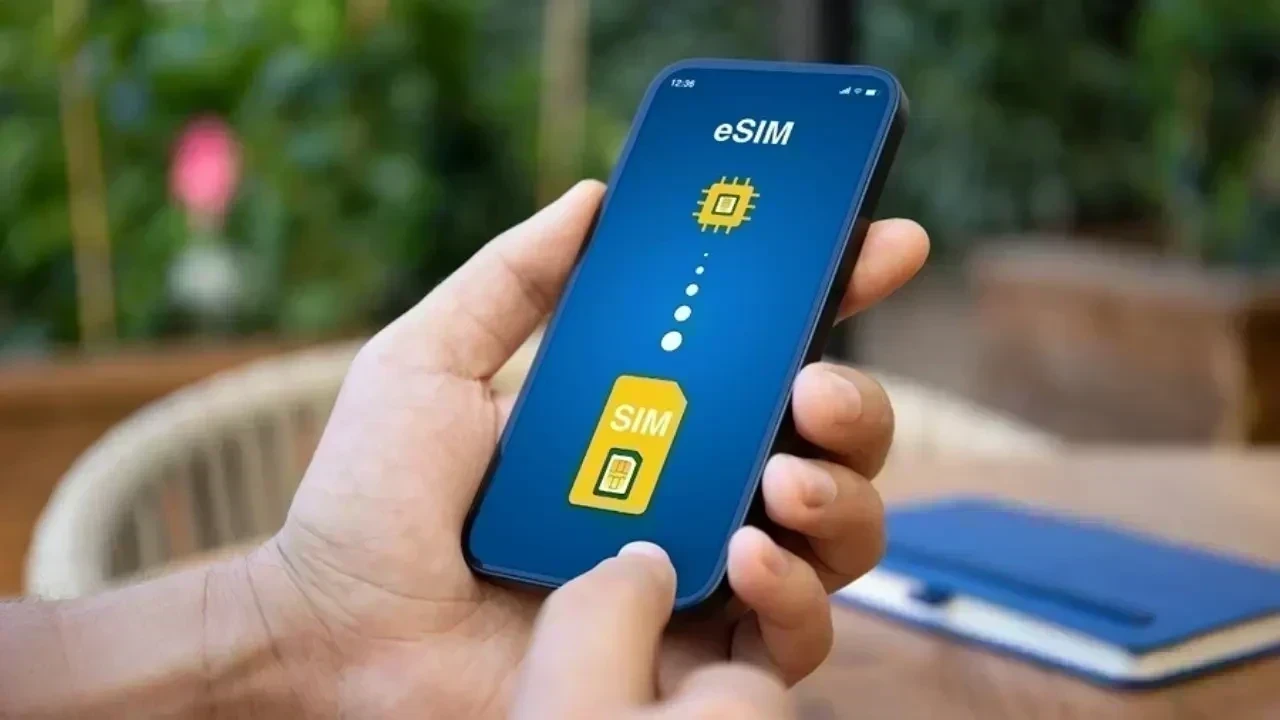
An eSIM (embedded SIM) is a programmable chip baked directly into the device's motherboard. Unlike traditional SIM cards, which users insert and remove manually, eSIMs are activated digitally.
Key features include:
remote carrier provisioning
multiple profiles stored at once
no physical tray or card
seamless switching between networks
The technology eliminates the need for tiny physical cards and simplifies connectivity — at least in theory.
Multiple developments around the world have accelerated the push toward eSIM-only designs:
more carriers adopting eSIM activation tools
widespread travel resuming globally
demand for dual-network flexibility
manufacturing trends favouring compact hardware
sustainability pressures to reduce plastic components
This year alone, dozens of smartphone models either launched as eSIM-only variants or expanded eSIM focus across regions previously dependent on physical SIM cards.
The shift, once isolated to a few flagship devices, is now a global trend shaping the future of mobile communication.
The move to eSIM isn’t just about convenience. Manufacturers have multiple strategic motivations.
Removing the SIM tray provides:
more space for battery modules
better waterproofing
cleaner internal architecture
room for additional antennas
sleeker aesthetics
In compact devices — especially folding phones, wearables, and compact flagships — every millimetre counts.
Physical SIMs can be:
stolen
swapped without permission
cloned
used to bypass two-factor authentication
eSIMs are embedded, making unauthorised tampering significantly harder.
Several manufacturers argue that eSIM-only devices reduce SIM-swap incidents and related fraud.
Different countries use different SIM form factors. Removing the SIM tray streamlines production by:
reducing component variation
eliminating SKU differences
simplifying logistics and packaging
Manufacturers ultimately cut costs while increasing global consistency.
eSIM integration aligns better with:
5G standalone networks
advanced IoT services
satellite connectivity
next-gen roaming standards
Many telecom innovations rely on eSIM compatibility rather than physical SIM architecture.
Manufacturers aren’t the only ones pushing the shift — carriers are equally motivated.
Carriers can manage activations digitally rather than through physical SIM distribution. This gives them:
faster onboarding
simplified number management
lower distribution costs
reduced SIM manufacturing expenses
Digital provisioning also keeps customers within the operator ecosystem longer.
SIM-swap crimes have plagued users worldwide. With eSIM authentication requiring device-based security, carriers can better protect customer identities.
Carriers benefit from offering global travellers:
instant roaming profiles
temporary data plans
country-specific eSIM packs
The travel-SIM industry is increasingly digital — favouring carriers who support eSIM.
Although some users are skeptical, many find eSIMs genuinely beneficial.
Users can change carriers without visiting a store.
Profiles download within seconds, enabling better flexibility.
eSIM-only phones often support multiple network profiles simultaneously, ideal for:
work vs. personal numbers
international travel
regional data packs
Removing the SIM tray improves the structural integrity of the device, reducing the ingress points for dust and water.
eSIM eliminates:
cutting SIM cards
mismatched SIM sizes
bent trays
broken pins
Everything becomes digital and much smoother.
Consumers no longer need to carry adapters, spare SIMs, or ejector tools.
The rise of eSIM-only smartphones also caused a wave of frustration this month, with many users and analysts voicing concerns.
The debate includes both practical issues and philosophical objections.
In regions where carrier monopolies or duopolies exist, eSIM-only devices could:
reduce consumer switching
increase carrier lock-in
limit competition
Physical SIM swapping has historically been a user’s easiest escape route from an unfriendly operator.
Some parts of the world still depend heavily on:
in-store activation
physical SIM replacement
multi-SIM device culture
eSIM adoption has not fully reached these regions, creating compatibility gaps and inconvenience.
While eSIM travel plans are booming, travellers in remote areas may face:
carriers lacking eSIM support
limited digital provisioning tools
the need for temporary physical SIMs
For these users, eSIM-only devices may cause friction.
Some users fear that eSIM-only designs strengthen the control of:
manufacturers
carriers
digital activation servers
Traditional SIM cards gave consumers tangible control over their network identity.
Repair technicians worldwide report complications with:
network tests
activation resets
user handovers
device refurbishing
Physical SIMs were often key for quick diagnostics.
Some critics argue eSIMs increase:
network traceability
centralised control
difficulty in maintaining anonymous numbers
While not universal, these concerns appear frequently in online discussions.
Governments worldwide are watching the trend closely.
EU regulations strongly support interoperability and reduced e-waste. eSIM adoption aligns with both goals, making policy favourable.
These markets see rapid eSIM carrier support, although debates around consumer freedom continue.
India is pushing strong eSIM adoption but remains cautious about nationwide carrier readiness.
Some countries leading in digital payments and mobile usage are quickly adapting, while others remain in transition.
Several regions are aggressively promoting eSIM services due to tech-forward consumer cultures and strong telecom infrastructure.
eSIM technology exists, but rollout varies dramatically by region. Infrastructure gaps influence overall adoption.
Device innovation cycles move quickly, while regulations move slowly.
Manufacturers want to eliminate:
legacy components
extra ports
outdated standards
This creates a natural tension with countries that are not yet ready for full eSIM adoption.
Probably — but not immediately.
A few predictions:
Flagship models adopt new standards earliest.
Manufacturers will slowly transition once carriers fully support eSIM.
In developing regions, affordability and accessibility matter more than innovation.
The industry already favours eSIM in compact devices.
Without compatible provisioning tools, activation becomes difficult.
Storing multiple eSIM profiles is essential when switching devices.
Users who travel frequently should confirm country-specific access.
Moving an eSIM from old phones to new ones may require:
carrier codes
account authentication
device-to-device transfer tools
eSIM is not just a technology; it’s an ecosystem that includes:
carriers
manufacturers
regulatory compliance
app-based activation flows
Understanding this ecosystem helps consumers avoid inconvenience.
The global rise of eSIM-only smartphones marks a major shift in mobile technology. While the transition offers significant advantages — convenience, digital flexibility, stronger security, and better design — it also comes with meaningful concerns around accessibility, carrier freedom, and global readiness.
For many users in advanced mobile markets, the switch is seamless. But for others, especially in regions with uneven telecom infrastructure, eSIM-only devices introduce new complexities.
Ultimately, the move to eSIM-only smartphones is neither purely convenient nor purely restrictive. It is a transformation that will require carriers, regulators, and consumers to adapt deliberately. The future is undoubtedly digital, but ensuring that digital freedom remains intact will be critical as this global transition accelerates.
This article provides general analysis of global eSIM adoption. Carrier capabilities, regional infrastructure, and manufacturer policies vary widely. Users should verify eSIM compatibility with local telecom providers before purchasing an eSIM-only device.

US Stocks Slide as AI Fears, Inflation and Oil Surge Weigh
US stocks dropped as AI disruption fears hit tech firms, inflation rose above forecasts, and oil pri

Pacific Prime Wins Top Honors at Cigna Awards 2026
Pacific Prime secured Top Individual Broker and Top SME Broker awards at Cigna’s Annual Broker Award

QatarEnergy Halts LNG Output After Military Attack
QatarEnergy has stopped LNG production after military attacks hit its facilities in Ras Laffan and M

Strong 6.1 Magnitude Earthquake Hits West Sumatra, No Damage
A 6.1 earthquake struck off West Sumatra, Indonesia. No casualties, damage, or tsunami alert reporte

Saudi Confirms Drone Strike on US Embassy Riyadh
Two drones hit the US Embassy in Riyadh, causing a small fire and minor damage. No injuries were rep

UAE Restarts Limited Flights as Regional Airspace Disruptions Continue
UAE restarts limited flights from Dubai as US-Israel attacks on Iran disrupt regional airspace, forc

Asia Faces Energy Shock After Iran Closes Strait
Iran shuts Strait of Hormuz amid US-Israel strikes, sending oil prices higher and raising serious en


Bank of Baroda Faces Abu Dhabi Legal Battle over NMC Collapse
Bank of Baroda’s involvement in Abu Dhabi litigation tied to the NMC Healthcare collapse raises repu

Top Museum Openings of 2026 Set to Transform Global Tourism
From Los Angeles to Abu Dhabi and Brussels, 2026 brings major museum launches—Lucas Museum, Guggenhe

UAE Tour Highlights UAE’s Strength in Hosting Global Sports Events
Abu Dhabi Sports Council says the successful UAE Tour reflects the UAE’s leading role in hosting maj

EU Seeks Clarity from US After Supreme Court IEEPA Ruling
European Commission urges full transparency from the US on steps after Supreme Court ruling, emphasi

SpaceX Launches 53 New Satellites for Expanding Starlink Network
SpaceX launches 53 Starlink satellites in two Falcon 9 missions, breaking reuse records and expandin

RTA Awards Contract for Phase II of Hessa Street Upgrade in Dubai
Phase II of Hessa Street Development to add bridges, tunnel, and upgraded intersections, doubling ca

UAE Gold Prices Today, Monday 16 February 2026: Dubai & Abu Dhabi Updated Rates
Gold prices in UAE on 16 Feb 2026 updated: 24K around AED 599.75/gm, 22K AED 555.25/gm, and 18K AED

Over 25 Ahmedabad Schools Receive Bomb Threat Email, Authorities Investigate
More than 25 schools in Ahmedabad evacuated after bomb threat emails mentioning Khalistan. Authoriti