Post by : Anis Karim
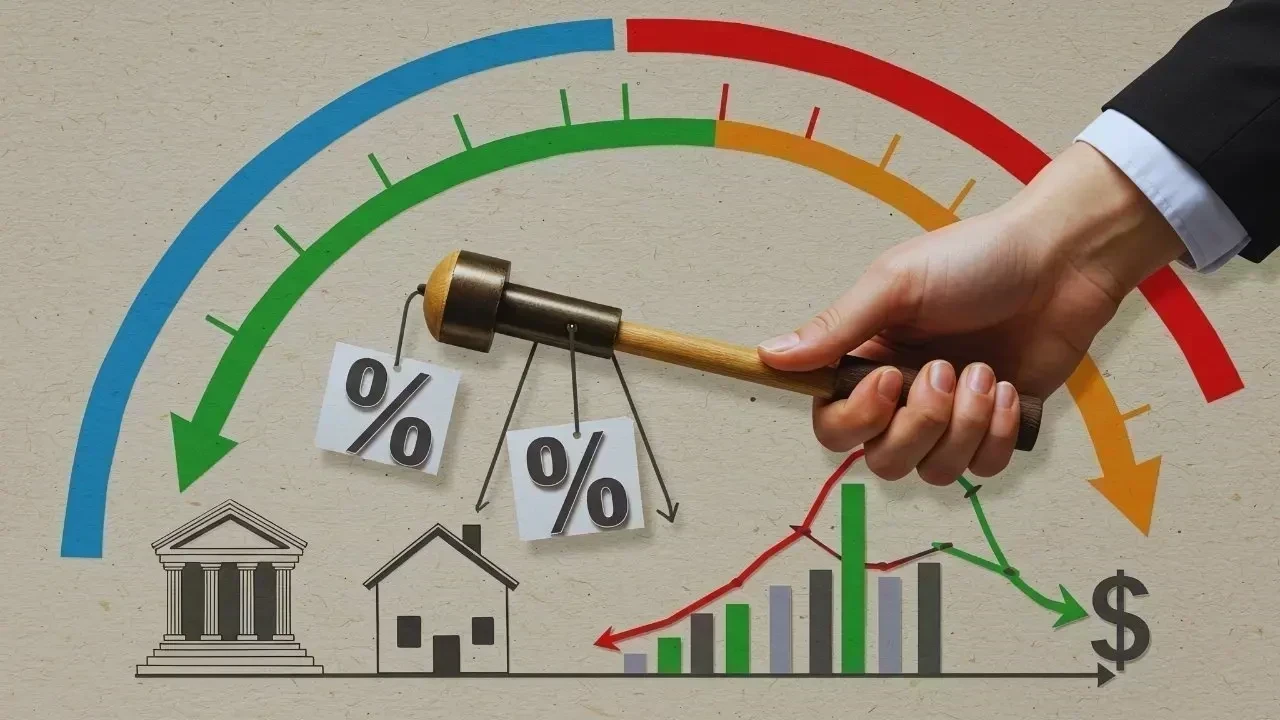
In 2026, three pivotal forces—inflation, interest rates, and the job market—are intricately linked, shaping economic landscapes worldwide. The interplay among these factors creates a fragile equilibrium that governments and central banks are striving to navigate. Rising inflation often compels a hike in interest rates to curb demand, creating a cascading effect on hiring and job availability. When the job market experiences a downturn, consumer spending declines, further fueling inflationary trends.
Described frequently as an economic triangle, this relationship has gained even greater relevance in our current context. Following a series of global disruptions—including pandemics, conflicts, supply chain crises, and assertive monetary policies—nations are working tirelessly to find stabilization. Leaders are treading a fine line as they seek to manage inflation, foster jobs, and ensure economic growth, influencing day-to-day realities like living costs and job stability for households.
Inflation signifies a steady rise in the price of goods and services, effectively eroding the purchasing power of money. High inflation directly affects everyday expenses for families, often leading to increased costs for essentials like food, fuel, and healthcare, even when wages don’t rise correspondingly.
Although inflation pressures have eased in many areas in 2026 compared to previous years, they remain a formidable issue, particularly in critical sectors like food and housing. The strain of even modest inflation on consumers is notable, as wage growth frequently lags behind price surges.
Persistent inflation has proven difficult to manage due to various factors, including ongoing supply chain adjustments and geopolitical tensions affecting energy prices. Concurrently, heightened consumer demand in certain areas exacerbates price challenges.
Institutions like the International Monetary Fund have cautioned that a swift return to pre-crisis inflation levels is unlikely, indicating a prolonged period of price instability ahead, requiring cautious policymaking.
Interest rates reflect the cost of borrowing capital. When central banks elevate rates, it makes loans pricier, which discourages excessive spending and investment, theoretically calming inflation. Conversely, lower rates encourage borrowing, boosting spending and job creation.
In 2026, interest rates remain significantly elevated compared to the previous decade's ultra-low rates. Central banks are cautious about cutting rates quickly, fearing a resurgence of inflation should they loosen monetary policies too much.
Lessons learned from past experiences inform central banks like the Federal Reserve and the Reserve Bank of India. Premature rate cuts can rekindle inflation, while extended high rates could stifle growth and job creation, necessitating careful data analysis before policy adjustments.
Their policy choices resonate globally, affecting international investment flows and currency strength—often complicating export competitiveness for developing economies.
The job landscape in 2026 reveals a mixed bag. While sectors like healthcare, technology, and green energy thrive, others—particularly those dependent on borrowing—are facing challenges attributed to elevated interest costs. Industries such as real estate and manufacturing feel the pinch.
Although unemployment rates remain low in many regions, job security is waning, with more people reliant on gig contracts and short-term roles, raising concerns over stability.
Wage growth directly connects jobs and inflation. In tight labor markets, companies may boost wages to attract talent, pushing up consumer spending and consequently prices. In 2026, this wage-price cycle is under close watch by policymakers.
While wage improvements have been noted in certain economies, they often fail to keep pace with rising living costs, sparking public dissatisfaction and calls for greater income equality.
Typically, rising inflation leads to higher interest rates as central banks act to curtail demand and stabilize price growth. However, this strategy has delayed effects, with impacts taking considerable time to manifest in the economy.
In 2026, policymakers face challenges from the lagging results of prior rate hikes, struggling to find a balance while inflation shows signs of easing amidst an unfolding economic slowdown precipitated by stringent monetary policies.
Elevated interest rates restrict businesses' borrowing capabilities, forcing delays in investments and sometimes leading to job cuts as firms work to manage costs. This poses direct ramifications for employment and wage dynamics.
Small businesses are particularly at risk; high borrowing costs can threaten their survival and lead to job reductions at the community level.
Strong employment levels typically boost consumer demand, potentially escalating prices if supply can't meet demand. Conversely, weakened job markets can slow spending and alleviate inflationary pressures.
This ongoing feedback loop complicates the management of the economic triangle. Adjustments targeting one aspect ultimately reverberate across the others.
Middle-income families face a challenging landscape where higher inflation elevates household expenditures, and increased interest rates inflate borrowing costs. The uncertainty surrounding jobs complicates long-term planning.
In 2026, many families are focusing on saving and minimizing non-essential expenditures, behavior that further influences broader economic growth.
For young individuals entering the job market, prospects are challenging. Although opportunities exist, competition is fierce, and entry wages often lag behind rising living costs. The burden of high-interest loans for education hampers their prospects further.
This pressure is shaping career decisions, with a growing number favoring secure roles over riskier ventures.
Companies must now navigate rising costs, wage demands, and expensive borrowing. Many opt to prioritize automation and improving efficiency over expanding staff. While this can enhance productivity, it raises concerns about future employment opportunities.
Governments are increasingly utilizing fiscal measures to energize job creation and economic growth. Investments in infrastructure, healthcare, and renewable energy are viewed as pivotal to creating jobs without exacerbating inflation.
Targeted subsidies and tax reliefs are also being deployed to shield vulnerable groups from soaring living costs.
Support systems for unemployment, food security, and healthcare play a vital role in alleviating the pressures of economic tightening. In 2026, many governments are reevaluating these safety nets to ensure effective support amid uncertainty.
Advanced economies are concentrating on keeping inflation manageable while avoiding recession. Their dilemma revolves around balancing aging demographics, substantial debt, and slower growth with the need to sustain employment levels.
Emerging markets confront unique hurdles, grappling with inflation and interest rate discrepancies while dealing with capital flow instability. Elevated global interest rates risk curtailing investment and stunting job opportunities.
In 2026, economists are closely observing several critical indicators to predict trends:
Core inflation metrics, excluding food and energy variables
Wage progression relative to productivity levels
Participation rates in the labor force
Trends in business investments and credit expansions
These indicators are pivotal for assessing whether the economic triangle is trending toward equilibrium or instability.
The remainder of 2026 is likely to unfold with measured optimism. Although inflation may gradually decrease, fostering potential opportunities for central banks to alter interest rates, the job landscape could see tightening before any policy adjustments take effect.
Adaptability will be essential for both individuals and enterprises. Strategic financial planning, skill enhancement, and effective risk management will be imperative for thriving within an interconnected economic milieu.
Inflation, interest rates, and job markets are not isolated phenomena. They constitute a potent triangle that shapes our economic existence in 2026. Policymakers must adeptly manage these forces to avert recessionary spirals or unchecked inflationary growth.
For the public, understanding this intricate relationship clarifies uncertainties. The decisions made today by governments and financial authorities will significantly impact living standards, job availability, and future economic stability.
This article serves informational purposes and should not be taken as financial or investment advice. Economic conditions can change rapidly; readers are encouraged to seek guidance from qualified professionals regarding personal financial matters.

US Stocks Slide as AI Fears, Inflation and Oil Surge Weigh
US stocks dropped as AI disruption fears hit tech firms, inflation rose above forecasts, and oil pri

Pacific Prime Wins Top Honors at Cigna Awards 2026
Pacific Prime secured Top Individual Broker and Top SME Broker awards at Cigna’s Annual Broker Award

QatarEnergy Halts LNG Output After Military Attack
QatarEnergy has stopped LNG production after military attacks hit its facilities in Ras Laffan and M

Strong 6.1 Magnitude Earthquake Hits West Sumatra, No Damage
A 6.1 earthquake struck off West Sumatra, Indonesia. No casualties, damage, or tsunami alert reporte

Saudi Confirms Drone Strike on US Embassy Riyadh
Two drones hit the US Embassy in Riyadh, causing a small fire and minor damage. No injuries were rep

UAE Restarts Limited Flights as Regional Airspace Disruptions Continue
UAE restarts limited flights from Dubai as US-Israel attacks on Iran disrupt regional airspace, forc

Asia Faces Energy Shock After Iran Closes Strait
Iran shuts Strait of Hormuz amid US-Israel strikes, sending oil prices higher and raising serious en


Bank of Baroda Faces Abu Dhabi Legal Battle over NMC Collapse
Bank of Baroda’s involvement in Abu Dhabi litigation tied to the NMC Healthcare collapse raises repu

Top Museum Openings of 2026 Set to Transform Global Tourism
From Los Angeles to Abu Dhabi and Brussels, 2026 brings major museum launches—Lucas Museum, Guggenhe

UAE Tour Highlights UAE’s Strength in Hosting Global Sports Events
Abu Dhabi Sports Council says the successful UAE Tour reflects the UAE’s leading role in hosting maj

EU Seeks Clarity from US After Supreme Court IEEPA Ruling
European Commission urges full transparency from the US on steps after Supreme Court ruling, emphasi
SpaceX Launches 53 New Satellites for Expanding Starlink Network
SpaceX launches 53 Starlink satellites in two Falcon 9 missions, breaking reuse records and expandin

RTA Awards Contract for Phase II of Hessa Street Upgrade in Dubai
Phase II of Hessa Street Development to add bridges, tunnel, and upgraded intersections, doubling ca

UAE Gold Prices Today, Monday 16 February 2026: Dubai & Abu Dhabi Updated Rates
Gold prices in UAE on 16 Feb 2026 updated: 24K around AED 599.75/gm, 22K AED 555.25/gm, and 18K AED

Over 25 Ahmedabad Schools Receive Bomb Threat Email, Authorities Investigate
More than 25 schools in Ahmedabad evacuated after bomb threat emails mentioning Khalistan. Authoriti