Post by : Sam Haleem
Photo: AFP
The border shared between Thailand and Cambodia has erupted into violence once more, following an unexpected attack in early December 2025 that disrupted a fragile peace. The episode dismantled the temporary tranquility established by the recent Kuala Lumpur Peace Accord, instilling fear among civilians and alarming regional stakeholders.
What unfolded were rapid escalations of military actions — from artillery exchanges and retaliatory airstrikes to troop deployments, evacuations, and a growing count of civilian casualties. This escalation represents the most severe altercation observed between the two nations since the early 2010s.
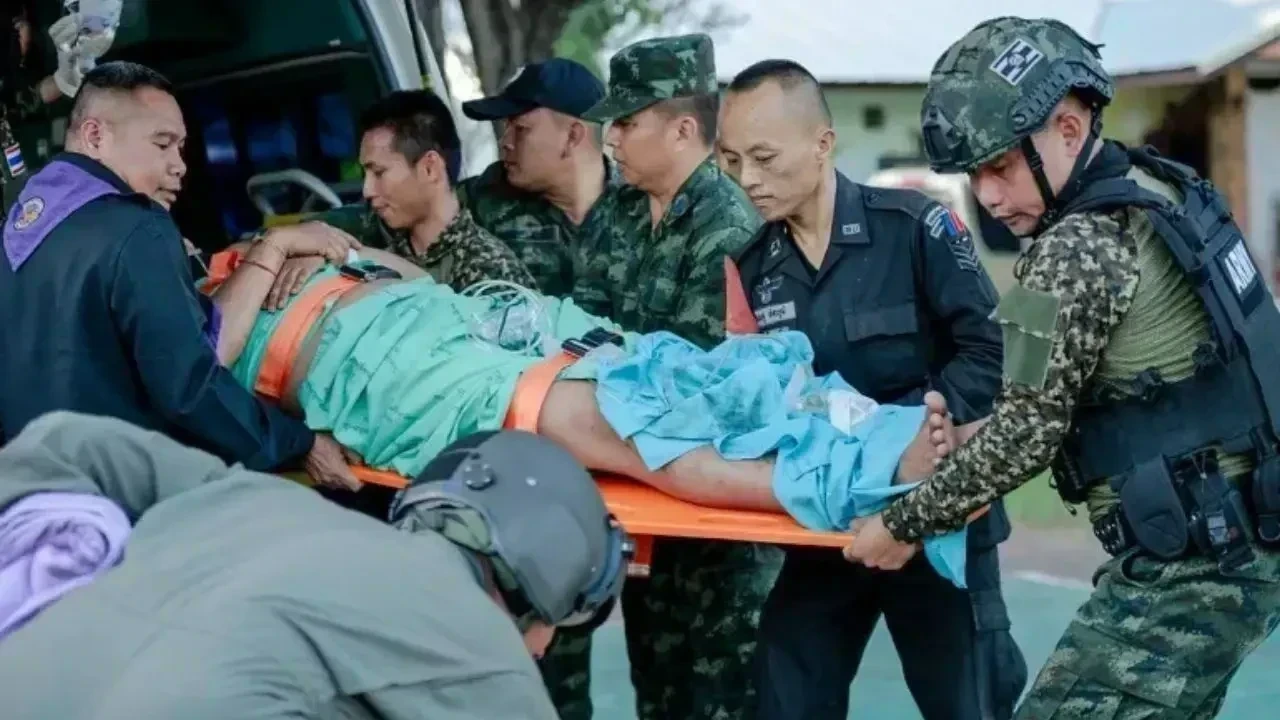
The conflict reportedly ignited in the early hours when Thai forces stationed at a disputed sector of the border were unexpectedly fired upon. Several soldiers sustained injuries, and one was confirmed dead during the initial confrontations. Officials in Thailand declared the assault intentional and unprovoked.
In retaliation, Thailand executed multiple airstrikes targeting Cambodian military assets, indicating a serious interpretation of the attack as a breach of the peace framework and a threat to national integrity.
Conversely, Cambodian officials refuted these claims, asserting that Thai airstrikes struck civilian areas and military positions without cause, resulting in injuries among both military personnel and civilians.
The Kuala Lumpur Peace Accord, which had been viewed as a significant diplomatic leap forward just two months prior, aimed to promote de-escalation, troop withdrawals, and collaborative monitoring efforts.
Nonetheless, underlying tensions persisted. Reports of injuries from landmines sustained by Thai soldiers in November triggered doubts and prompted a partial halt to the accord. Each side accused the other of breaching treaty agreements, leading to a deterioration of trust crucial for peace.
The recent violence underscored that the accords were inadequate to manage long-held grievances and evolving military dynamics.
Following the initial exchange of gunfire, Thai armed forces utilized air power to retaliate, marking a rare instance of such an escalation in border skirmishes, reflecting the critical nature of the situation.
Cambodian authorities asserted that the airstrikes inflicted injuries on civilians, including vulnerable populations residing near the border. While both sides recorded military losses, the full extent remains obscured due to restricted access to affected zones.
With artillery exchanges resonating across nearby communities, rapid evacuations ensued. Thai officials dispatched hundreds of thousands of civilians to safer locations inland.
Schools, transportation, and local businesses in border areas were halted, prompting a humanitarian crisis as displaced Cambodian families similarly faced peril.
Families fled with only essentials, left uncertain about their future return.
Reports and satellite imagery indicate an alarming increase in troop numbers on both sides:
Deployment of armored units
Repositioning of artillery batteries
Strengthening of border patrols
Enhancement of defensive structures
Such mobilization raises concerns that these clashes may not be isolated incidents but could signal the onset of a larger military conflict.
The disputes along the Cambodia-Thailand border are entrenched in historical context, traced back to colonial maps established during French dominion over Cambodia. Key areas, particularly around ancient temples and agricultural lands, remain ambiguously defined.
Conflicting claims over these territories heighten sensitivity to military movements, making escalation probable.
The existence of historic temples, including UNESCO sites, intensifies the stakes, as control over these structures is laden with national pride, leading to increased political tension.
Onset of violence invariably fuels domestic nationalist sentiments, reducing the capacity for peaceful resolution.
The latest peace negotiation is not the first endeavor to maintain tranquility at the border. Various ceasefire attempts since the 1990s have faltered due to:
Distrust among military factions
Deficient monitoring frameworks
Political pressures from both capitals
Independent actions taken by local military leaders
Residual landmines along contested territories
The December conflict acts as a reminder that absent comprehensive border definitions, agreements remain at risk of collapse.
Families on both sides now confront:
Temporary accommodation
Shortages in essential supplies
Interrupted educational opportunities
Losses in agricultural income
Psychological strain
Farmers are barred from accessing their fields, traders are impeded at the borders, and children are unable to attend school, leading to disruption in the daily lives of communities that have long lived under the threat of conflict.
Should violence persist, the displaced population could swell dramatically. Humanitarian organizations are bracing for potential:
Emergency provisions of food supplies
Medical aid
Temporary refuge solutions
Cross-border aid coordination
The region, already strained from previous displacements, could face an overwhelming new refugee situation.
The breakdown of the peace agreement raises alarms for neighboring nations and regional entities, as the conflict poses risks to:
Trade route stability
Tourism sectors
Investor confidence
Security for border-adjacent communities
Diplomatic efforts are reportedly in motion aimed at reestablishing dialogue, but prevailing tensions remain a significant barrier.
Both Thailand and Cambodia rely greatly on tourism; thus, even conflicts occurring distantly from tourist hotspots can dampen visitor confidence, potentially leading to cancellations and financial setbacks.
Tourism-dependent provinces are already reflecting a downturn in bookings as the rivalry captures global media attention.
The border facilitates essential trade that sustains many local enterprises. Disruptions threaten to influence:
Agricultural trade
Import transactions
Logistics and transportation
Labour movements
If hostilities continue, the lasting economic price could be considerable.
Regional mediators may push for:
Immediate troop withdrawals from conflict zones
Investigations into border occurrences
Establishment of ceasefire monitoring
Maintaining open channels for communication to avert misunderstandings
However, achieving lasting peace will demand political commitment from both parties—an element missing in previous disputes.
If retaliatory actions persist, risks of:
Expanded air operations
Artillery exchanges
Engagement of additional forces
Accidental strikes in civilian areas
While a broader regional conflict is improbable, tensions continuing to escalate cannot be overlooked.
Ultimately, enduring peace hinges on:
Finalization of border definitions
Landmine removal initiatives
Deployment of impartial monitoring teams
Reduction of military presences in sensitive zones
Until these fundamental concerns are addressed, the potential for recurring conflict remains.
This situation illustrates the precariousness of peace accords amidst lingering historical grievances, mistrust, and undefined borders.
The adverse impact on civilians is frequently the most overlooked consequence of such conflicts, with entire generations enduring instability and displacement.
This recent escalation serves as a reminder for nations grappling with unresolved colonial-era boundaries. Long-term diplomatic commitments are essential to prevent dormant disputes from reigniting unexpectedly.
Southeast Asia benefits from considerable progress in areas of trade, connectivity, and growth. A lasting conflict between Thailand and Cambodia threatens not just bilateral stability, but the entire region's development.
Both nations must prioritize:
A prompt ceasefire
Protection of civilian lives
Support for rebuilding efforts
Transparent investigations at the borders
Reactivation of joint peace efforts
If these measures are not taken, the cycle of violence may spiral deeply into entrenched patterns once again.
Disclaimer:
This article summarizes recent publicly reported events and developments. Ongoing military situations evolve rapidly; details may change as more verified information becomes available.

US Stocks Slide as AI Fears, Inflation and Oil Surge Weigh
US stocks dropped as AI disruption fears hit tech firms, inflation rose above forecasts, and oil pri

Pacific Prime Wins Top Honors at Cigna Awards 2026
Pacific Prime secured Top Individual Broker and Top SME Broker awards at Cigna’s Annual Broker Award

QatarEnergy Halts LNG Output After Military Attack
QatarEnergy has stopped LNG production after military attacks hit its facilities in Ras Laffan and M

Strong 6.1 Magnitude Earthquake Hits West Sumatra, No Damage
A 6.1 earthquake struck off West Sumatra, Indonesia. No casualties, damage, or tsunami alert reporte
Saudi Confirms Drone Strike on US Embassy Riyadh
Two drones hit the US Embassy in Riyadh, causing a small fire and minor damage. No injuries were rep
UAE Restarts Limited Flights as Regional Airspace Disruptions Continue
UAE restarts limited flights from Dubai as US-Israel attacks on Iran disrupt regional airspace, forc
Asia Faces Energy Shock After Iran Closes Strait
Iran shuts Strait of Hormuz amid US-Israel strikes, sending oil prices higher and raising serious en


Bank of Baroda Faces Abu Dhabi Legal Battle over NMC Collapse
Bank of Baroda’s involvement in Abu Dhabi litigation tied to the NMC Healthcare collapse raises repu

Top Museum Openings of 2026 Set to Transform Global Tourism
From Los Angeles to Abu Dhabi and Brussels, 2026 brings major museum launches—Lucas Museum, Guggenhe

UAE Tour Highlights UAE’s Strength in Hosting Global Sports Events
Abu Dhabi Sports Council says the successful UAE Tour reflects the UAE’s leading role in hosting maj

EU Seeks Clarity from US After Supreme Court IEEPA Ruling
European Commission urges full transparency from the US on steps after Supreme Court ruling, emphasi
SpaceX Launches 53 New Satellites for Expanding Starlink Network
SpaceX launches 53 Starlink satellites in two Falcon 9 missions, breaking reuse records and expandin

RTA Awards Contract for Phase II of Hessa Street Upgrade in Dubai
Phase II of Hessa Street Development to add bridges, tunnel, and upgraded intersections, doubling ca

UAE Gold Prices Today, Monday 16 February 2026: Dubai & Abu Dhabi Updated Rates
Gold prices in UAE on 16 Feb 2026 updated: 24K around AED 599.75/gm, 22K AED 555.25/gm, and 18K AED

Over 25 Ahmedabad Schools Receive Bomb Threat Email, Authorities Investigate
More than 25 schools in Ahmedabad evacuated after bomb threat emails mentioning Khalistan. Authoriti