Post by : Sam Jeet Rahman
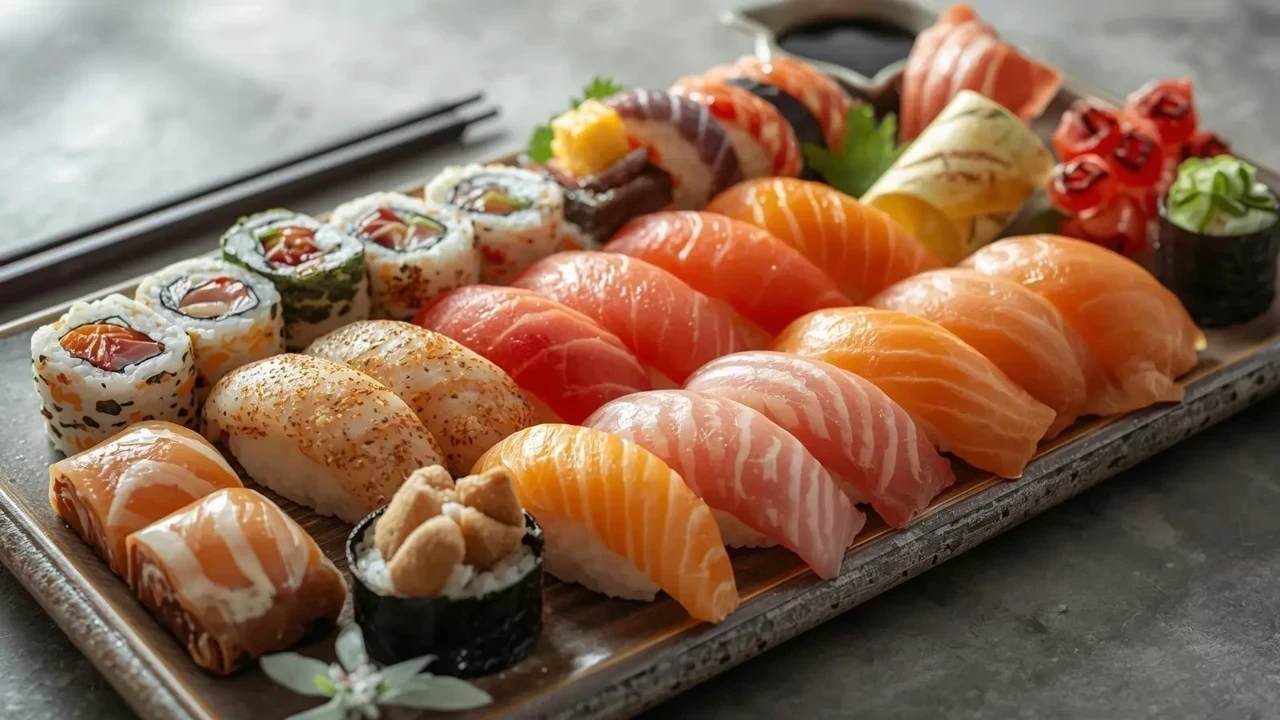
Sushi is one of Japan’s most recognizable foods, but many people outside Japan are confused by the different types they see on menus. Sushi is not just raw fish; it is a broad category built around vinegared rice combined with seafood, vegetables, or other toppings. Understanding the main sushi types helps you order confidently and appreciate the skill behind each style. This guide clearly explains Nigiri, Maki, Sashimi, Uramaki, and Temaki, how they differ, and when to try each.
Sushi is defined by seasoned rice, not raw fish. The rice is mixed with vinegar, sugar, and salt to create a slightly tangy base. Some sushi styles include rice, while others, like sashimi, do not but are commonly grouped with sushi in restaurants. The balance between rice, topping, texture, and freshness is what makes good sushi.
Nigiri is one of the most traditional and respected forms of sushi.
Nigiri consists of a small hand-pressed oval of sushi rice topped with a slice of fish or seafood. The topping may be raw, lightly cooked, or cured.
Common toppings include tuna, salmon, shrimp, eel, sea bream, and scallops.
Nigiri focuses on simplicity and balance, allowing the flavor of the fish to stand out without distractions.
It is usually eaten in one bite and lightly dipped fish-side down into soy sauce to avoid soaking the rice.
Nigiri is ideal for first-time sushi eaters who want a pure, classic experience.
Maki refers to rolled sushi wrapped in seaweed.
It is made by spreading rice on nori, adding fillings, and rolling it into a cylinder that is sliced into bite-sized pieces.
Maki rolls often include fish, vegetables, or a combination of both.
Popular types include cucumber rolls, tuna rolls, salmon rolls, and avocado rolls.
Maki is easier to eat and visually familiar, making it popular outside Japan.
This type is great for sharing and for those who like balanced flavors rather than pure fish focus.
Sashimi is often listed on sushi menus but is technically not sushi because it does not include rice.
Sashimi consists of thinly sliced raw fish or seafood served on its own.
Common sashimi options include tuna, salmon, yellowtail, octopus, and scallops.
The emphasis is entirely on freshness, texture, and knife skills.
Sashimi is usually eaten with soy sauce and a small amount of wasabi.
This style is best for diners who appreciate clean, pure seafood flavors and high-quality fish.
Uramaki is commonly known as inside-out sushi.
In uramaki, the rice is on the outside and the seaweed is wrapped around the filling inside.
The outer rice layer is often coated with sesame seeds, fish roe, or other toppings.
Famous examples include California rolls and dragon rolls.
Uramaki was popularized outside Japan, especially in the United States, to make sushi more approachable.
This type is ideal for beginners who prefer mild flavors or cooked ingredients.
Temaki is hand-rolled sushi shaped like a cone.
It is made by wrapping seaweed around rice and fillings, forming an ice-cream-cone shape.
Temaki is meant to be eaten immediately, usually by hand.
Fillings often include fish, vegetables, rice, and sauces.
Because it is freshly assembled and not sliced, temaki feels casual and interactive.
This style is popular at informal meals and sushi parties.
Nigiri focuses on rice and fish balance.
Maki emphasizes combination and variety.
Sashimi highlights pure fish quality.
Uramaki offers creative, layered flavors.
Temaki delivers freshness and casual eating.
Each type serves a different purpose depending on taste preference and dining setting.
For beginners, maki and uramaki are usually the easiest starting points because they are mild, familiar, and often include cooked or vegetable fillings.
Nigiri is ideal for those ready to experience traditional sushi.
Sashimi is best for confident seafood lovers.
Temaki is great for relaxed dining and trying multiple fillings without formality.
Sushi can be eaten with hands or chopsticks.
Nigiri should be dipped fish-side down in soy sauce.
Wasabi is traditionally placed by the chef; adding too much can overpower the fish.
Sushi is best eaten soon after it is served.
Ginger is meant to cleanse the palate between different types, not placed on sushi.
Outside Japan, sushi menus often focus heavily on rolls with sauces and toppings.
In Japan, sushi is simpler and more fish-forward.
Both styles are valid, but understanding the difference helps set expectations when dining internationally.
Sushi is a diverse and nuanced cuisine, not a single dish. Nigiri offers tradition, maki provides balance, sashimi showcases purity, uramaki delivers creativity, and temaki adds a casual touch. Knowing these differences helps you order with confidence and enjoy sushi the way it was meant to be experienced.
This article is for informational purposes only. Sushi preparation, ingredients, and styles may vary by region and restaurant. Always consider personal dietary needs and food safety when consuming raw seafood.

US Stocks Slide as AI Fears, Inflation and Oil Surge Weigh
US stocks dropped as AI disruption fears hit tech firms, inflation rose above forecasts, and oil pri

Pacific Prime Wins Top Honors at Cigna Awards 2026
Pacific Prime secured Top Individual Broker and Top SME Broker awards at Cigna’s Annual Broker Award

QatarEnergy Halts LNG Output After Military Attack
QatarEnergy has stopped LNG production after military attacks hit its facilities in Ras Laffan and M

Strong 6.1 Magnitude Earthquake Hits West Sumatra, No Damage
A 6.1 earthquake struck off West Sumatra, Indonesia. No casualties, damage, or tsunami alert reporte

Saudi Confirms Drone Strike on US Embassy Riyadh
Two drones hit the US Embassy in Riyadh, causing a small fire and minor damage. No injuries were rep

UAE Restarts Limited Flights as Regional Airspace Disruptions Continue
UAE restarts limited flights from Dubai as US-Israel attacks on Iran disrupt regional airspace, forc

Asia Faces Energy Shock After Iran Closes Strait
Iran shuts Strait of Hormuz amid US-Israel strikes, sending oil prices higher and raising serious en


Bank of Baroda Faces Abu Dhabi Legal Battle over NMC Collapse
Bank of Baroda’s involvement in Abu Dhabi litigation tied to the NMC Healthcare collapse raises repu

Top Museum Openings of 2026 Set to Transform Global Tourism
From Los Angeles to Abu Dhabi and Brussels, 2026 brings major museum launches—Lucas Museum, Guggenhe

UAE Tour Highlights UAE’s Strength in Hosting Global Sports Events
Abu Dhabi Sports Council says the successful UAE Tour reflects the UAE’s leading role in hosting maj

EU Seeks Clarity from US After Supreme Court IEEPA Ruling
European Commission urges full transparency from the US on steps after Supreme Court ruling, emphasi

SpaceX Launches 53 New Satellites for Expanding Starlink Network
SpaceX launches 53 Starlink satellites in two Falcon 9 missions, breaking reuse records and expandin

RTA Awards Contract for Phase II of Hessa Street Upgrade in Dubai
Phase II of Hessa Street Development to add bridges, tunnel, and upgraded intersections, doubling ca

UAE Gold Prices Today, Monday 16 February 2026: Dubai & Abu Dhabi Updated Rates
Gold prices in UAE on 16 Feb 2026 updated: 24K around AED 599.75/gm, 22K AED 555.25/gm, and 18K AED

Over 25 Ahmedabad Schools Receive Bomb Threat Email, Authorities Investigate
More than 25 schools in Ahmedabad evacuated after bomb threat emails mentioning Khalistan. Authoriti