Post by : Sam Jeet Rahman
Making smart money decisions today is one of the most powerful ways to secure financial stability tomorrow. Whether you’re just starting your financial journey or trying to recover from past mistakes, even small improvements can dramatically change your long-term wealth. The key is consistency, discipline, and choosing money moves that offer compounding benefits. This guide explains the most effective financial actions you can take right now to strengthen your savings, reduce risks, and build a future-proof plan.
Before making any advanced money moves, you must understand your current financial condition.
Current income and fixed expenses. Debts and interest rates. Existing savings and investments. Monthly non-essential spending.
A clear overview helps you identify leaks, opportunities, and priorities. Without this step, you will keep repeating the same financial patterns.
Automation removes willpower from the equation. When you automatically transfer a portion of your income into savings, you stay disciplined without effort.
You save before spending. You avoid skipping savings in tight months. Your money grows steadily over time.
Set up separate accounts for long-term savings, emergencies, and investments. Automate transfers the moment your salary arrives.
Life becomes easier when unexpected expenses don’t ruin your finances.
3–6 months of essential expenses, and 9–12 months if your income is unstable.
High-yield savings accounts, liquid mutual funds, or short-term fixed deposits.
A proper emergency fund protects you from dipping into investments or taking high-interest loans.
High-interest debt grows faster than most investments can. Clearing it early gives you guaranteed returns because you eliminate the interest you would have paid.
Credit cards, personal loans, buy-now-pay-later fees, revolving credit lines.
Pay more than the minimum amount. Shift balances to lower-interest options if possible. Use your bonuses or side income to reduce debt principal.
The simplest budgeting rule divides your after-tax income into three groups.
50 percent for needs such as rent, bills, groceries.
30 percent for wants such as travel, entertainment, hobbies.
20 percent for savings, investments, and debt repayment.
This plan builds balance and helps prevent lifestyle inflation.
You don’t need large capital to start investing. What matters is time.
Index funds, SIPs, ETFs, government securities, and diversified mutual funds.
Compounding works best when investments have more time to grow. Even small monthly amounts can grow into significant wealth.
Putting all your money in one place increases your vulnerability. Diversification spreads risk across different asset types.
Savings account for liquidity. Fixed deposits or bonds for stability. SIPs for growth. Gold for crisis protection.
Diversification ensures that if one asset underperforms, others remain stable.
Monthly tracking often hides overspending. Weekly tracking gives quicker control.
Use a simple app or spreadsheet. Categorize spending into food, transport, entertainment, shopping. Review totals every Sunday.
This habit alone can increase your savings by reducing unconscious spending.
Your credit score affects loans, rent approvals, and even job opportunities.
Pay dues on time. Keep your utilization below 30 percent. Avoid applying for too many loans.
A strong credit score gives better financial opportunities and lower interest rates.
Insurance is a financial shield, not just an expense.
Health insurance to reduce medical expenses. Term insurance to protect your family. Vehicle and home insurance for major losses.
Insurance prevents financial disasters during emergencies.
Saving alone has limits, but income has infinite potential.
Digital marketing, data analysis, AI tools, communication, specialized technical skills.
Higher income accelerates savings, debt repayment, and investments.
Financial growth becomes easier when goals are clear.
Buying a home, building retirement savings, starting a business, creating passive income.
Break these into yearly and monthly milestones so progress feels achievable.
Markets, income, and personal priorities change. Regular reviews help you adjust.
Budget, investments, debts, emergency fund, insurance coverage.
A review ensures your financial strategy stays aligned with your goals.
Improving your financial future doesn’t require sudden, dramatic changes. It’s the combination of small, smart decisions—automating savings, managing debt, diversifying investments, increasing income, and staying consistent. The sooner you implement these moves, the faster your money begins working for you. Financial security is built through daily habits, not big one-time actions. Start today, stay committed, and your future self will thank you.
This article offers general financial information and is not a substitute for personal financial planning or professional advice. Individual circumstances vary, and readers should consult a certified financial advisor before making investment, budgeting, or debt-related decisions. The author is not responsible for financial outcomes resulting from the use of this information.

US Stocks Slide as AI Fears, Inflation and Oil Surge Weigh
US stocks dropped as AI disruption fears hit tech firms, inflation rose above forecasts, and oil pri

Pacific Prime Wins Top Honors at Cigna Awards 2026
Pacific Prime secured Top Individual Broker and Top SME Broker awards at Cigna’s Annual Broker Award

QatarEnergy Halts LNG Output After Military Attack
QatarEnergy has stopped LNG production after military attacks hit its facilities in Ras Laffan and M

Strong 6.1 Magnitude Earthquake Hits West Sumatra, No Damage
A 6.1 earthquake struck off West Sumatra, Indonesia. No casualties, damage, or tsunami alert reporte

Saudi Confirms Drone Strike on US Embassy Riyadh
Two drones hit the US Embassy in Riyadh, causing a small fire and minor damage. No injuries were rep

UAE Restarts Limited Flights as Regional Airspace Disruptions Continue
UAE restarts limited flights from Dubai as US-Israel attacks on Iran disrupt regional airspace, forc
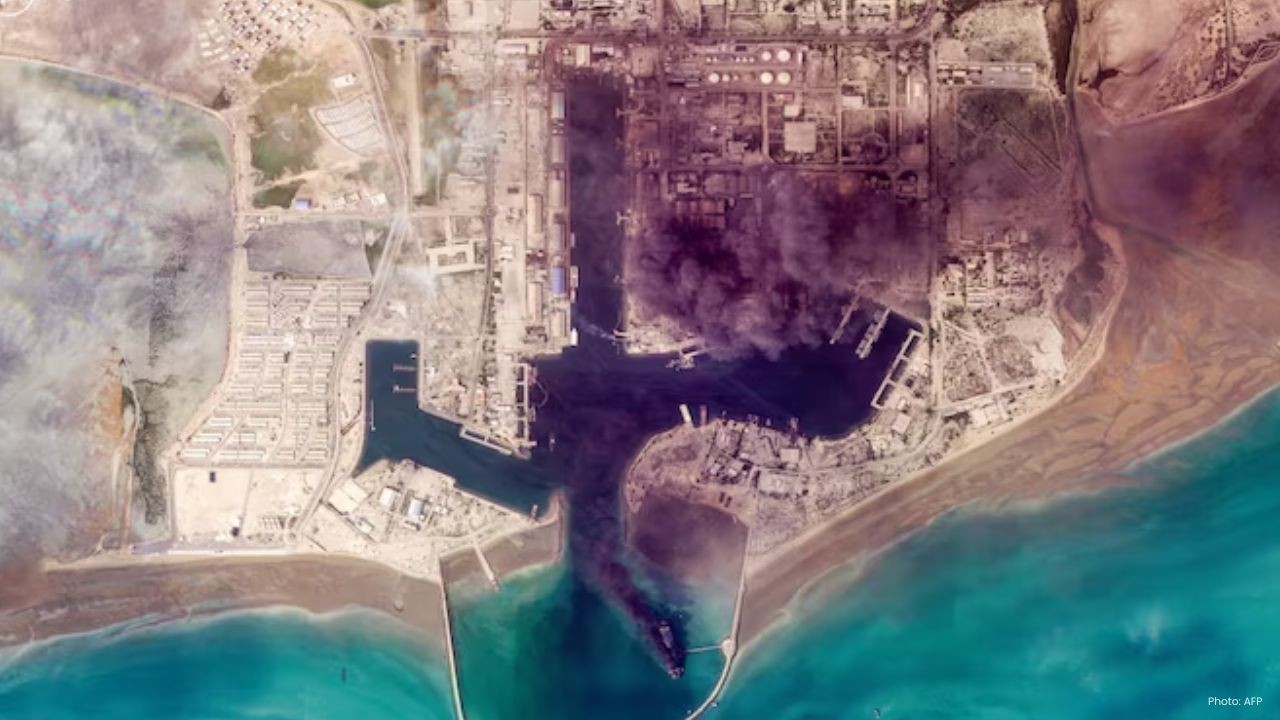
Asia Faces Energy Shock After Iran Closes Strait
Iran shuts Strait of Hormuz amid US-Israel strikes, sending oil prices higher and raising serious en


Bank of Baroda Faces Abu Dhabi Legal Battle over NMC Collapse
Bank of Baroda’s involvement in Abu Dhabi litigation tied to the NMC Healthcare collapse raises repu

Top Museum Openings of 2026 Set to Transform Global Tourism
From Los Angeles to Abu Dhabi and Brussels, 2026 brings major museum launches—Lucas Museum, Guggenhe

UAE Tour Highlights UAE’s Strength in Hosting Global Sports Events
Abu Dhabi Sports Council says the successful UAE Tour reflects the UAE’s leading role in hosting maj

EU Seeks Clarity from US After Supreme Court IEEPA Ruling
European Commission urges full transparency from the US on steps after Supreme Court ruling, emphasi

SpaceX Launches 53 New Satellites for Expanding Starlink Network
SpaceX launches 53 Starlink satellites in two Falcon 9 missions, breaking reuse records and expandin

RTA Awards Contract for Phase II of Hessa Street Upgrade in Dubai
Phase II of Hessa Street Development to add bridges, tunnel, and upgraded intersections, doubling ca

UAE Gold Prices Today, Monday 16 February 2026: Dubai & Abu Dhabi Updated Rates
Gold prices in UAE on 16 Feb 2026 updated: 24K around AED 599.75/gm, 22K AED 555.25/gm, and 18K AED

Over 25 Ahmedabad Schools Receive Bomb Threat Email, Authorities Investigate
More than 25 schools in Ahmedabad evacuated after bomb threat emails mentioning Khalistan. Authoriti