Post by : Anis Karim
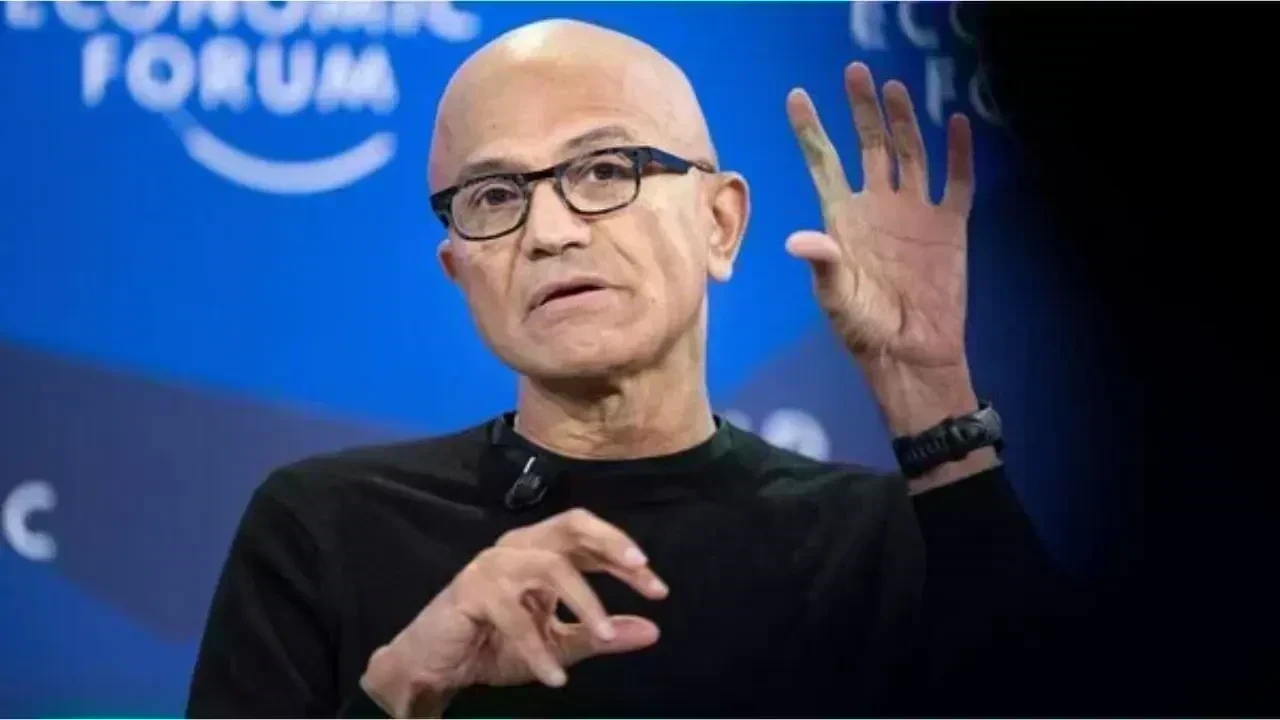
In 2026, artificial intelligence stands out as a groundbreaking innovation, promising sweeping changes across various sectors. However, this potential carries an immense obligation. At the World Economic Forum Annual Meeting in Davos, Switzerland, Microsoft’s CEO, Satya Nadella, called on AI developers and policymakers to prioritize tangible societal benefits. His insights have ignited a critical dialogue within the tech world regarding the ethical dimensions of AI development.
Leading a major technology corporation, Nadella's words resonate deeply. His appeal is not just for technological advancements but for maintaining public trust in AI and ensuring it gains acceptance from societies and governments alike.
Nadella's core message presented a stark warning: without demonstrable, widespread benefits that enhance daily life, AI risks losing its “social permission.” This permission signifies society's endorsement of AI technologies in everyday scenarios.
He stressed that AI should transcend mere novelty and narrow business profits — it should bring significant improvements in critical areas such as healthcare, education, and public services. For example:
In healthcare, AI can enhance diagnostic processes, assist in clinical decisions, and expedite drug development.
In education, AI tools can fashion personalized learning pathways and support diverse student requirements.
In public governance, AI can boost efficiency, encourage transparency, and enrich citizens' experiences.
If AI does not show noticeable advantages across these areas, trust from users and governmental support may decline.
“Social permission” means more than just regulatory endorsement—it reflects society’s implicit acceptance that a technology is safe, beneficial, and worth its resource expenditure. Nadella cautioned that the growing energy usage associated with AI must be justified with equal benefits to humanity and economic progress.
This outlook highlights a significant transition in how tech leaders should present AI's value proposition. It's no longer enough to simply innovate; these innovations must align with the needs of society. Failing to do so may lead to a backlash against AI, with increased regulatory restrictions, ethical concerns, and slower adoption rates.
One major issue Nadella pointed out is the environmental impact of AI. The training and operation of large AI models require significant energy and computing resources. As AI infrastructure expands, so does its carbon footprint, raising sustainability and climate change issues.
Should AI systems continue to require vast amounts of electrical energy without delivering corresponding benefits, Nadella warned, their credibility with the public could diminish. This issue intersects with larger discussions on responsible technology usage and the environmental repercussions of digital advancements.
Another challenge discussed by Nadella is the disparity in accessing AI's benefits. Currently, cutting-edge AI technologies are largely found in affluent nations and leading tech firms. This risks creating a technological gap between those who can leverage AI and those who cannot, hampering growth in productivity and essential services.
Such an imbalance could threaten AI's social legitimacy, fostering the belief that it serves only the powerful rather than benefiting the broader public. For AI to bring real transformation, its advantages must permeate all levels of society.
Beyond concerns about resource consumption and societal acceptance, Nadella cautioned against the potential for AI to become a speculative bubble, where excitement and investment may outstrip actual usefulness. Such a scenario would mean that hype around AI could dominate over real-world impacts on societal welfare and productivity.
To avert this, he advocated for more comprehensive adoption of AI—not just within major tech companies but also across governments, small businesses, and various sectors—to ensure the technology’s value is both robust and widespread.
This inclusive approach can be achieved by:
Governments investing in digital capabilities and workforce development.
Industries using AI to refine operations and enhance outcomes.
Educational institutions preparing students for an AI-driven future.
Such efforts will weave AI into the daily lives of individuals, rendering its benefits tangible and relevant.
Nadella's message also highlighted ethical considerations. The rapid advancement of AI raises critical issues related to privacy, bias, transparency, and responsibility. Fostering accountable AI governance—anchored in human values and ethical principles—is vital to maintaining public trust and preventing misuse.
AI developers need to collaborate with stakeholders—policymakers, civil society, and communities—to co-create frameworks that merge innovation with human rights and the interest of the public.
Strong governance necessitates effective collaboration among governments, global organizations, and private sectors. Platforms like Davos provide opportunities for dialogues to establish agreement on standards, manage cross-border data issues, and promote fair economic participation.
This collaborative framework is essential to ensure AI serves not only tech elites but contributes to addressing worldwide issues in education, healthcare, environmental adjustment, and economic equity.
As CEO of Microsoft, Satya Nadella plays a crucial part in guiding the global AI narrative and direction. Under his leadership, Microsoft has prioritized cloud services, AI integration, and ethical technology initiatives, positioning the company as a key player in discussions surrounding the future of technology.
His comments at Davos not only reflect corporate priorities but also highlight that the viability of AI hinges on collective responsibility among all ecosystem stakeholders.
Nadella’s remarks serve as a call to action for all AI firms—from established corporations to new startups. His urging to “make AI acceptable for people and governments” focuses on societal value, safety, and utility rather than purely on technical innovation.
This viewpoint inspires AI creators to broaden their horizons beyond commercial success and invest in solutions that align with societal needs, enhance lives, and correspond with fundamental human interests.
Satya Nadella’s presentation at the World Economic Forum signals a critical juncture in AI's development trajectory. His message is unequivocal: AI must be meaningful, equitable, and publicly accepted to prosper. As technology advances, it should not exist in isolation but rather as a catalyst that enriches healthcare, education, productivity, and well-being.
By advocating for impactful outcomes, equitable distribution of benefits, and responsible energy practices, Nadella’s message aligns with a broader vision of technology that prioritizes humanity over industry. The future of AI relies on trust, practical utility, and collective prosperity.
Disclaimer: This article is based on current reports and public statements and is intended for informational purposes only. Views and interpretations are subject to change as technology and policy discussions evolve.

US Stocks Slide as AI Fears, Inflation and Oil Surge Weigh
US stocks dropped as AI disruption fears hit tech firms, inflation rose above forecasts, and oil pri

Pacific Prime Wins Top Honors at Cigna Awards 2026
Pacific Prime secured Top Individual Broker and Top SME Broker awards at Cigna’s Annual Broker Award

QatarEnergy Halts LNG Output After Military Attack
QatarEnergy has stopped LNG production after military attacks hit its facilities in Ras Laffan and M

Strong 6.1 Magnitude Earthquake Hits West Sumatra, No Damage
A 6.1 earthquake struck off West Sumatra, Indonesia. No casualties, damage, or tsunami alert reporte

Saudi Confirms Drone Strike on US Embassy Riyadh
Two drones hit the US Embassy in Riyadh, causing a small fire and minor damage. No injuries were rep

UAE Restarts Limited Flights as Regional Airspace Disruptions Continue
UAE restarts limited flights from Dubai as US-Israel attacks on Iran disrupt regional airspace, forc

Asia Faces Energy Shock After Iran Closes Strait
Iran shuts Strait of Hormuz amid US-Israel strikes, sending oil prices higher and raising serious en


Bank of Baroda Faces Abu Dhabi Legal Battle over NMC Collapse
Bank of Baroda’s involvement in Abu Dhabi litigation tied to the NMC Healthcare collapse raises repu

Top Museum Openings of 2026 Set to Transform Global Tourism
From Los Angeles to Abu Dhabi and Brussels, 2026 brings major museum launches—Lucas Museum, Guggenhe

UAE Tour Highlights UAE’s Strength in Hosting Global Sports Events
Abu Dhabi Sports Council says the successful UAE Tour reflects the UAE’s leading role in hosting maj

EU Seeks Clarity from US After Supreme Court IEEPA Ruling
European Commission urges full transparency from the US on steps after Supreme Court ruling, emphasi

SpaceX Launches 53 New Satellites for Expanding Starlink Network
SpaceX launches 53 Starlink satellites in two Falcon 9 missions, breaking reuse records and expandin

RTA Awards Contract for Phase II of Hessa Street Upgrade in Dubai
Phase II of Hessa Street Development to add bridges, tunnel, and upgraded intersections, doubling ca

UAE Gold Prices Today, Monday 16 February 2026: Dubai & Abu Dhabi Updated Rates
Gold prices in UAE on 16 Feb 2026 updated: 24K around AED 599.75/gm, 22K AED 555.25/gm, and 18K AED

Over 25 Ahmedabad Schools Receive Bomb Threat Email, Authorities Investigate
More than 25 schools in Ahmedabad evacuated after bomb threat emails mentioning Khalistan. Authoriti





