
Post by : Anis Karim
When headlines report the rupee's drooping value, it can feel like a distant economic idea. Yet, for Dubai's middle class, currency fluctuations are immediate realities. The cost of imported goods rises, overseas education becomes pricier, and foreign travel appears less attainable. Moreover, investments tied to international markets start reflecting unforeseen changes.
A depreciating rupee affects financial perceptions deeply—what was once a secure savings feels increasingly fragile. This scenario adds emotional stress to financial decisions, forcing families who meticulously calculated their education and retirement plans to hesitate about the potential risks and benefits of global investments.
Many investors in Dubai lean towards foreign stocks and international mutual funds to gain exposure to overseas companies and sectors not available locally. However, when the rupee falls, investment valuations shift dramatically.
In essence, foreign investments are measured in their respective currencies. A drop in the rupee's value can make these investments seem more valuable in rupee terms—regardless of any price changes in dollars. This can conceal potential risks, as fluctuations can lead to losses just as easily as gains.
A downturn in overseas markets coupled with rupee instability can cause significant combined losses. Investors may find themselves facing a double whammy—not just a dip in stock prices but also from changing exchange rates.
The depreciation of currency can create a confusing scenario. A falling rupee can amplify the rupee-value of international assets amid steady global markets. Yet, it can also hint at broader economic vulnerabilities—such as inflation or trade deficits.
This paradox raises questions:
Does a weaker rupee make foreign investments safer, or does it amplify risks?
The truth is nuanced.
Foreign investments aren't inherently less viable during a rupee slump, but their dynamics do change. Risk transforms in these conditions.
Investors often first focus on returns, sidelining currency impacts. This is understandable but can be detrimental. Ignoring currency risks is like purchasing insurance without considering coverage terms.
Many international funds don’t hedge currency fluctuations. Therefore, investors must watch two variables: market performance and exchange rates. Diversification previously meant spreading investments across countries; it now encompasses currencies as well.
A sudden rupee rebound could instantly erode the value of foreign assets, regardless of foreign market strength.
Currency influences work in both directions.
Not necessarily.
Global investing has always been about achieving a delicate balance rather than fleeing from challenges. Dubai families should avoid swings from panic to over-optimism spurred by currency changes. A weakening rupee doesn’t automatically require divestment from foreign assets; it calls for cautious management.
The key isn't whether to invest globally but determining the depth and manner of that investment.
Investors should consider adjusting allocations rather than abandoning foreign exposure entirely. An investment portfolio heavily weighted with overseas funds may waver in tumultuous currency periods. A slight reduction can create more stability without forgoing opportunities.
The most prudent approach currently isn’t impulsive decisions; it’s recalibrating strategies.
Families ought to review:
Those approaching crucial financial milestones, like tuition or retirement, should take on fewer currency-related risks compared to those with longer investment timelines.
Currency fluctuations often stir fear, leading to hasty financial choices. Rushed decisions can disrupt long-term investment strategies.
Selling foreign investments based solely on headlines isn't a plan; it's an impulsive reaction.
Middle-class investors can't afford frequent missteps. Emotional responses can lock in financial losses, increasing risks rather than alleviating them.
Stability arises not from predictions but from consistent investment practices.
Gold has historically been a safe haven during currency downturns. While it may not yield income, it preserves purchasing power. Domestic equities still tie closely to Indian consumption dynamics and growth.
Foreign assets ought to complement rather than replace local investments.
A balanced mix can help counteract the effects of currency fluctuations.
Families planning for international education must calculate currency risks carefully. Tuition that seemed manageable last year might be far less so now.
Those transferring funds abroad should weigh options such as:
Neglecting currency strategies in such matters can lead to unforeseen stress.
Currency weakening rarely occurs in isolation; it often showcases underlying economic factors, including trade pressures and investment flows. While individual investors may not control these forces, staying informed can contextualize the situation.
A weakening rupee isn’t always a precursor to crisis. However, it does warrant focused attention.
The rupee's decline isn't a cue for panic.
Rather, it is a chance for reassessment.
Foreign investments continue to offer value, but their movements are no longer straightforward. Currency now represents an additional risk factor within your portfolio. Ignoring this reality is no longer an option.
To thrive, the middle-class investor must adapt in response to market transformations. Increased awareness can reduce anxiety. Strategic planning can mitigate pressures.
A weaker rupee does not erase potential; it merely reshapes it.
DISCLAIMER
This article serves informational purposes only and does not provide investment advice. Market conditions and currency variations are unpredictable. Readers are encouraged to consult licensed financial advisors before proceeding with investment choices.

US Stocks Slide as AI Fears, Inflation and Oil Surge Weigh
US stocks dropped as AI disruption fears hit tech firms, inflation rose above forecasts, and oil pri

Pacific Prime Wins Top Honors at Cigna Awards 2026
Pacific Prime secured Top Individual Broker and Top SME Broker awards at Cigna’s Annual Broker Award

QatarEnergy Halts LNG Output After Military Attack
QatarEnergy has stopped LNG production after military attacks hit its facilities in Ras Laffan and M
Strong 6.1 Magnitude Earthquake Hits West Sumatra, No Damage
A 6.1 earthquake struck off West Sumatra, Indonesia. No casualties, damage, or tsunami alert reporte

Saudi Confirms Drone Strike on US Embassy Riyadh
Two drones hit the US Embassy in Riyadh, causing a small fire and minor damage. No injuries were rep

UAE Restarts Limited Flights as Regional Airspace Disruptions Continue
UAE restarts limited flights from Dubai as US-Israel attacks on Iran disrupt regional airspace, forc
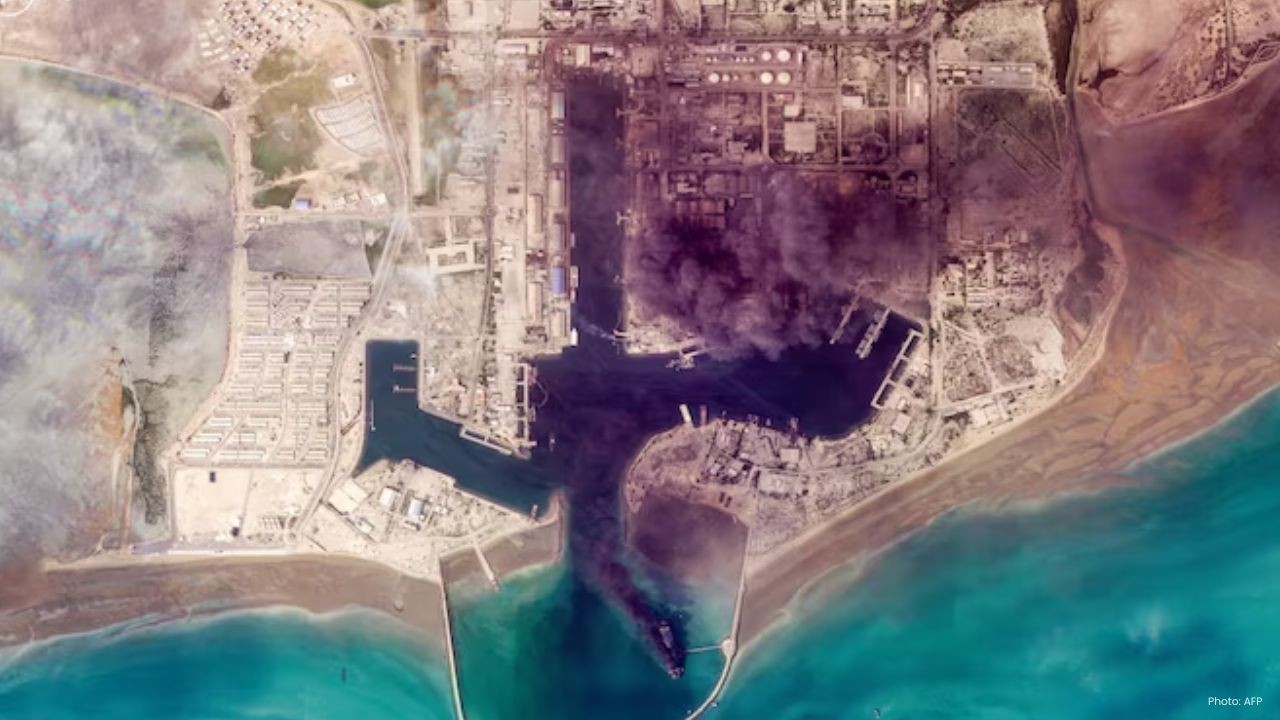
Asia Faces Energy Shock After Iran Closes Strait
Iran shuts Strait of Hormuz amid US-Israel strikes, sending oil prices higher and raising serious en


Bank of Baroda Faces Abu Dhabi Legal Battle over NMC Collapse
Bank of Baroda’s involvement in Abu Dhabi litigation tied to the NMC Healthcare collapse raises repu

Top Museum Openings of 2026 Set to Transform Global Tourism
From Los Angeles to Abu Dhabi and Brussels, 2026 brings major museum launches—Lucas Museum, Guggenhe

UAE Tour Highlights UAE’s Strength in Hosting Global Sports Events
Abu Dhabi Sports Council says the successful UAE Tour reflects the UAE’s leading role in hosting maj

EU Seeks Clarity from US After Supreme Court IEEPA Ruling
European Commission urges full transparency from the US on steps after Supreme Court ruling, emphasi
SpaceX Launches 53 New Satellites for Expanding Starlink Network
SpaceX launches 53 Starlink satellites in two Falcon 9 missions, breaking reuse records and expandin

RTA Awards Contract for Phase II of Hessa Street Upgrade in Dubai
Phase II of Hessa Street Development to add bridges, tunnel, and upgraded intersections, doubling ca

UAE Gold Prices Today, Monday 16 February 2026: Dubai & Abu Dhabi Updated Rates
Gold prices in UAE on 16 Feb 2026 updated: 24K around AED 599.75/gm, 22K AED 555.25/gm, and 18K AED
Over 25 Ahmedabad Schools Receive Bomb Threat Email, Authorities Investigate
More than 25 schools in Ahmedabad evacuated after bomb threat emails mentioning Khalistan. Authoriti