Post by : Anis Karim
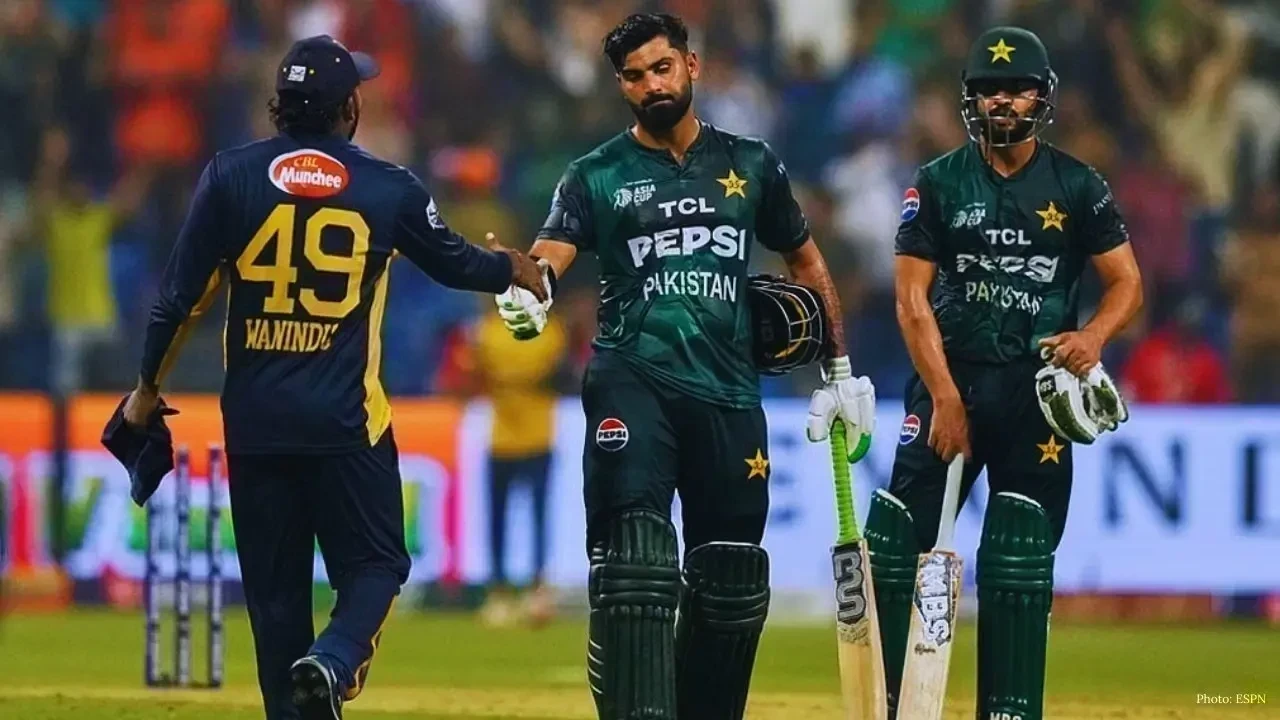
Pakistan couldn’t have hoped for a more victorious start in their T20I series. The opening match showcased an impressive performance that highlighted their confidence and strategic acumen in white-ball cricket. The standout trio of Shadab Khan, Mirza Tahir Baig, and Abrar Ahmed were pivotal to Pakistan’s emphatic victory.
From the outset, Pakistan’s players appeared sharper and more composed, displaying superior tactics. Their disciplined bowling, agile fielding, and methodical batting ensured they maintained control throughout, sending a strong signal about their series ambitions.
Beyond the scoreboard, the match exhibited promising signs of team balance. The mix of youth and experience, along with strategic aggression and discipline, made the performance a true reflection of careful planning and execution.
Pakistan’s tactical approach during the powerplay was clearly defined. Rather than recklessly pursuing wickets, the bowlers prioritized accuracy, forcing the opposition into errors. Proactive field placements ensured that the batting side felt constant pressure.
The visitors struggled to find their footing, with dot balls swiftly accumulating. This early pressure tilted the game's momentum firmly in Pakistan's favor, turning the innings into an exercise of damage control for the opposition.
An exceptional fielding unit amplified the bowlers’ efforts. Their swift action both in the circle and deep protected against easy boundaries, constantly putting the opposing batters on edge and elevating team morale.
Shadab Khan’s influence transcended his bowling statistics. As captain, his strategic insights transformed the match, effectively rotating bowlers and adjusting field placements with precision. His composed presence ensured that Pakistan always retained control.
Shadab bowled with economical precision, varying his pace and using flight to outsmart batters. His knack for breaking pivotal partnerships prevented any momentum for the visitors.
Shadab’s impactful performance reinforced his status as a vital asset in Pakistan's T20 lineup. His all-round capabilities provide the team with flexibility and balance, establishing him as a core player in the squad.
Mirza approached this match with remarkable maturity. From his initial deliveries, he demonstrated poise and control, consistently targeting critical areas. His skill at extracting movement posed a constant threat.
As the overs progressed, Mirza’s pressure grew, forcing batters into risky decisions. His crucial wickets halted any potential resurgence from the opposition.
For a newcomer eager to make his mark, this match was a defining showcase. Mirza exhibited not just talent, but also temperament, affirming his capacity to perform under intense scrutiny, thereby enhancing Pakistan’s bowling arsenal.
Abrar Ahmed’s bowling was a clinic on controlled techniques. By combining subtle variations with accurate delivery, he effectively stymied scoring even against seasoned batters. His distinctive action and sharp turns kept the opposition guessing.
With an unwavering commitment to wicket-to-wicket bowling, he tightened his grip further, leading to mistimed shots and a loss of rhythm for the batters.
The middle overs, often critical in T20 matches, saw Abrar impose his will. By stifling runs and claiming vital wickets, he ensured Pakistan retained firm control. His impact effectively dashed any hopes for a competitive total from the opposition.
While individual brilliance was evident from Shadab, Mirza, and Abrar, the victory stemmed from a collective effort. Each bowler executed their plans with precision and discipline. No loose deliveries surrendered easy runs.
The opposing innings never gained a strong foothold, with fleeting partnerships amplifying the mounting pressure. By the innings’ conclusion, it was evident Pakistan had set up a comfortable chase.
Pakistan’s bowling strategies reflected thoughtful preparation and flexibility. Bowlers adapted lengths according to the conditions and batter behavior, demonstrating a solid understanding of match dynamics. This awareness proved vital.
In pursuing the modest target, Pakistan’s batsmen remained collected. They refrained from rushing or being overly aggressive, choosing instead to rotate the strike methodically and capitalize on available opportunities.
With no early wickets lost, the chase felt secure and well within control, mirroring the confidence instilled by their bowling display.
Stable partnerships were instrumental in ensuring Pakistan remained on track throughout the chase. Exceptional communication and aggressive running enabled exploitation of scoring chances, and the target was comfortably reached, underscoring their overall dominance.
A significant takeaway from the match was Pakistan’s team harmony. The mix of spin options, pace support, and batting strength provided them with the necessary flexibility across all formats. Such balance is essential in T20 play, where adaptability can differentiate contestants.
The diversity of multi-talented contributors ensured Pakistan could maintain superiority no matter the match conditions.
Efforts from players like Mirza and Abrar illustrate Pakistan’s swelling bench strength. Their emergence at international levels provides hope for advancement and healthy competition within the squad.
The visiting team encountered difficulties countering Pakistan’s spin bowling. Ill-judged shot selection and poor strike rotation hampered their chances, exposing fragility in their batting order.
Throughout the chase, the opposition failed to deliver sustained pressure. Inaccurate deliveries and fielding errors granted Pakistan steady progress, eliminating any semblance of a comeback.
A commanding victory in the first T20I bestows a substantial psychological advantage to Pakistan. The confidence derived from such an impressive performance often affects decision-making in future matches.
Despite the comprehensive win, retaining high intensity remains crucial. Consistency across matches is vital, particularly against opponents eager for redemption. Replicating this discipline will be Pakistan's next challenge.
Supporters responded enthusiastically to Pakistan's effort, lauding the balance and composure displayed. Exceptional performances from Shadab, Mirza, and Abrar fostered optimism for Pakistan’s T20 future.
Triumphs like this play a pivotal role in developing confidence ahead of more formidable challenges. These occasions help teams fine-tune synergy and reinforce faith in strategies.
Pakistan’s straightforward victory in the first T20I exemplified clarity, execution, and shared accountability. The leadership of Shadab Khan, precision of Mirza, and mastery of spin by Abrar built the foundation for a comprehensive performance that left no doubts.
Beyond mere victory, this was a declaration of intent. Pakistan exhibited not only raw talent but also the discipline and framework necessary for success in contemporary T20 cricket. With this strong opening, the series promises a thrilling continuation.
This article is intended for informational purposes. Match analysis and interpretations are based on observed performances and may evolve with subsequent matches and conditions.

US Stocks Slide as AI Fears, Inflation and Oil Surge Weigh
US stocks dropped as AI disruption fears hit tech firms, inflation rose above forecasts, and oil pri

Pacific Prime Wins Top Honors at Cigna Awards 2026
Pacific Prime secured Top Individual Broker and Top SME Broker awards at Cigna’s Annual Broker Award

QatarEnergy Halts LNG Output After Military Attack
QatarEnergy has stopped LNG production after military attacks hit its facilities in Ras Laffan and M

Strong 6.1 Magnitude Earthquake Hits West Sumatra, No Damage
A 6.1 earthquake struck off West Sumatra, Indonesia. No casualties, damage, or tsunami alert reporte

Saudi Confirms Drone Strike on US Embassy Riyadh
Two drones hit the US Embassy in Riyadh, causing a small fire and minor damage. No injuries were rep

UAE Restarts Limited Flights as Regional Airspace Disruptions Continue
UAE restarts limited flights from Dubai as US-Israel attacks on Iran disrupt regional airspace, forc

Asia Faces Energy Shock After Iran Closes Strait
Iran shuts Strait of Hormuz amid US-Israel strikes, sending oil prices higher and raising serious en


Bank of Baroda Faces Abu Dhabi Legal Battle over NMC Collapse
Bank of Baroda’s involvement in Abu Dhabi litigation tied to the NMC Healthcare collapse raises repu

Top Museum Openings of 2026 Set to Transform Global Tourism
From Los Angeles to Abu Dhabi and Brussels, 2026 brings major museum launches—Lucas Museum, Guggenhe

UAE Tour Highlights UAE’s Strength in Hosting Global Sports Events
Abu Dhabi Sports Council says the successful UAE Tour reflects the UAE’s leading role in hosting maj

EU Seeks Clarity from US After Supreme Court IEEPA Ruling
European Commission urges full transparency from the US on steps after Supreme Court ruling, emphasi

SpaceX Launches 53 New Satellites for Expanding Starlink Network
SpaceX launches 53 Starlink satellites in two Falcon 9 missions, breaking reuse records and expandin

RTA Awards Contract for Phase II of Hessa Street Upgrade in Dubai
Phase II of Hessa Street Development to add bridges, tunnel, and upgraded intersections, doubling ca

UAE Gold Prices Today, Monday 16 February 2026: Dubai & Abu Dhabi Updated Rates
Gold prices in UAE on 16 Feb 2026 updated: 24K around AED 599.75/gm, 22K AED 555.25/gm, and 18K AED

Over 25 Ahmedabad Schools Receive Bomb Threat Email, Authorities Investigate
More than 25 schools in Ahmedabad evacuated after bomb threat emails mentioning Khalistan. Authoriti





