Post by : Mina Saadi
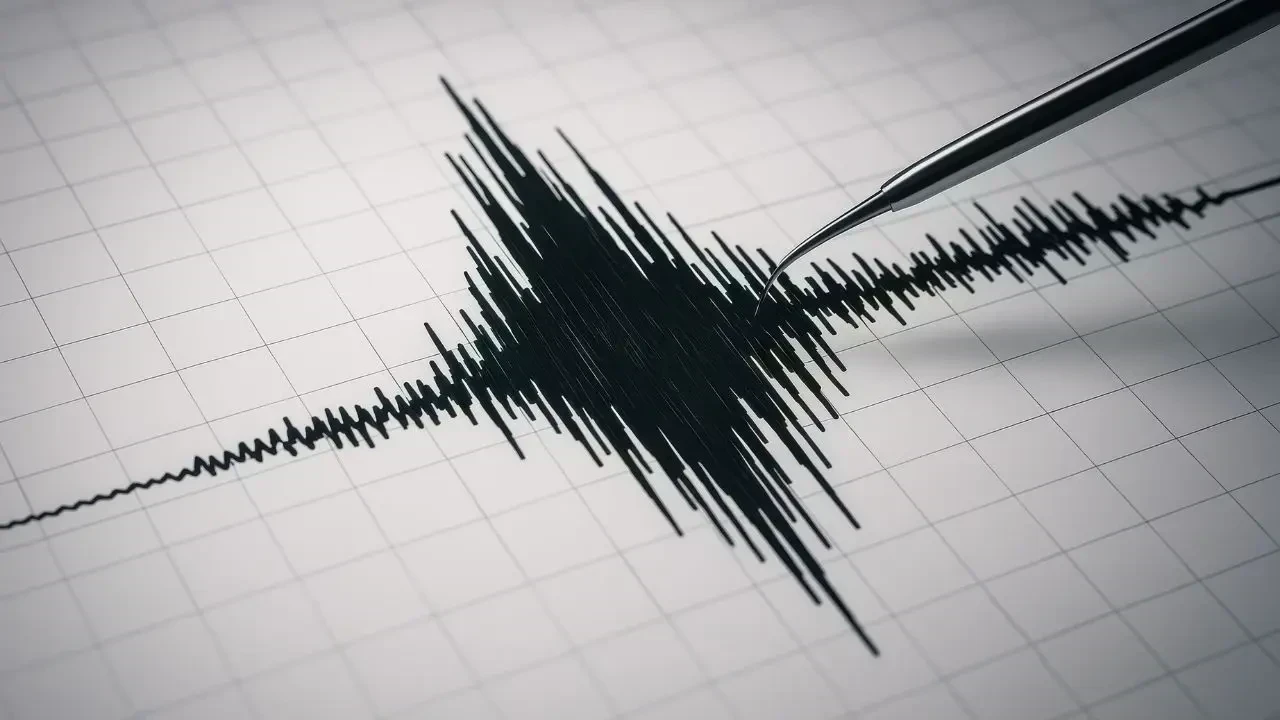
An earthquake registering a magnitude of 4.0 struck Myanmar on Wednesday, adding to the troubles faced by a nation still recovering from a series of devastating quakes earlier this year. The tremor was recorded at 11:56:28 IST and occurred at a shallow depth of 10 kilometers, which typically leads to stronger vibrations and raises the potential for aftershocks.
According to seismic data, the epicenter was located at a latitude of 25.05 degrees North and longitude 95.80 degrees East. Although there were no immediate accounts of injuries or severe damage, the shallow nature of this earthquake has put residents and officials on high alert, particularly in areas that have already faced structural problems in the months prior.
Shallow quakes are often more perilous than their deeper counterparts; the seismic waves reach the Earth’s surface faster, resulting in stronger ground shaking. This shaking can inflict damage on infrastructure, essential services, and buildings, particularly older constructions or those with weakened bases. Even moderate seismic events can have grave consequences in areas that are already stressed.
This latest earthquake comes just months after two significant quakes of 7.7 and 6.4 magnitudes hit central Myanmar on March 28, causing extensive destruction, displacing tens of thousands, and damaging critical services like hospitals and schools. Many survivors are still living in temporary shelters where conditions are tough.
In the wake of the March quakes, global health organizations raised alarms about escalating health risks among displaced communities. Overcrowding in shelters, poor sanitation, and inadequate access to clean water have heightened the likelihood of diseases such as tuberculosis, HIV, and waterborne conditions like dengue and malaria. Health systems in several affected areas remain under strain due to damaged facilities and supply shortages.
Earlier this month, Myanmar also dealt with another quake on January 12, where a 5.0 magnitude tremor was registered at a depth of 130 kilometers. While deeper earthquakes generally produce less surface impact, the series of seismic events underscores the region's susceptibility to tectonic activity. That preceding quake was located at latitude 24.89 degrees North and longitude 95.07 degrees East.
Positioned in a seismically active area, Myanmar is nestled among four major tectonic plates: Indian, Eurasian, Sunda, and Burma. The constant interaction among these plates generates geological stress, making earthquakes a prevalent threat.
The Sagaing Fault, a significant 1,400-kilometer-long transform fault runs through the country and significantly raises earthquake risk across vast regions. Cities such as Sagaing, Mandalay, Bago, and Yangon lie close to this fault system, housing nearly 46 percent of Myanmar’s population. Although Yangon is situated some distance from the fault line, experts caution that its dense urban landscape renders it vulnerable. Historical records indicate that a 7.0 magnitude quake in Bago in 1903 caused considerable shaking in Yangon, despite the distance.
Seismologists are closely monitoring the area, cautioning that seismic events of this magnitude can be followed by additional quakes. While a 4.0 magnitude quake is categorized as moderate, its occurrence and location raise concerns given the region’s recent earthquake history. Authorities are urging residents to stay vigilant and prepared as Myanmar continues to grapple with geological threats and humanitarian challenges.

US Stocks Slide as AI Fears, Inflation and Oil Surge Weigh
US stocks dropped as AI disruption fears hit tech firms, inflation rose above forecasts, and oil pri

Pacific Prime Wins Top Honors at Cigna Awards 2026
Pacific Prime secured Top Individual Broker and Top SME Broker awards at Cigna’s Annual Broker Award

QatarEnergy Halts LNG Output After Military Attack
QatarEnergy has stopped LNG production after military attacks hit its facilities in Ras Laffan and M

Strong 6.1 Magnitude Earthquake Hits West Sumatra, No Damage
A 6.1 earthquake struck off West Sumatra, Indonesia. No casualties, damage, or tsunami alert reporte

Saudi Confirms Drone Strike on US Embassy Riyadh
Two drones hit the US Embassy in Riyadh, causing a small fire and minor damage. No injuries were rep

UAE Restarts Limited Flights as Regional Airspace Disruptions Continue
UAE restarts limited flights from Dubai as US-Israel attacks on Iran disrupt regional airspace, forc

Asia Faces Energy Shock After Iran Closes Strait
Iran shuts Strait of Hormuz amid US-Israel strikes, sending oil prices higher and raising serious en


Bank of Baroda Faces Abu Dhabi Legal Battle over NMC Collapse
Bank of Baroda’s involvement in Abu Dhabi litigation tied to the NMC Healthcare collapse raises repu

Top Museum Openings of 2026 Set to Transform Global Tourism
From Los Angeles to Abu Dhabi and Brussels, 2026 brings major museum launches—Lucas Museum, Guggenhe

UAE Tour Highlights UAE’s Strength in Hosting Global Sports Events
Abu Dhabi Sports Council says the successful UAE Tour reflects the UAE’s leading role in hosting maj

EU Seeks Clarity from US After Supreme Court IEEPA Ruling
European Commission urges full transparency from the US on steps after Supreme Court ruling, emphasi

SpaceX Launches 53 New Satellites for Expanding Starlink Network
SpaceX launches 53 Starlink satellites in two Falcon 9 missions, breaking reuse records and expandin

RTA Awards Contract for Phase II of Hessa Street Upgrade in Dubai
Phase II of Hessa Street Development to add bridges, tunnel, and upgraded intersections, doubling ca

UAE Gold Prices Today, Monday 16 February 2026: Dubai & Abu Dhabi Updated Rates
Gold prices in UAE on 16 Feb 2026 updated: 24K around AED 599.75/gm, 22K AED 555.25/gm, and 18K AED

Over 25 Ahmedabad Schools Receive Bomb Threat Email, Authorities Investigate
More than 25 schools in Ahmedabad evacuated after bomb threat emails mentioning Khalistan. Authoriti





