Post by : Michael Darzi
Have you ever noticed that your stomach feels upset when you’re nervous or stressed? Or that you feel happier after a healthy meal? Scientists are now discovering that our gut and brain are closely connected—a relationship known as the mind-gut connection. This means that the food you eat does more than just fuel your body; it can also influence your mood, thoughts, and overall mental health. Eating well is not only about staying fit; it’s also about keeping your mind calm, focused, and happy.
The mind-gut connection refers to the communication that happens between the brain and the digestive system. Your gut is home to trillions of bacteria, called the gut microbiome, which play an important role in digestion, immunity, and mental well-being. These bacteria aren’t just passive passengers—they produce important chemicals like serotonin and dopamine, which affect your mood and emotions.
Research shows that nearly 90% of serotonin, the hormone that makes you feel happy, is actually made in the gut. When your gut is healthy, your brain works better. You may feel more focused, less anxious, and emotionally balanced.
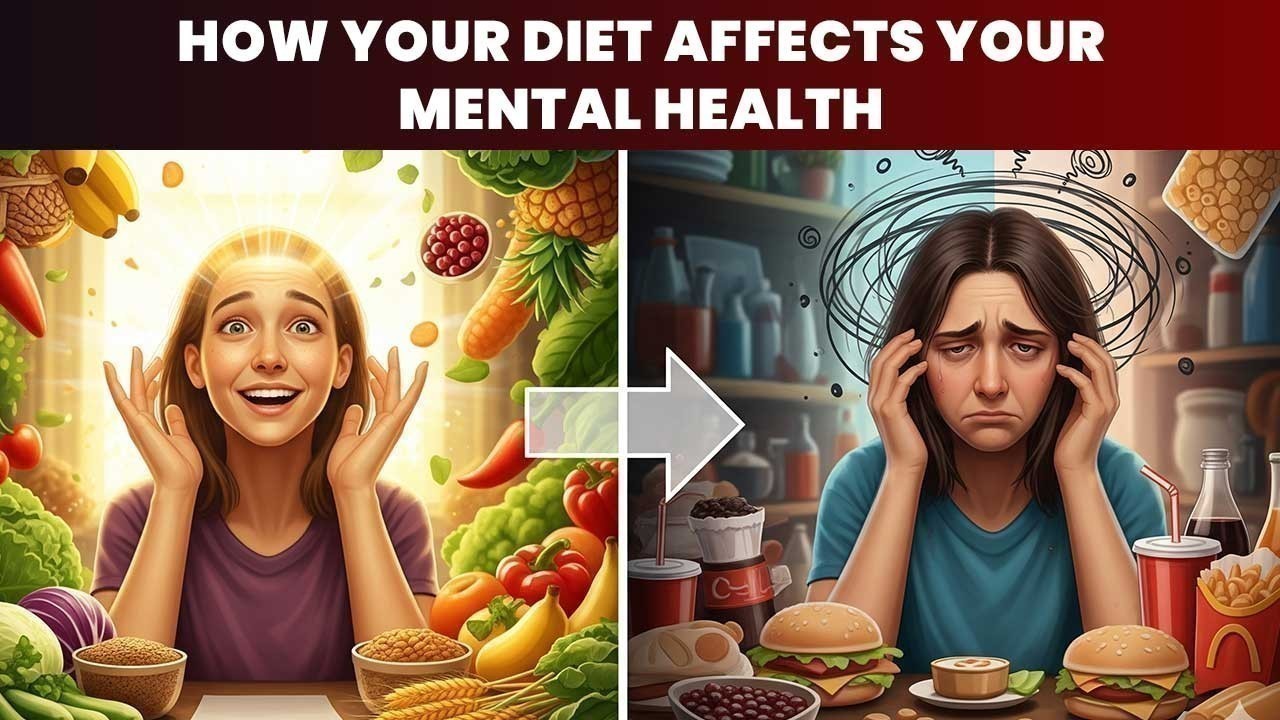
What you eat affects not only your gut but also your mind. A good diet can improve your mood and reduce stress, while poor eating habits may increase the risk of anxiety, depression, and mood swings. Here’s how different types of food affect your mental health:
1. Probiotics and Fermented Foods
Probiotics are the “good bacteria” that help keep your gut healthy. Foods like yogurt, kefir, kimchi, sauerkraut, and miso are full of these helpful bacteria. Regularly eating these foods can balance your gut, improve digestion, and support your mood. Studies suggest that people who eat probiotic-rich foods often feel calmer, less stressed, and more focused.
2. Foods High in Fiber
Fruits, vegetables, whole grains, and legumes are rich in fiber. Fiber feeds the good bacteria in your gut, which then produce chemicals called short-chain fatty acids. These acids help reduce inflammation in the brain and improve memory, concentration, and mood stability. Eating fiber-rich foods is a simple way to support both your digestion and mental well-being.
3. Avoiding Processed Foods and Too Much Sugar
Fast food, packaged snacks, and sugary treats can harm your gut bacteria and increase inflammation in the brain. High sugar intake has been linked to mood swings, irritability, and even depression. By cutting down on processed foods and added sugars, you can keep your gut healthy, which helps your mind feel calm and focused.
4. Omega-3 Fatty Acids
Omega-3 fatty acids are essential fats that support your brain and gut health. Foods like salmon, sardines, mackerel, walnuts, and chia seeds are excellent sources. Omega-3s reduce inflammation, improve mood, and support brain functions like learning and memory. Including these foods in your diet can help you manage stress better and feel mentally strong.
5. Staying Hydrated
Water is crucial not only for digestion but also for mental clarity. Drinking enough water prevents tiredness, irritability, and poor focus. Even mild dehydration can make you feel anxious or low on energy. Staying hydrated is a simple but important way to keep your gut and brain healthy.
The gut and brain communicate through what is called the gut-brain axis. One of the main links is the vagus nerve, which sends messages between the gut and the brain. Additionally, gut bacteria produce chemicals and fatty acids that travel to the brain, affecting mood, stress levels, and thinking ability.
This connection explains why people often feel “butterflies” in their stomach when nervous or why stress can cause stomach problems. A healthy gut helps the brain function better, leading to improved emotional and mental health.
Here are some practical ways to support your gut and mental health:
Eat plenty of fruits, vegetables, and whole grains to provide nutrients and fiber for gut bacteria.
Include fermented foods like yogurt, kefir, and kimchi to boost good bacteria.
Limit sugary snacks and processed foods to prevent inflammation and mood swings.
Eat omega-3-rich foods like fish, walnuts, and chia seeds to support brain function.
Drink enough water every day to stay hydrated.
Practice mindful eating—eat slowly, enjoy your meals, and try to reduce stress while eating.
Your gut is not just responsible for digestion—it plays a crucial role in your mental health too. By choosing a balanced and healthy diet, you can improve your mood, reduce stress, and strengthen your mental well-being. Eating well isn’t just about looking healthy; it’s about feeling mentally strong, focused, and happy. So, the next time you sit down for a meal, remember that every bite counts—not just for your body, but for your mind too.
Disclaimer
This article is intended for general informational purposes only and is not a substitute for professional medical advice, diagnosis, or treatment. The content provided is based on current research and expert opinions but may not apply to every individual. DXB News Network strongly recommends that readers consult a qualified healthcare professional, nutritionist, or mental health specialist before making any significant changes to their diet, lifestyle, or addressing mental health concerns. Individual needs, medical conditions, and personal circumstances can vary, so professional guidance is essential to ensure safety and effectiveness.

US Stocks Slide as AI Fears, Inflation and Oil Surge Weigh
US stocks dropped as AI disruption fears hit tech firms, inflation rose above forecasts, and oil pri

Pacific Prime Wins Top Honors at Cigna Awards 2026
Pacific Prime secured Top Individual Broker and Top SME Broker awards at Cigna’s Annual Broker Award

QatarEnergy Halts LNG Output After Military Attack
QatarEnergy has stopped LNG production after military attacks hit its facilities in Ras Laffan and M

Strong 6.1 Magnitude Earthquake Hits West Sumatra, No Damage
A 6.1 earthquake struck off West Sumatra, Indonesia. No casualties, damage, or tsunami alert reporte

Saudi Confirms Drone Strike on US Embassy Riyadh
Two drones hit the US Embassy in Riyadh, causing a small fire and minor damage. No injuries were rep

UAE Restarts Limited Flights as Regional Airspace Disruptions Continue
UAE restarts limited flights from Dubai as US-Israel attacks on Iran disrupt regional airspace, forc

Asia Faces Energy Shock After Iran Closes Strait
Iran shuts Strait of Hormuz amid US-Israel strikes, sending oil prices higher and raising serious en


Bank of Baroda Faces Abu Dhabi Legal Battle over NMC Collapse
Bank of Baroda’s involvement in Abu Dhabi litigation tied to the NMC Healthcare collapse raises repu

Top Museum Openings of 2026 Set to Transform Global Tourism
From Los Angeles to Abu Dhabi and Brussels, 2026 brings major museum launches—Lucas Museum, Guggenhe

UAE Tour Highlights UAE’s Strength in Hosting Global Sports Events
Abu Dhabi Sports Council says the successful UAE Tour reflects the UAE’s leading role in hosting maj

EU Seeks Clarity from US After Supreme Court IEEPA Ruling
European Commission urges full transparency from the US on steps after Supreme Court ruling, emphasi

SpaceX Launches 53 New Satellites for Expanding Starlink Network
SpaceX launches 53 Starlink satellites in two Falcon 9 missions, breaking reuse records and expandin

RTA Awards Contract for Phase II of Hessa Street Upgrade in Dubai
Phase II of Hessa Street Development to add bridges, tunnel, and upgraded intersections, doubling ca

UAE Gold Prices Today, Monday 16 February 2026: Dubai & Abu Dhabi Updated Rates
Gold prices in UAE on 16 Feb 2026 updated: 24K around AED 599.75/gm, 22K AED 555.25/gm, and 18K AED

Over 25 Ahmedabad Schools Receive Bomb Threat Email, Authorities Investigate
More than 25 schools in Ahmedabad evacuated after bomb threat emails mentioning Khalistan. Authoriti





