Author : Global Affairs Desk
Photo : AFP
A powerful earthquake, one of the biggest ever recorded in history, shook the Pacific Ocean near Russia’s Kamchatka Peninsula on Tuesday night. The earthquake had a magnitude of 8.8, making it one of the top 10 strongest earthquakes ever documented. It happened deep under the sea, which caused huge waves—called tsunamis—to travel across the ocean. These waves reached different countries, forcing thousands of people to leave their homes and coastal areas.
Let’s take a detailed look at what happened, how different countries responded, and what we can learn from this major event.
The earthquake occurred under the sea, near the Kamchatka Peninsula in Russia’s Far East. This region lies along the "Ring of Fire," a circular area in the Pacific Ocean known for frequent earthquakes and volcanic activity. The quake was caused by a megathrust fault, where one tectonic plate is pushed under another. These types of quakes are known to cause massive tsunamis.
According to the United States Geological Survey (USGS), this was the fourth-strongest quake this century and the sixth-largest in world history.
Stay informed with the latest news. Follow DXB News Network on WhatsApp Channel
Soon after the earthquake, tsunami warnings were issued across many Pacific nations. These alerts were sent out to countries like Japan, the United States, Chile, Ecuador, Colombia, French Polynesia, and more.
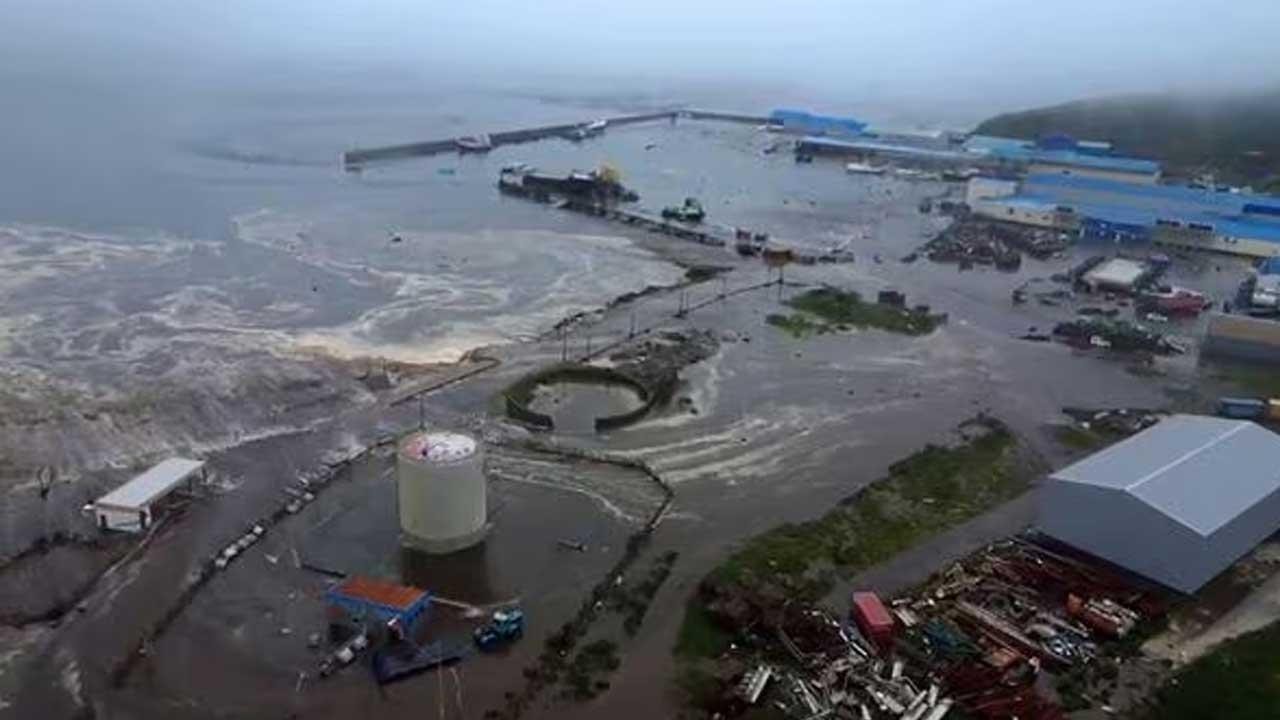
In Severo-Kurilsk, a small fishing port in Russia, tsunami waves reached 6 meters (around 20 feet) and flooded parts of the town. Power lines were knocked down and buildings were damaged, although there were only a few minor injuries reported. The Russian government declared a state of emergency and carried out evacuations.
ALSO READ : Top Tsunami & Ocean Hazard Monitoring Agencies Worldwide
The earthquake also caused volcanic activity. Klyuchevskaya Sopka, one of the largest volcanoes in the Northern Hemisphere, started to release lava. Scientists are keeping a close eye on this volcano for more eruptions.
Despite the flooding and the volcanic eruption, the Kremlin confirmed there were no casualties, thanks to quick evacuation and alert systems.
On the U.S. mainland, Crescent City in Northern California recorded the largest tsunami wave on the continental U.S. coastline—about 4 feet (1.2 meters). Crescent City has a long history of tsunamis. In 1964, a tsunami killed 11 people there, so local people took the new warning seriously.
While no one was hurt this time, a dock in the city’s harbor was damaged when a wave lifted it off its pillars and submerged it. Authorities praised residents for acting fast and following safety instructions.
In Alaska and parts of southern California, the tsunami advisories were lifted later that day.
Japan’s coastal areas also received tsunami alerts. In places like Hokkaido and Iwate, the waves were small, and the damage was minor. One of the biggest concerns was the Fukushima Daiichi nuclear plant, but officials confirmed it was safe and unaffected by the waves.
While Pacific tsunami warnings were lifted in many places, South American countries remained on high alert.
Tsunami alerts in the U.S. and other countries are divided into:
Alerts are sent through sirens, phone messages, and emergency broadcasts.
A tsunami is a series of ocean waves caused by sudden movements like earthquakes, volcanic eruptions, or underwater landslides. Tsunamis can travel across oceans at high speeds and grow much larger as they approach the shore. Unlike normal waves, tsunamis rise quickly and powerfully. Sometimes the first wave isn’t the biggest—others may follow and cause more damage.
Famous deadly tsunamis include:
The recent tsunami didn’t cause mass destruction, but it reminded everyone of the risks and the need to stay prepared.
Dr. Simon Boxall, a scientist from the University of Southampton, compared the earthquake to "throwing a huge rock into the sea." He explained that such strong earthquakes send out waves in all directions. These waves travel fast and are unpredictable, which makes it hard to know how serious the damage will be until the waves arrive.
As of now:
If you live in a coastal area, especially one near the Ring of Fire:
Always listen to official warnings.
Move quickly to higher ground when a tsunami warning is issued.
Avoid going near beaches or rivers after a strong quake, even if waves look small.
Stay updated through trusted news sources like DXB News Network.
This massive 8.8 earthquake was a strong reminder of how powerful nature can be. Even with all our technology, we cannot stop natural disasters—but we can prepare for them. Thanks to early warning systems and fast government response, many lives were saved.
Let’s hope the aftershocks fade soon and that affected families can return to normal life. But this event also teaches us a valuable lesson: respect the sea, respect nature, and always be ready.

US Stocks Slide as AI Fears, Inflation and Oil Surge Weigh
US stocks dropped as AI disruption fears hit tech firms, inflation rose above forecasts, and oil pri

Pacific Prime Wins Top Honors at Cigna Awards 2026
Pacific Prime secured Top Individual Broker and Top SME Broker awards at Cigna’s Annual Broker Award
QatarEnergy Halts LNG Output After Military Attack
QatarEnergy has stopped LNG production after military attacks hit its facilities in Ras Laffan and M
Strong 6.1 Magnitude Earthquake Hits West Sumatra, No Damage
A 6.1 earthquake struck off West Sumatra, Indonesia. No casualties, damage, or tsunami alert reporte
Saudi Confirms Drone Strike on US Embassy Riyadh
Two drones hit the US Embassy in Riyadh, causing a small fire and minor damage. No injuries were rep
UAE Restarts Limited Flights as Regional Airspace Disruptions Continue
UAE restarts limited flights from Dubai as US-Israel attacks on Iran disrupt regional airspace, forc
Asia Faces Energy Shock After Iran Closes Strait
Iran shuts Strait of Hormuz amid US-Israel strikes, sending oil prices higher and raising serious en


Bank of Baroda Faces Abu Dhabi Legal Battle over NMC Collapse
Bank of Baroda’s involvement in Abu Dhabi litigation tied to the NMC Healthcare collapse raises repu

Top Museum Openings of 2026 Set to Transform Global Tourism
From Los Angeles to Abu Dhabi and Brussels, 2026 brings major museum launches—Lucas Museum, Guggenhe

UAE Tour Highlights UAE’s Strength in Hosting Global Sports Events
Abu Dhabi Sports Council says the successful UAE Tour reflects the UAE’s leading role in hosting maj

EU Seeks Clarity from US After Supreme Court IEEPA Ruling
European Commission urges full transparency from the US on steps after Supreme Court ruling, emphasi

SpaceX Launches 53 New Satellites for Expanding Starlink Network
SpaceX launches 53 Starlink satellites in two Falcon 9 missions, breaking reuse records and expandin

RTA Awards Contract for Phase II of Hessa Street Upgrade in Dubai
Phase II of Hessa Street Development to add bridges, tunnel, and upgraded intersections, doubling ca

UAE Gold Prices Today, Monday 16 February 2026: Dubai & Abu Dhabi Updated Rates
Gold prices in UAE on 16 Feb 2026 updated: 24K around AED 599.75/gm, 22K AED 555.25/gm, and 18K AED

Over 25 Ahmedabad Schools Receive Bomb Threat Email, Authorities Investigate
More than 25 schools in Ahmedabad evacuated after bomb threat emails mentioning Khalistan. Authoriti