Author : Global Affairs Desk
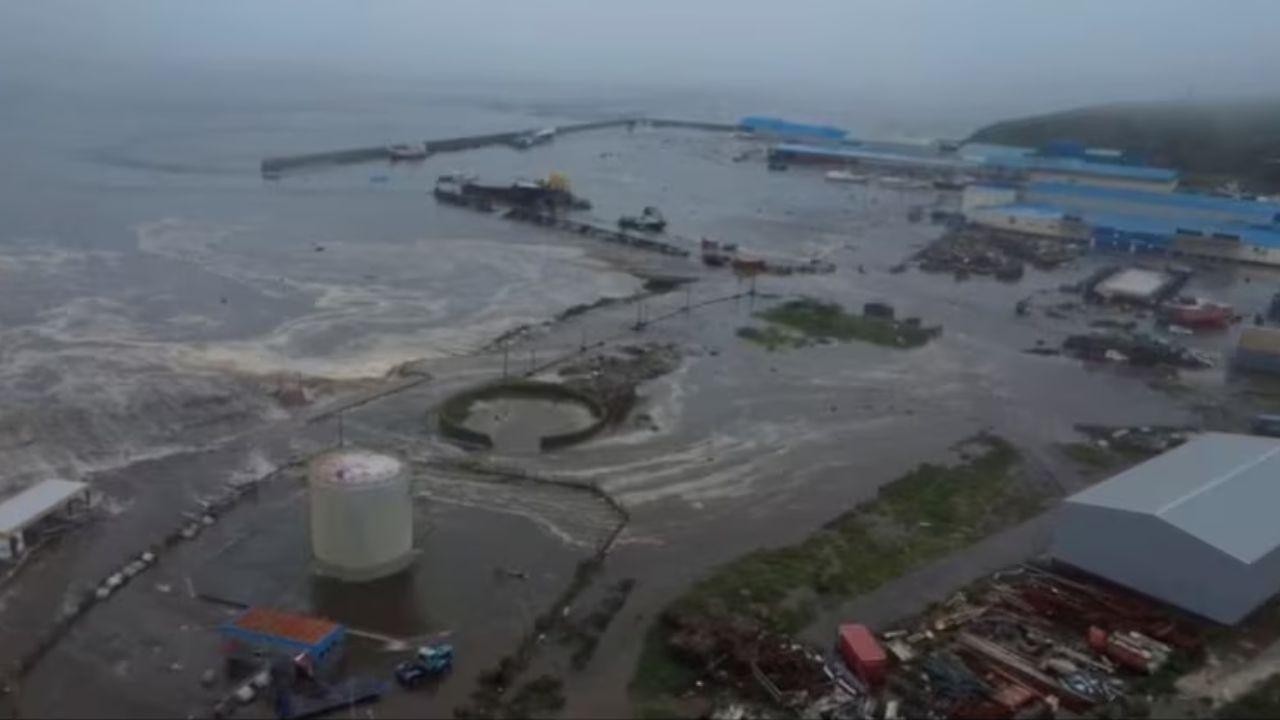
Photo: Reuters
Kamchatka, Russia — July 30, 2025
A powerful earthquake, measured at magnitude 8.8, struck the Far Eastern coast of Russia’s Kamchatka Peninsula on Wednesday, July 30. This major quake has raised widespread alarm, not only due to its intensity but also because of its location—very close to Avacha Bay, a critical area housing some of Russia’s most important naval military assets, including nuclear submarines.
The impact of this natural disaster has gone far beyond the borders of Russia. Tsunami warnings were issued across several countries in the Pacific Ocean, including French Polynesia, Chile, Japan, and even Hawaii. In addition to the earthquake, the Klyuchevskaya Sopka volcano, which sits on the peninsula, erupted shortly after the quake, adding to the concerns in the already shaken region.
Stay informed with the latest news. Follow DXB News Network on WhatsApp Channel
What Happened: Earthquake Strikes Near Avacha Bay
The earthquake struck at a shallow depth of 19.3 kilometers (12 miles), which makes it especially dangerous. It was centered around 119 kilometers (74 miles) southeast of Petropavlovsk-Kamchatsky, a major city on the Kamchatka Peninsula with a population of about 165,000 people.
While it is one of the strongest earthquakes ever recorded in the region—and in modern history—Russian officials have stated that the damage was relatively contained. Several buildings were damaged, and some people were injured, but no deaths have been reported so far. Emergency teams were quickly sent to affected areas to check infrastructure and assist the injured.
Tsunami Warnings Across the Pacific
Due to the strength of the quake and its location near the Pacific Ocean, tsunami alerts were activated in several distant regions. These included places thousands of kilometers away, like Chile and French Polynesia, where coastal populations were warned to stay alert. In Japan, people living on the eastern coast were told to evacuate as a precautionary measure. Similar warnings were also issued for Hawaii, which lies in the central Pacific.
Although large waves were not immediately reported in these places, scientists warned that aftershocks and delayed waves could still occur, and it is better to stay cautious.
Klyuchevskaya Sopka Volcano Eruption
As if the earthquake wasn’t frightening enough, Klyuchevskaya Sopka, one of the most active volcanoes in Eurasia, erupted right after the quake. Located on the Kamchatka Peninsula, this volcano has erupted many times in the past, but its eruption following such a strong earthquake added to fears of further geological instability in the region.
Scientists explained that earthquakes can sometimes disturb underground magma chambers, which might cause volcanic eruptions. This link between the earthquake and the volcano is still being studied.
Avacha Bay: A Strategic Military Zone Under Threat
Perhaps the biggest concern after the earthquake has been its proximity to Avacha Bay—one of Russia’s most important military zones. Inside this bay is the Rybachiy submarine base, which is home to some of the Russian Navy’s most advanced nuclear submarines. These include Borei-class and Delta-class submarines, which are key parts of Russia’s nuclear defense system.
Apart from these, Yasen-M and Oscar-class guided missile submarines, which are powered by nuclear reactors but carry conventional (non-nuclear) weapons, also operate from this base. The area also contains missile loading docks, repair facilities, and shipyards, making it a crucial center for Russian naval operations.
Because the earthquake was so close to this bay, experts around the world are concerned that the base might have suffered structural damage. Even though these military facilities are designed to survive natural disasters and even nuclear attacks, repeated seismic activity can weaken structures over time.
Military analysts and satellite imaging experts are now studying photos of the region to try and determine if any submarines or buildings were damaged. As of now, it is not clear what exact submarines were docked at the base when the earthquake occurred.
Russian Response and Expert Opinions
According to Russia’s official statement, there was no serious or critical damage to the naval base or its infrastructure. Russian authorities claim that everything is functioning normally, and emergency checks are being carried out to make sure safety is maintained.
A retired Russian Navy officer, known online as @Capt_Navy, told The War Zone that the base was designed with major disasters in mind. He emphasized that "these bases were designed and built with the possibility of a nuclear attack by the enemy in mind." According to him, there is no current indication of any major damage to Russia’s naval capabilities in Kamchatka.
However, international experts remain concerned. Due to limited access and the lack of independent observers in the area, it is difficult to confirm whether the official Russian reports are fully accurate. Many countries, including the United States and Japan, are keeping a close watch on satellite images and regional seismic data.
The Biggest Earthquake Since 1952
Russian scientists have confirmed that this was the most powerful earthquake in the Kamchatka region since 1952. That historic quake had also triggered a large tsunami and caused serious damage. The U.S. Geological Survey (USGS) confirmed the details of the July 30 quake and continues to monitor the situation along with agencies around the world.
What Happens Next?
While the initial shock has passed, aftershocks are highly likely. These smaller quakes can still cause damage, especially if buildings have already been weakened. Emergency teams in Kamchatka are staying alert, and shelters have been opened for people who had to leave their homes.
At the same time, military analysts will be paying close attention to satellite imagery, hoping to find out more about any unseen effects of the quake on the Avacha Bay naval base. The condition of nuclear-powered submarines, missile systems, and reactor safety will be closely monitored in the coming weeks.
A magnitude 8.8 earthquake struck the Kamchatka Peninsula on July 30.
The epicenter was near Avacha Bay, where Russian nuclear submarines are stationed.
Tsunami warnings were issued for Japan, Chile, Hawaii, and French Polynesia.
The Klyuchevskaya Sopka volcano erupted shortly after the quake.
Buildings were damaged, and several people were injured, but no deaths have been reported.
Russia claims the naval base is unharmed, but international experts remain cautious.
Aftershocks and further volcanic activity are still possible.
This earthquake has reminded the world that even in remote corners of the globe, natural disasters can affect global security, especially when they happen close to military installations with nuclear capabilities. As experts continue to analyze the situation, the world watches with caution and hope that the region remains stable.

US Stocks Slide as AI Fears, Inflation and Oil Surge Weigh
US stocks dropped as AI disruption fears hit tech firms, inflation rose above forecasts, and oil pri

Pacific Prime Wins Top Honors at Cigna Awards 2026
Pacific Prime secured Top Individual Broker and Top SME Broker awards at Cigna’s Annual Broker Award

QatarEnergy Halts LNG Output After Military Attack
QatarEnergy has stopped LNG production after military attacks hit its facilities in Ras Laffan and M

Strong 6.1 Magnitude Earthquake Hits West Sumatra, No Damage
A 6.1 earthquake struck off West Sumatra, Indonesia. No casualties, damage, or tsunami alert reporte

Saudi Confirms Drone Strike on US Embassy Riyadh
Two drones hit the US Embassy in Riyadh, causing a small fire and minor damage. No injuries were rep

UAE Restarts Limited Flights as Regional Airspace Disruptions Continue
UAE restarts limited flights from Dubai as US-Israel attacks on Iran disrupt regional airspace, forc

Asia Faces Energy Shock After Iran Closes Strait
Iran shuts Strait of Hormuz amid US-Israel strikes, sending oil prices higher and raising serious en


Bank of Baroda Faces Abu Dhabi Legal Battle over NMC Collapse
Bank of Baroda’s involvement in Abu Dhabi litigation tied to the NMC Healthcare collapse raises repu

Top Museum Openings of 2026 Set to Transform Global Tourism
From Los Angeles to Abu Dhabi and Brussels, 2026 brings major museum launches—Lucas Museum, Guggenhe

UAE Tour Highlights UAE’s Strength in Hosting Global Sports Events
Abu Dhabi Sports Council says the successful UAE Tour reflects the UAE’s leading role in hosting maj

EU Seeks Clarity from US After Supreme Court IEEPA Ruling
European Commission urges full transparency from the US on steps after Supreme Court ruling, emphasi

SpaceX Launches 53 New Satellites for Expanding Starlink Network
SpaceX launches 53 Starlink satellites in two Falcon 9 missions, breaking reuse records and expandin

RTA Awards Contract for Phase II of Hessa Street Upgrade in Dubai
Phase II of Hessa Street Development to add bridges, tunnel, and upgraded intersections, doubling ca

UAE Gold Prices Today, Monday 16 February 2026: Dubai & Abu Dhabi Updated Rates
Gold prices in UAE on 16 Feb 2026 updated: 24K around AED 599.75/gm, 22K AED 555.25/gm, and 18K AED

Over 25 Ahmedabad Schools Receive Bomb Threat Email, Authorities Investigate
More than 25 schools in Ahmedabad evacuated after bomb threat emails mentioning Khalistan. Authoriti





