
Post by : Sam Jeet Rahman
Interest rates are more than just numbers—they are economic signals that guide investor behavior, corporate borrowing, and household financial decisions. Central banks adjust interest rates to manage inflation, encourage growth, or cool overheated markets. Investors closely monitor these moves because even a small rate change can affect asset prices, borrowing costs, and expected returns.
In 2026, global interest rate signals are influencing investment strategies across asset classes, from equities and bonds to real estate and alternative investments. Understanding how these signals work is crucial for risk management and optimizing returns.
Central banks raise or lower interest rates based on macroeconomic conditions:
Rising inflation: Higher rates are used to cool spending and borrowing.
Economic slowdown: Lower rates encourage borrowing and investment.
Currency stabilization: Rates can attract foreign capital to strengthen currency.
These policy moves are closely watched by investors because they directly influence capital costs, corporate earnings, and asset valuations.
Increase borrowing costs for businesses and individuals
Reduce consumer spending and corporate profit margins
Often lead to equity market volatility, particularly in growth sectors
Can make bonds more attractive due to higher yields
Lower borrowing costs and encourage investment
Support risk-taking in equities
Reduce yields in fixed-income instruments, pushing investors to seek higher returns in other assets
Investors analyze the speed, timing, and communication of rate changes, not just the headline numbers, to gauge market direction.
Interest rate changes affect valuation models and sector performance.
Growth stocks like tech are highly sensitive to rate hikes due to future earnings discounting.
Financials such as banks often benefit from rising rates due to increased lending margins.
Defensive sectors like utilities and consumer staples are preferred when rates are volatile.
Investors often adjust portfolios to balance risk and return expectations, using rates as a guide to shift allocations.
Bond prices move inversely with interest rates.
Rising rates cause existing bond prices to fall, reducing capital gains.
Falling rates increase bond prices, boosting returns.
Duration and credit quality become critical factors for risk management.
Investors frequently adjust the mix of government, corporate, and high-yield bonds depending on anticipated rate changes.
Interest rates directly impact mortgage costs and property yields.
Rising rates increase loan repayments, potentially cooling housing demand.
Lower rates make borrowing cheaper, increasing affordability and investment appetite.
Commercial real estate is influenced by financing availability and lease growth expectations.
Smart investors anticipate these shifts by timing property purchases, refinancing strategies, and rental pricing projections.
Interest rate differentials between countries influence capital flows and currency values.
Higher domestic rates attract foreign investment, strengthening the currency.
Lower rates may weaken currency but encourage exports and overseas investment.
Global investors adjust portfolios to hedge currency risk and take advantage of cross-border interest rate arbitrage.
Interest rate decisions are often aimed at controlling inflation, which affects real investment returns.
Real returns are nominal returns minus inflation.
Rising rates typically signal higher inflation expectations, influencing investor preference for inflation-protected assets like Treasury Inflation-Protected Securities (TIPS), commodities, or real estate.
Understanding real vs nominal returns helps investors preserve wealth during rate cycles.
Interest rate signals also shape market sentiment and risk appetite.
Hawkish statements (suggesting higher future rates) can trigger risk-off behavior.
Dovish statements (suggesting lower future rates) encourage risk-on strategies.
Investors often react preemptively, adjusting portfolios before actual rate changes occur.
Diversification: Investors increasingly use multi-asset strategies to hedge interest rate risks.
Short-term positioning: Traders focus on rate-sensitive sectors and instruments.
Alternative investments: Real assets, commodities, and private equity are being used to offset rate volatility.
ESG and sustainable investing: Companies with strong governance and resilience to rate fluctuations are preferred.
These trends indicate that interest rate signals are not only financial factors but also behavioral triggers shaping global capital flows.
Monitor central bank statements for forward guidance, not just rate announcements.
Diversify asset classes to include equities, bonds, real estate, and alternatives.
Adjust portfolio duration to minimize bond market volatility risk.
Focus on quality companies with strong balance sheets to withstand rising costs.
Evaluate debt exposure in personal and corporate investments.
Consider inflation-protected instruments for long-term wealth preservation.
Stay flexible and liquid to capitalize on opportunities when markets react to rate shifts.
Interest rate signals have become a central factor in investment decision-making in 2026. They affect stocks, bonds, real estate, currencies, and alternative investments, shaping not only portfolio allocation but also investor psychology. Being informed and proactive about rate trends allows investors to protect capital, optimize returns, and navigate volatility with confidence.
This article is for informational and educational purposes only and does not constitute financial, investment, or legal advice. Investment decisions should be based on individual risk tolerance, financial goals, and professional consultation. Past performance is not indicative of future results.

US Stocks Slide as AI Fears, Inflation and Oil Surge Weigh
US stocks dropped as AI disruption fears hit tech firms, inflation rose above forecasts, and oil pri

Pacific Prime Wins Top Honors at Cigna Awards 2026
Pacific Prime secured Top Individual Broker and Top SME Broker awards at Cigna’s Annual Broker Award

QatarEnergy Halts LNG Output After Military Attack
QatarEnergy has stopped LNG production after military attacks hit its facilities in Ras Laffan and M

Strong 6.1 Magnitude Earthquake Hits West Sumatra, No Damage
A 6.1 earthquake struck off West Sumatra, Indonesia. No casualties, damage, or tsunami alert reporte

Saudi Confirms Drone Strike on US Embassy Riyadh
Two drones hit the US Embassy in Riyadh, causing a small fire and minor damage. No injuries were rep

UAE Restarts Limited Flights as Regional Airspace Disruptions Continue
UAE restarts limited flights from Dubai as US-Israel attacks on Iran disrupt regional airspace, forc
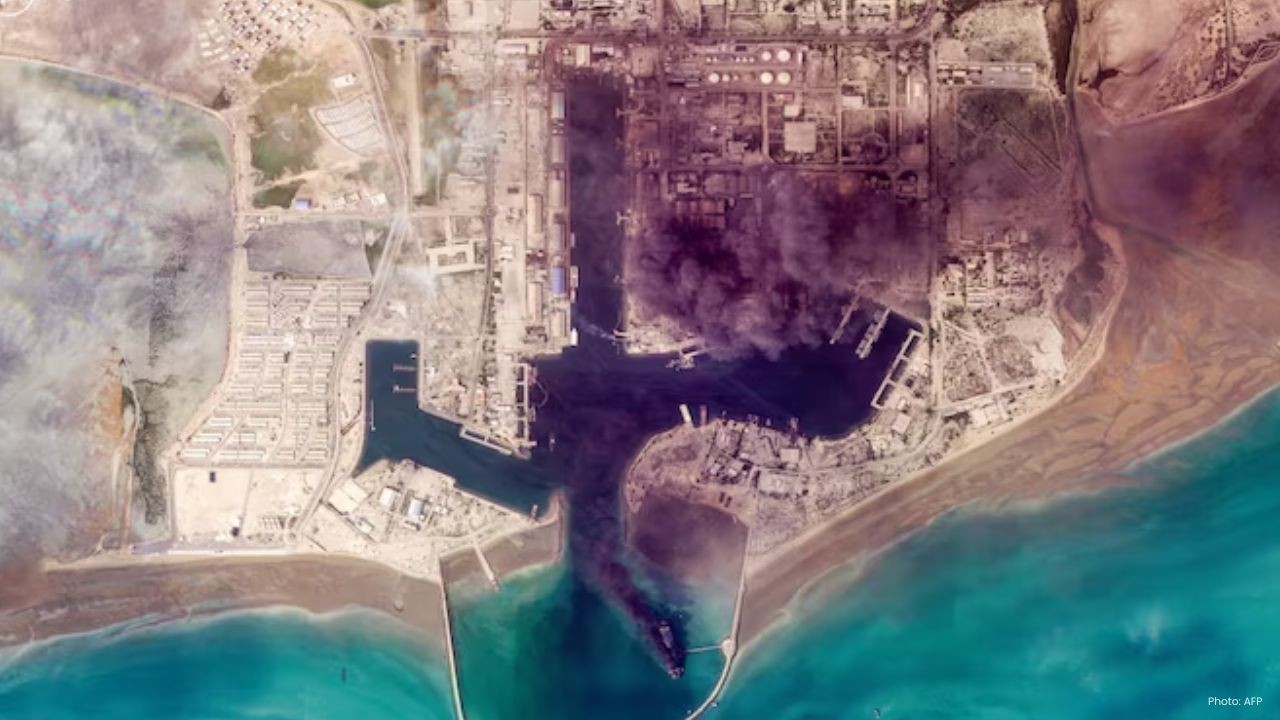
Asia Faces Energy Shock After Iran Closes Strait
Iran shuts Strait of Hormuz amid US-Israel strikes, sending oil prices higher and raising serious en


Bank of Baroda Faces Abu Dhabi Legal Battle over NMC Collapse
Bank of Baroda’s involvement in Abu Dhabi litigation tied to the NMC Healthcare collapse raises repu

Top Museum Openings of 2026 Set to Transform Global Tourism
From Los Angeles to Abu Dhabi and Brussels, 2026 brings major museum launches—Lucas Museum, Guggenhe

UAE Tour Highlights UAE’s Strength in Hosting Global Sports Events
Abu Dhabi Sports Council says the successful UAE Tour reflects the UAE’s leading role in hosting maj
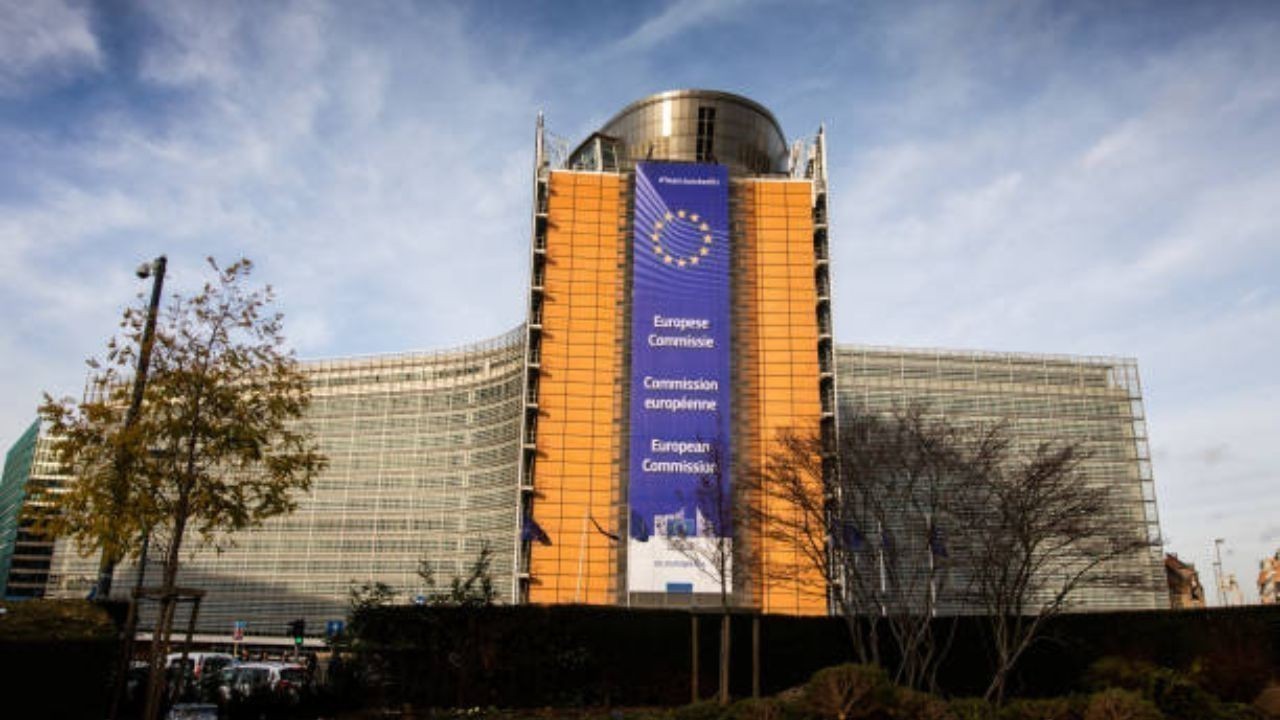
EU Seeks Clarity from US After Supreme Court IEEPA Ruling
European Commission urges full transparency from the US on steps after Supreme Court ruling, emphasi

SpaceX Launches 53 New Satellites for Expanding Starlink Network
SpaceX launches 53 Starlink satellites in two Falcon 9 missions, breaking reuse records and expandin

RTA Awards Contract for Phase II of Hessa Street Upgrade in Dubai
Phase II of Hessa Street Development to add bridges, tunnel, and upgraded intersections, doubling ca

UAE Gold Prices Today, Monday 16 February 2026: Dubai & Abu Dhabi Updated Rates
Gold prices in UAE on 16 Feb 2026 updated: 24K around AED 599.75/gm, 22K AED 555.25/gm, and 18K AED

Over 25 Ahmedabad Schools Receive Bomb Threat Email, Authorities Investigate
More than 25 schools in Ahmedabad evacuated after bomb threat emails mentioning Khalistan. Authoriti