Post by : Anis Karim
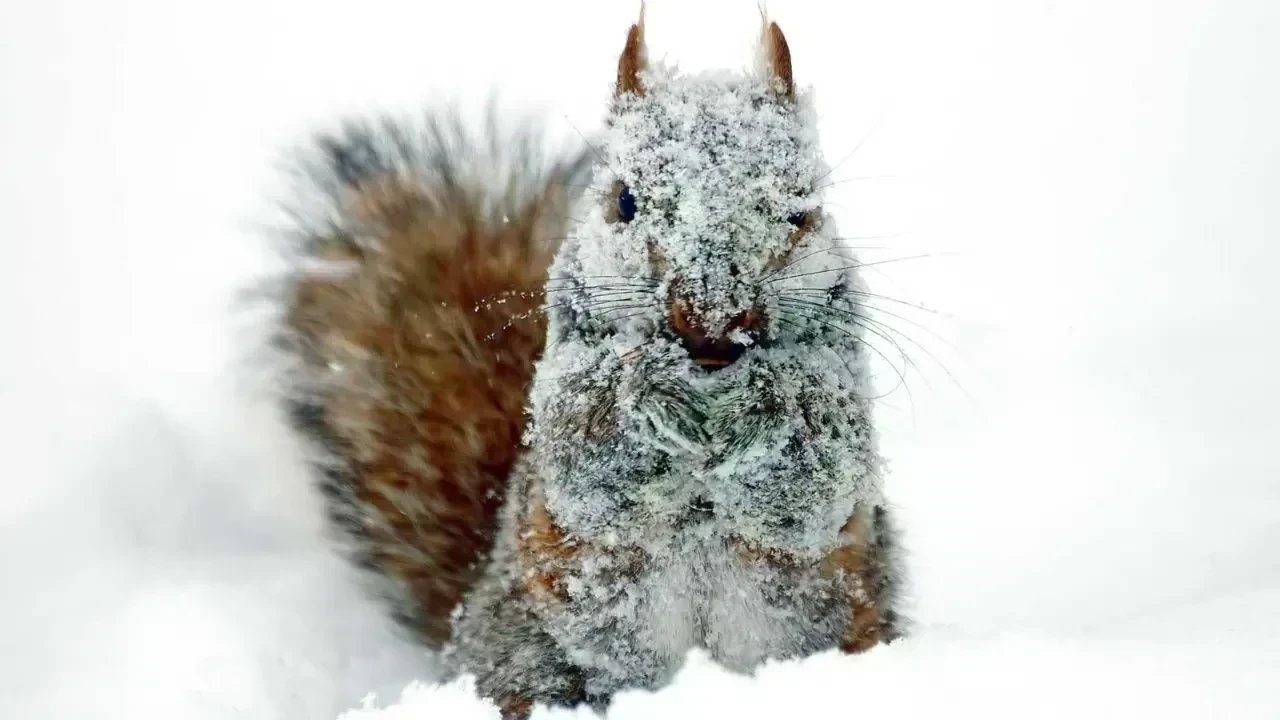
Winter brings some of the toughest trials for wildlife. With plummeting temperatures, frozen water, and dwindling food supplies, animals find themselves in survival mode, requiring more energy just when it’s hardest to find it.
Survival during chilly months hinges on efficiency. Animals have developed strategies over millennia to conserve warmth, minimize energy loss, and maximize their access to scarce resources through thick fur, fat reserves, migration, and hibernation.
These adaptations highlight a delicate interplay between animals and their changing environments, deepening our appreciation for wildlife.
A prominent adaptation is the presence of thicker fur or denser feathers. Many species grow winter coats that offer significantly better insulation than their summer fur.
This insulation traps warm air close to the skin, acting as a barrier against heat loss. Some animals even develop hollow hairs to enhance this insulation without added bulk.
Birds make similar adjustments, fluffing their feathers to create air pockets that decrease heat loss, even in freezing temperatures.
Fat serves a crucial twin purpose in winter: it insulates and provides energy when food becomes scarce.
In autumn, many animals engage in hyperphagia, overeating to build fat reserves for the winter months, allowing survival during food scarcity.
Marine species and mammals from cold regions rely heavily on these fat layers, as water and wind remove heat at a greater rate than air.
Cold-adapted animals often boast compact bodies with shorter limbs and ears, reducing their exposed surface area and conserving warmth.
Longer extremities increase heat loss, thus shorter ones are a classic response to the cold climate.
Hibernation stands as a prime survival tactic for many species. During this state, their heart rates, breathing, and metabolic activities slow considerably, slashing energy requirements to nearly a fraction.
With body temperatures dropping to near ambient levels, hibernators rely entirely on stored fat until the arrival of spring.
Hibernation can vary; some animals enter deep sleep, while others have lighter periods of dormancy interspersed with brief awakenings.
Torpor is akin to hibernation but occurs over shorter spells—often on chilly nights. Here, animals lessen their metabolic rates to bridge energy gaps.
This strategy is common among small species unable to store substantial fat reserves, allowing energy conservation during harsh conditions.
Many animals opt to migrate to milder regions rather than endure freezing conditions. This journey allows them to escape the rigors of winter.
Such migrations demand exceptional navigation skills, as animals trek thousands of kilometers, making it an energy-draining yet effective strategy.
Timing is crucial; they must depart before it’s too late and return once resources become available again.
Cold-environment animals often exhibit metabolic regulation skills. Some slow their metabolism to curtail energy use, while others may ramp it up to generate warmth.
This adaptability ensures that they can respond to fluctuations in their surroundings effectively.
Freezing temperatures jeopardize cells; fortunately, certain species produce proteins that inhibit ice crystal formation within their bodies.
These antifreeze compounds decrease the freezing point of bodily fluids, aiding survival in lethal cold.
Cold weather often hampers blood circulation to extremities, threatening frost damage. Many species feature circulatory systems that control blood flow while minimizing heat loss.
This capability reduces heat loss to exposed areas while preserving tissue health.
Some species change color with seasonal shifts, adopting white or lighter hues in winter. This provides essential camouflage in snowy settings, avoiding predators and aiding in hunting.
This transformation is guided by sunlight duration rather than temperature, ensuring the timely change.
Winter camouflage becomes crucial when plant life recedes, presenting a stark white landscape. Animals unable to blend in become easy prey.
This adaptation conserves energy, reducing the need for desperate escapes.
Many species seek refuge underground during winter, where conditions are more stable and shielded from wind and predators.
Burrows offer insulation, allowing for energy conservation. Snow acts as an insulating layer also, trapping warmth beneath.
Some creatures utilize natural shelters like caves or hollow tree trunks, while others construct nests specifically for heat retention.
Living in groups can enhance warmth; by huddling together, they share body heat to curb energy loss.
Numerous animals stockpile food in autumn to prepare for winter. These caches may be hidden underground, within trees, or under snow.
Food storage enables them to maintain activity without entirely depending on unpredictable winter foraging.
With preferred foods vanishing, animals adapt by altering their diets. Herbivores may turn to bark or roots while predators adapt their strategies according to available prey.
Such dietary flexibility often determines survival during extended winters.
Group behavior becomes a vital strategy for winter survival. By huddling, animals significantly minimize heat loss while sharing warmth.
This conduct is seen in various mammals and birds and also significantly decreases individual energy expenditure.
In some groups, shared vigilance against predators enhances survival. While some members rest, others stay alert to danger.
This cooperative vigilance elevates survival chances for the whole group.
Aquatic organisms face distinct challenges when surface water freezes. Many thrive by inhabiting deeper waters, where temperatures remain steadier.
Water is a more efficient heat retainer compared to air, supporting life beneath ice.
During winter, aquatic species often curtail movement and feeding to save energy. A slowed metabolism aids survival until conditions improve.
Climate change has disrupted established winter patterns, presenting new hurdles for organisms accustomed to stable seasonal cycles.
Warmer winters can alter hibernation schedules, food availability, and effectiveness of camouflage.
Inconsistent snow cover can make color-changing animals more visible to predators. Likewise, early thaws risk depleting fat reserves too soon.
These mismatches underscore the meticulous nature of winter adaptations and their vulnerability to rapid environmental shifts.
The winter adaptations of animals exemplify evolutionary resilience and the complexity of adaptation as a response to survival challenges over time.
Gaining insight into these adaptations assists scientists in predicting species responses to changing environments and informs vital conservation strategies.
Preserving winter habitats is essential for even the most well-equipped animals reliant on stable ecosystems for survival.
Harsh winter conditions push life to the limit, yet across the globe, wildlife display incredible adaptability. With remarkable physical insulating methods, behavioral adjustments, physiological transformations, and social cooperation, they brave months of cold, darkness, and resource scarcity.
Such survival techniques aren't arbitrary; they are precise evolutionary responses to environmental conditions. As winters evolve, understanding these strategies becomes increasingly vital, showcasing nature’s ingenuity and the fragile balance that sustains life even in the harshest climates.
Disclaimer:
This article is designed for informative and educational purposes only, presenting a general overview of animal behavior and adaptations without replacing in-depth ecological research.

US Stocks Slide as AI Fears, Inflation and Oil Surge Weigh
US stocks dropped as AI disruption fears hit tech firms, inflation rose above forecasts, and oil pri

Pacific Prime Wins Top Honors at Cigna Awards 2026
Pacific Prime secured Top Individual Broker and Top SME Broker awards at Cigna’s Annual Broker Award

QatarEnergy Halts LNG Output After Military Attack
QatarEnergy has stopped LNG production after military attacks hit its facilities in Ras Laffan and M

Strong 6.1 Magnitude Earthquake Hits West Sumatra, No Damage
A 6.1 earthquake struck off West Sumatra, Indonesia. No casualties, damage, or tsunami alert reporte

Saudi Confirms Drone Strike on US Embassy Riyadh
Two drones hit the US Embassy in Riyadh, causing a small fire and minor damage. No injuries were rep

UAE Restarts Limited Flights as Regional Airspace Disruptions Continue
UAE restarts limited flights from Dubai as US-Israel attacks on Iran disrupt regional airspace, forc

Asia Faces Energy Shock After Iran Closes Strait
Iran shuts Strait of Hormuz amid US-Israel strikes, sending oil prices higher and raising serious en


Bank of Baroda Faces Abu Dhabi Legal Battle over NMC Collapse
Bank of Baroda’s involvement in Abu Dhabi litigation tied to the NMC Healthcare collapse raises repu

Top Museum Openings of 2026 Set to Transform Global Tourism
From Los Angeles to Abu Dhabi and Brussels, 2026 brings major museum launches—Lucas Museum, Guggenhe

UAE Tour Highlights UAE’s Strength in Hosting Global Sports Events
Abu Dhabi Sports Council says the successful UAE Tour reflects the UAE’s leading role in hosting maj

EU Seeks Clarity from US After Supreme Court IEEPA Ruling
European Commission urges full transparency from the US on steps after Supreme Court ruling, emphasi

SpaceX Launches 53 New Satellites for Expanding Starlink Network
SpaceX launches 53 Starlink satellites in two Falcon 9 missions, breaking reuse records and expandin

RTA Awards Contract for Phase II of Hessa Street Upgrade in Dubai
Phase II of Hessa Street Development to add bridges, tunnel, and upgraded intersections, doubling ca

UAE Gold Prices Today, Monday 16 February 2026: Dubai & Abu Dhabi Updated Rates
Gold prices in UAE on 16 Feb 2026 updated: 24K around AED 599.75/gm, 22K AED 555.25/gm, and 18K AED

Over 25 Ahmedabad Schools Receive Bomb Threat Email, Authorities Investigate
More than 25 schools in Ahmedabad evacuated after bomb threat emails mentioning Khalistan. Authoriti