Post by : Anis Karim
Photo: PMI
Amid a landscape where governance is evaluated on efficiency and transparency, India's PRAGATI platform has quietly reshaped the paradigm. Created to eliminate bureaucratic delays and speed up decision-making, PRAGATI has become integral to India’s governance framework.
Celebrating a significant milestone in 2026, the platform illustrates the effectiveness of technology in governance, especially in a nation as vast and intricate as India. What started as a digital oversight initiative has now turned into a crucial mechanism for project management across various sectors.
PRAGATI, an acronym for Pro-Active Governance and Timely Implementation, serves as an interactive digital conduit connecting the Prime Minister's Office, Union ministries, state administrations, and district officials.
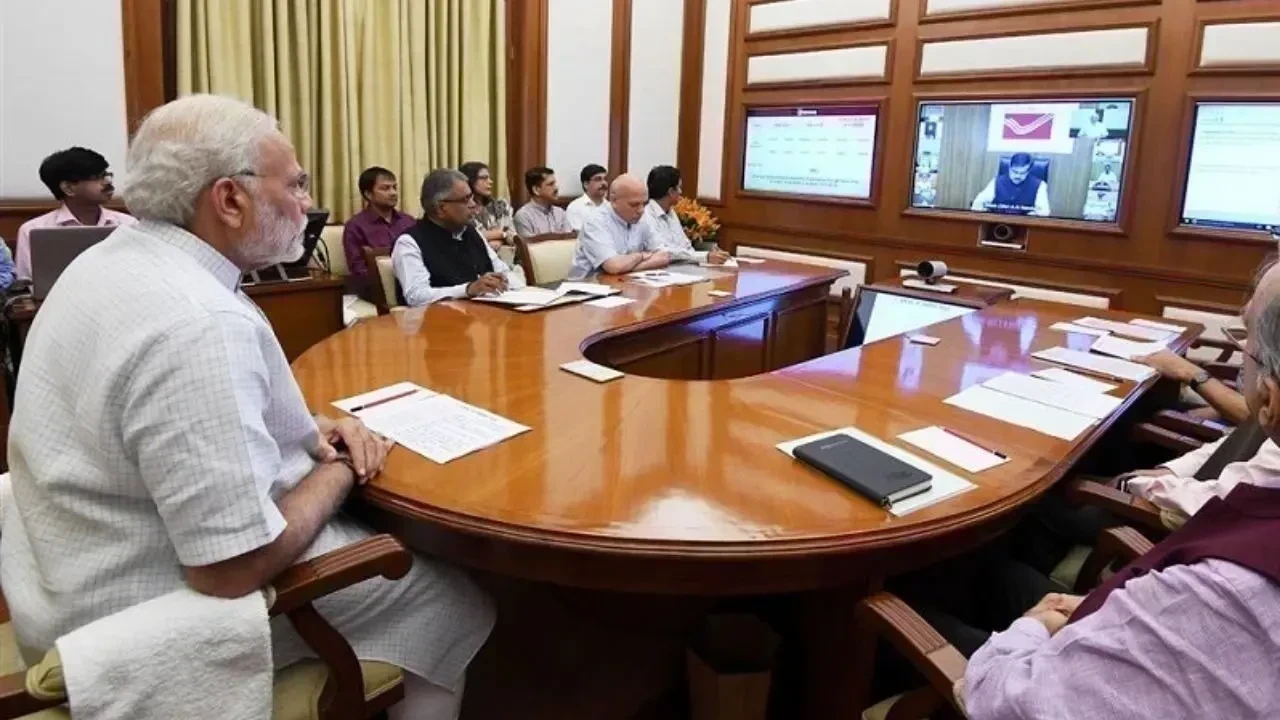
At its foundation, PRAGATI operates as a live review and assessment platform where crucial projects and citizen concerns are discussed, evaluated, and resolved through video sessions led by Narendra Modi.
The PRAGATI platform combines three essential governance aspects:
Assessment of vital infrastructure and social initiatives
Resolution of conflicts between ministries and with state governments
Addressing longstanding public grievances
This synthesis elevates PRAGATI beyond a mere monitoring interface; it acts as a pivotal decision-making instrument.
Governance in India has historically grappled with issues like delays, poor inter-departmental collaboration, and accountability issues. Critical infrastructure and community projects often face holdups due to procedural delays or inter-governmental conflicts.
PRAGATI was designed to tackle these challenges by bringing unresolved issues directly under the Prime Minister's scrutiny.
Traditional governance previously relied on paperwork and correspondence. PRAGATI has redirected attention towards measurable outcomes and deadlines, injecting urgency and clarity into the system.
Each PRAGATI session follows a rigorous agenda. Selected projects and complaints are reviewed alongside senior officials from pertinent departments and state governments.
Officials must provide updates on project statuses, elucidate any delays, and set clear deadlines—often in real-time during the session.
The platform employs digital dashboards, GIS mapping, and real-time data inputs to ensure discussions are founded on facts instead of hearsay, significantly decreasing ambiguity or obfuscation.
By 2026, PRAGATI had reviewed numerous projects and resolved thousands of grievances across sectors like infrastructure, energy, education, and urban development.
This milestone not only reflects sustainability but also the institutionalization of PRAGATI—it has evolved into a system rather than a mere initiative.
A key achievement has been the enhanced collaboration between state and district administrations, ensuring governance extends beyond the capital, New Delhi.
PRAGATI has been instrumental in eliminating hurdles for highways, railways, ports, energy facilities, and urban infrastructure projects. Challenges related to land acquisition and environmental approvals have witnessed quicker resolutions thanks to high-level oversight.
By identifying delays at an early stage and reinforcing accountability, the platform has contributed to managing cost overruns—a common issue in large-scale public projects.
In contrast to conventional top-down assessments, PRAGATI promotes collaborative resolution of issues. State authorities have direct access to central decision-makers, minimizing procedural barriers.
This has fortified cooperative federalism by turning review meetings into solution-centered dialogues, rather than just fault-finding sessions.
Beyond large projects, PRAGATI also tackles long-stagnant public issues spanning multiple departments. Many grievances unresolved for years have been addressed after being registered on the platform.
For citizens, the platform represents a rare chance for their concerns to be elevated within the highest echelons of government, reinstating faith in administrative efficacy.
A defining element of PRAGATI is its emphasis on personal accountability. Officials are specifically named for each concern, with timelines documented and monitored.
This practice has transformed the administrative culture, making excuses for delays harder to rationalize.
PRAGATI underscores that governance performance is quantifiable, not abstract. Progress is regularly monitored, reviewed, and followed up.
The platform has propelled officials towards proactive decision-making, reducing excessive risk aversion, knowing their issues will receive high-level review.
District administrators and field personnel now have a platform to voice ground realities, ensuring their concerns are acknowledged and acted upon.
PRAGATI showcases how digital tools and data can elevate the quality of governance. Discussions are anchored in reliable metrics and data rather than subjective narratives.
Globally, PRAGATI serves as a benchmark for how digital platforms can bolster executive oversight without undermining institutional processes.
Some critics voice concerns that an overreliance on high-level reviews could centralize authority, risking the autonomy of lower-level institutions.
While efficient for major initiatives, the PRAGATI model may not easily scale for all routine administrative needs.
Verifiers argue that PRAGATI is reserved for critical and long-pending issues, not routine governance, ensuring focus without overextension.
The platform supplements existing administrative mechanisms rather than replacing them, strengthening oversight without dismantling existing structures.
PRAGATI fits into India’s wider Digital India initiative, where technology amplifies governmental efficiency.
The platform closes the gap between policy objectives and real-world implementations, often the weakest aspect of public administration.
The involvement of the Prime Minister provides PRAGATI with unmatched authority, ensuring decisions are implemented effectively.
Unlike traditional mechanisms, PRAGATI prioritizes closure and tangible results over endless discussions.
Countries dealing with bureaucratic stagnation can draw valuable insights from PRAGATI’s design and operational effectiveness.
PRAGATI illustrates that while technology is crucial, it must be backed by political resolve and institutional support for success.
Future iterations might incorporate advanced analytics and predictive capabilities to preemptively identify delays.
Opportunities exist to bolster citizen interaction, making grievance resolution a more participatory process.
As PRAGATI approaches a major milestone in 2026, its narrative signifies a substantial transformation in Indian governance, evolving from passive administration to dynamic problem-solving. By merging technology, authority, and accountability, the platform has radically changed how decisions are made and executed.
In a system frequently critiqued for its inertia, PRAGATI stands as compelling evidence that governance reforms are achievable when intent aligns with execution.
This article serves informational and editorial purposes only. Governance outcomes may vary based on policy choices, administrative capabilities, and changing institutional frameworks. Readers should seek official government communications for authoritative updates.

US Stocks Slide as AI Fears, Inflation and Oil Surge Weigh
US stocks dropped as AI disruption fears hit tech firms, inflation rose above forecasts, and oil pri

Pacific Prime Wins Top Honors at Cigna Awards 2026
Pacific Prime secured Top Individual Broker and Top SME Broker awards at Cigna’s Annual Broker Award

QatarEnergy Halts LNG Output After Military Attack
QatarEnergy has stopped LNG production after military attacks hit its facilities in Ras Laffan and M

Strong 6.1 Magnitude Earthquake Hits West Sumatra, No Damage
A 6.1 earthquake struck off West Sumatra, Indonesia. No casualties, damage, or tsunami alert reporte

Saudi Confirms Drone Strike on US Embassy Riyadh
Two drones hit the US Embassy in Riyadh, causing a small fire and minor damage. No injuries were rep

UAE Restarts Limited Flights as Regional Airspace Disruptions Continue
UAE restarts limited flights from Dubai as US-Israel attacks on Iran disrupt regional airspace, forc

Asia Faces Energy Shock After Iran Closes Strait
Iran shuts Strait of Hormuz amid US-Israel strikes, sending oil prices higher and raising serious en


Bank of Baroda Faces Abu Dhabi Legal Battle over NMC Collapse
Bank of Baroda’s involvement in Abu Dhabi litigation tied to the NMC Healthcare collapse raises repu

Top Museum Openings of 2026 Set to Transform Global Tourism
From Los Angeles to Abu Dhabi and Brussels, 2026 brings major museum launches—Lucas Museum, Guggenhe

UAE Tour Highlights UAE’s Strength in Hosting Global Sports Events
Abu Dhabi Sports Council says the successful UAE Tour reflects the UAE’s leading role in hosting maj

EU Seeks Clarity from US After Supreme Court IEEPA Ruling
European Commission urges full transparency from the US on steps after Supreme Court ruling, emphasi

SpaceX Launches 53 New Satellites for Expanding Starlink Network
SpaceX launches 53 Starlink satellites in two Falcon 9 missions, breaking reuse records and expandin

RTA Awards Contract for Phase II of Hessa Street Upgrade in Dubai
Phase II of Hessa Street Development to add bridges, tunnel, and upgraded intersections, doubling ca

UAE Gold Prices Today, Monday 16 February 2026: Dubai & Abu Dhabi Updated Rates
Gold prices in UAE on 16 Feb 2026 updated: 24K around AED 599.75/gm, 22K AED 555.25/gm, and 18K AED

Over 25 Ahmedabad Schools Receive Bomb Threat Email, Authorities Investigate
More than 25 schools in Ahmedabad evacuated after bomb threat emails mentioning Khalistan. Authoriti





