Post by : Anis Karim
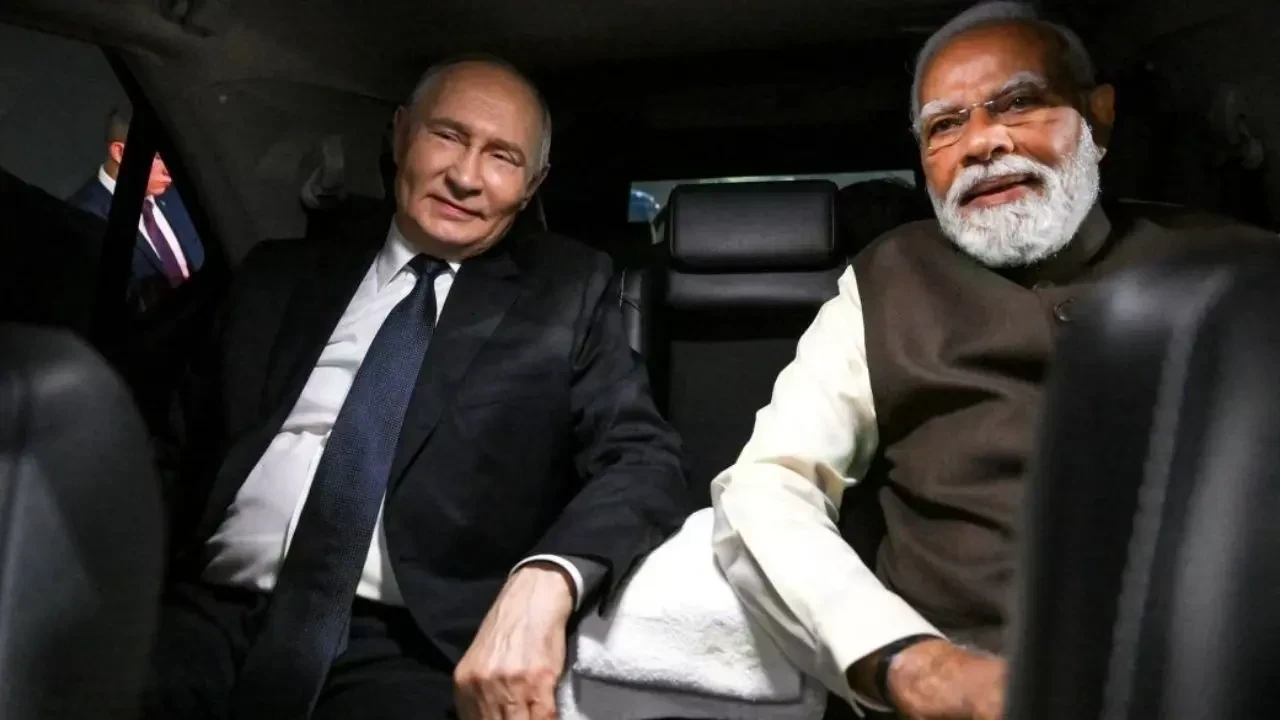
President Vladimir Putin's visit to Delhi arrives amid shifting global alliances and a pressing need for energy transitions. For India, Russia remains a vital ally in sectors like energy and defense. The dialogues in Delhi hint at not just continuity, but also potential new pathways that affect citizens directly—from fuel pricing and household energy costs to revitalizing industrial growth and job opportunities.
The renewed commitment between India and Russia is recognized as a strategic necessity. While Russia aims to fortify its partnerships in Asia to lessen economic vulnerabilities, India is on the hunt for stable energy supplies and to grow its manufacturing base. The topics discussed during this visit may lead to realignments influencing India's economic landscape.
Energy is the most direct way that people feel the effects of diplomatic efforts. Russia has become one of India's top crude oil suppliers, and stable imports help India maintain more predictable domestic fuel prices amid global market fluctuations.
Putin’s engagement has reignited discussions about long-term pricing models that could cushion India against sudden increases. Securing a multi-year pricing agreement could mean lower monthly fuel costs for households and sectors reliant on transportation.
Key conversations are also focusing on enhancing pipeline and storage networks. Despite facing logistical hurdles, talks about joint energy expansion and refinery partnerships are anticipated to accelerate.
If executed effectively, this collaboration could reduce India’s reliance on unstable international shipping routes, strengthening its energy security. A resilient energy supply chain fosters stable electricity prices and enhances industry competitiveness.
India has been progressively increasing its use of natural gas, encouraging both industries and homes to switch to cleaner options. As one of the world’s leading natural gas producers, Russia is well-positioned to assist India in boosting its gas infrastructure.
Enhanced cooperation may result in stable LNG contracts, better pricing, and wider reach of city gas networks, providing cleaner cooking fuel for households and cutting operational costs for businesses.
Beyond conventional hydrocarbons, both countries have shown interest in knowledge sharing on nuclear energy safety, hydrogen tech, and advanced battery systems. Russia's expertise in nuclear energy and India's focus on next-gen reactors presents promising prospects.
Collaboration in green hydrogen production and storage could ignite job growth in manufacturing, engineering, and energy distribution sectors.
A key expectation from the visit is job creation. Discussions on industrial cooperation cover vital sectors, including heavy machinery, mining, and petrochemicals—fields that have extensive local job potential.
When both nations agree to co-produce items—like turbines or industrial chemicals—it leads to new manufacturing plants, local vendor networks, and skill development initiatives, exemplified in the India–Russia Industrial Partnership Framework discussed during the summit.
Russia's aim to broaden its export base opens doors for technology-transfer agreements in:
advanced metallurgy
minerals processing
heavy engineering
chemical synthesis
support in defense manufacturing
For India, this translates to reduced import reliance and increased domestic manufacturing. Each transfer harbors the potential to create thousands of skilled jobs.
While defense collaboration isn’t new, recent discussions call for ramping up joint manufacturing efforts, aligning with India's goal of cutting down on arms imports while evolving its domestic defense capabilities.
Localized equipment production nurtures jobs across various sectors, spurring regional growth and R&D hubs.
As defense manufacturing scales up, opportunities will emerge in tier-2 and tier-3 cities through support networks—creating jobs from spare parts to distribution.
This employment ripple effect strengthens regional economic resilience and enhances India's overall industrial competitiveness.
A significant topic during India–Russia talks was improving logistics connectivity. The International North-South Transport Corridor (INSTC) seeks to shorten transit times by routing goods through Central Asia and the Middle East.
For consumers, this translates to more stable delivery schedules and potentially reduced pricing. For exporters, streamlined routes mean amplified profit margins and quicker access to new markets.
Enhanced trade pathways allow MSMEs to engage in exports without heavy shipping burdens. Items like textiles and agricultural produce could gain competitive entry into Eurasian markets.
As these enterprises expand, local job markets will benefit significantly.
If India secures more stable oil pricing, average citizens might:
experience fewer abrupt price hikes
enjoy steadier public transport costs
see logistics costs for essential goods stabilize
With fuel pricing being a significant inflation driver, such stability provides widespread economic relief.
Joint initiatives in energy, machinery, and defense create numerous job avenues:
construction labor during facility establishment
engineering and technician roles
supply chain and logistics positions
service and maintenance jobs
These roles uplift incomes and enhance workforce skill levels throughout India.
The addition of LNG terminals and pipeline infrastructure will facilitate:
consistent cooking gas availability
lower electricity tariffs
enhanced air quality
reliable industrial energy access
These improvements will significantly benefit millions, particularly in urban areas.
India aims for strategic autonomy, balancing relations among global powers. Strengthened ties with Russia do not undermine partnerships with Western nations but rather widen options in the energy and defense arenas.
This strategy enables India to negotiate favorable agreements, mitigate supply risks, and diversify its international relationships.
Putin's visit signifies Russia's trust in India as a significant partner amid changing global dynamics. This bolsters India’s standing as a balancing power in Asia.
For Indian citizens, diplomatic strength translates into:
reliable energy supplies
broadened trade prospects
increased global investment confidence
Even thorough agreements cannot fully shield against global price fluctuations caused by geopolitical events. India will need robust strategies to manage these variations.
Implementing large-scale gas imports and refining enhancements requires substantial infrastructure development, and local opposition can delay progress.
Timely execution is critical for achieving job growth and industrial expansion.
India must juggle its energy requirements with climate commitments. While Russian imports assure stability, India must also expand its clean energy ventures to meet sustainability targets.
Putin's visit reaffirms energy collaboration, providing India:
divergent crude sourcing options
greater access to natural gas
opportunities in nuclear and hydrogen domains
This diversification reduces vulnerabilities during global crises.
Industrial partnerships will necessitate more skilled talent in engineering, data systems, energy management, and precision manufacturing, aligning with India's vision for a high-skill economy.
Stable energy supplies, expanding manufacturing hubs, improved trade routes, and ongoing technological exchanges combine to set the stage for enduring economic stability. The benefits will ripple into communities through job availability, dependable living costs, and improved service quality.
Putin's journey to Delhi signifies more than diplomatic engagement—it creates pathways to energy security, industrial opportunities, and strengthened ties. If the projects discussed yield tangible results, upcoming years may bring substantial transformation in India's energy grid and job market.
For ordinary citizens, the dividends will manifest in stable fuel costs, employment prospects, local business growth, and enhanced economic conditions. The visit holds the promise of shaping India’s future in a rapidly evolving global arena.
This article incorporates current events and publicly available information. It is presented for informational purposes without endorsing any political stance or future policy predictions.

US Stocks Slide as AI Fears, Inflation and Oil Surge Weigh
US stocks dropped as AI disruption fears hit tech firms, inflation rose above forecasts, and oil pri

Pacific Prime Wins Top Honors at Cigna Awards 2026
Pacific Prime secured Top Individual Broker and Top SME Broker awards at Cigna’s Annual Broker Award

QatarEnergy Halts LNG Output After Military Attack
QatarEnergy has stopped LNG production after military attacks hit its facilities in Ras Laffan and M

Strong 6.1 Magnitude Earthquake Hits West Sumatra, No Damage
A 6.1 earthquake struck off West Sumatra, Indonesia. No casualties, damage, or tsunami alert reporte

Saudi Confirms Drone Strike on US Embassy Riyadh
Two drones hit the US Embassy in Riyadh, causing a small fire and minor damage. No injuries were rep

UAE Restarts Limited Flights as Regional Airspace Disruptions Continue
UAE restarts limited flights from Dubai as US-Israel attacks on Iran disrupt regional airspace, forc

Asia Faces Energy Shock After Iran Closes Strait
Iran shuts Strait of Hormuz amid US-Israel strikes, sending oil prices higher and raising serious en


Bank of Baroda Faces Abu Dhabi Legal Battle over NMC Collapse
Bank of Baroda’s involvement in Abu Dhabi litigation tied to the NMC Healthcare collapse raises repu

Top Museum Openings of 2026 Set to Transform Global Tourism
From Los Angeles to Abu Dhabi and Brussels, 2026 brings major museum launches—Lucas Museum, Guggenhe

UAE Tour Highlights UAE’s Strength in Hosting Global Sports Events
Abu Dhabi Sports Council says the successful UAE Tour reflects the UAE’s leading role in hosting maj

EU Seeks Clarity from US After Supreme Court IEEPA Ruling
European Commission urges full transparency from the US on steps after Supreme Court ruling, emphasi

SpaceX Launches 53 New Satellites for Expanding Starlink Network
SpaceX launches 53 Starlink satellites in two Falcon 9 missions, breaking reuse records and expandin

RTA Awards Contract for Phase II of Hessa Street Upgrade in Dubai
Phase II of Hessa Street Development to add bridges, tunnel, and upgraded intersections, doubling ca

UAE Gold Prices Today, Monday 16 February 2026: Dubai & Abu Dhabi Updated Rates
Gold prices in UAE on 16 Feb 2026 updated: 24K around AED 599.75/gm, 22K AED 555.25/gm, and 18K AED

Over 25 Ahmedabad Schools Receive Bomb Threat Email, Authorities Investigate
More than 25 schools in Ahmedabad evacuated after bomb threat emails mentioning Khalistan. Authoriti





