Post by : Naveen Mittal
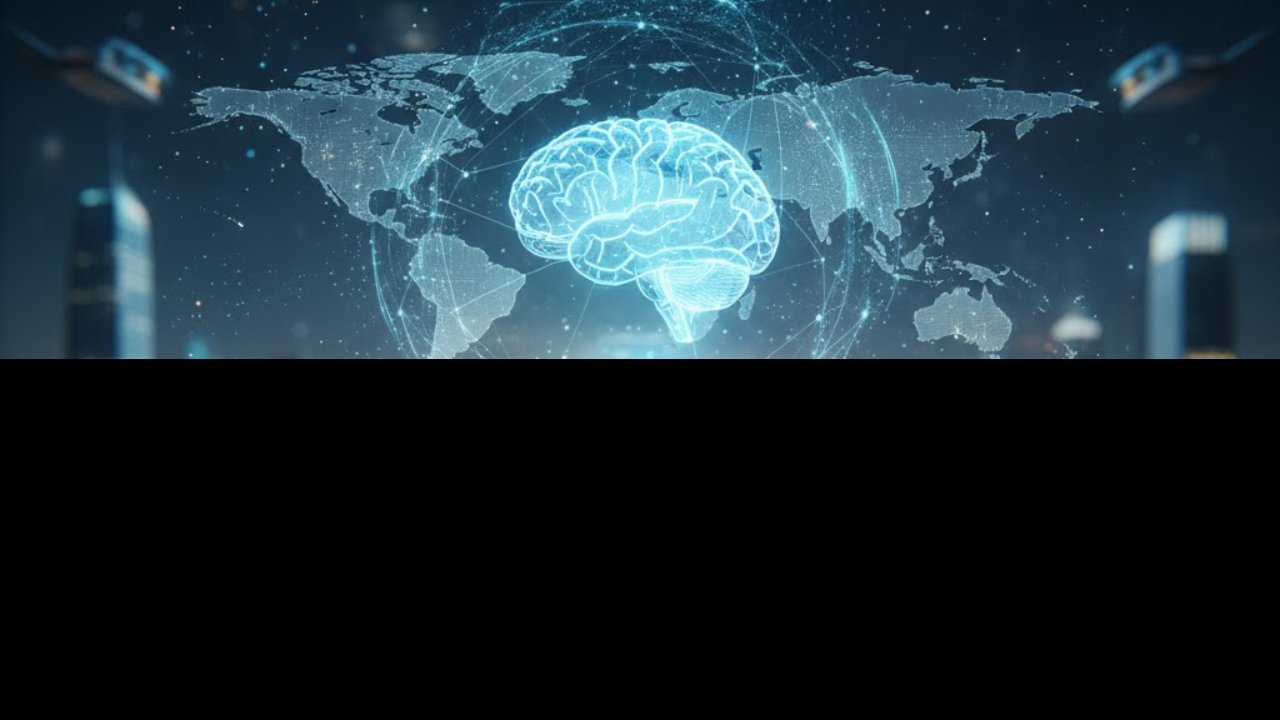
The world of work is experiencing its biggest disruption since the Industrial Revolution. Artificial intelligence—once an abstract buzzword—is now a tangible force reshaping how people earn, learn, and progress. In 2025, the global labour market is caught in a paradox: AI is creating wealth, but also widening divides.
For every data scientist commanding six-figure salaries, there are thousands of clerical, customer service, and administrative workers facing redundancy or stagnation. While productivity is rising, not everyone is benefiting equally—and that imbalance is rewriting the rules of capitalism.
New data from the International Labour Organization shows that AI adoption is polarizing wages. High-skill professionals—especially in engineering, cybersecurity, data science, and AI governance—are seeing double-digit income growth. In contrast, routine cognitive roles like bookkeeping, transcription, and back-office support have seen wages flatline or fall.
The new economy rewards those who complement machines, not compete with them. Employees who can design, supervise, or interpret AI systems are capturing more value, while those performing repeatable tasks are being priced out of relevance.
Even within tech, the divide is widening. Experienced machine learning engineers and AI ethicists are commanding record salaries, while junior coders—whose tasks are easily automated—face shrinking opportunities.
Economists are calling it the “skills barbell effect”—growth at the top and bottom, with a hollowing-out of the middle.
If the 20th century was defined by industrial literacy, the 21st will be defined by digital fluency. Yet, many nations are unprepared for the speed of change. The World Economic Forum estimates that 44% of workers’ skills will be disrupted within the next five years.
Governments and corporations are responding unevenly. Singapore and Finland have introduced national reskilling funds, subsidizing citizens to take AI, data, and digital ethics courses. India is rolling out an “AI for All” skilling program aimed at training 10 million workers by 2030. In contrast, many Western countries are still relying on private-sector initiatives, leaving millions of workers adrift in a shifting market.
Reskilling isn’t just about new knowledge—it’s about new mindsets. Analytical reasoning, creativity, emotional intelligence, and adaptability are emerging as the most in-demand traits—skills that can’t be easily replicated by machines.
Despite fears of mass displacement, AI isn’t replacing all work—it’s transforming it. Many jobs are evolving into AI-assisted roles, blending human insight with machine efficiency.
Lawyers use generative AI to draft contracts faster.
Doctors leverage algorithms for diagnosis and data visualization.
Designers co-create ideas with AI image generators.
Teachers use adaptive learning platforms to personalize education.
These hybrid jobs require workers who understand both context and computation. They don’t need to code, but they do need to know how to guide intelligent systems—how to ask the right questions, interpret results, and judge when the machine is wrong.
This ability to collaborate with AI is fast becoming the most valuable professional skill of the decade.
AI is driving efficiency at a scale never seen before. Global productivity has grown by roughly 1.6% in 2025—its highest rate in over a decade. But wages are not keeping up.
Why? Because the gains are accruing disproportionately to capital, not labor. The companies that own the AI infrastructure—data centers, algorithms, intellectual property—are capturing outsized profits. Workers, meanwhile, face shorter contracts, gig-style employment, and shrinking bargaining power.
The traditional social contract—where productivity growth led to higher wages—is breaking down. This tension is fueling debates about universal basic income (UBI), worker co-ownership of AI systems, and new tax models for automation.
AI has also disrupted the meaning of merit itself. Hiring is no longer just about degrees or experience—it’s about learnability.
Recruiters are increasingly using AI to evaluate cognitive agility, adaptability, and emotional intelligence. The ability to reskill quickly and operate in an AI-augmented environment is becoming a key hiring criterion.
This shift is creating opportunities for self-taught professionals and freelancers who can prove their competence through digital portfolios or micro-credentials rather than traditional degrees. The democratization of learning—through platforms like Coursera, Udemy, and Khan Academy—has allowed millions to pivot careers without stepping into a classroom.
But it also means the race never ends. In an AI-driven world, the shelf life of a skill is shrinking—and lifelong learning is no longer optional.
Interestingly, the AI revolution is also redrawing the global economic map. For decades, the Global South supplied inexpensive labor to Western firms through outsourcing and BPO industries. Now, automation is threatening that model—but also creating new avenues for innovation.
Countries like India, Indonesia, and Nigeria are investing in homegrown AI startups, building systems trained on local languages and data. Instead of being passive participants in the AI economy, they’re beginning to shape it.
This “South-to-South innovation” could redefine global competitiveness, turning emerging economies into creative powerhouses rather than cost centers.
In the coming decade, the workplace will be neither fully automated nor purely human. It will be collaborative, where algorithms handle scale and precision, while humans provide empathy, ethics, and creativity.
Employers will need to rethink career ladders, reward systems, and training pathways. Employees will need to become continual learners, agile in mindset and adaptable to technology that changes every quarter.
AI is not just a tool—it’s a mirror reflecting the strengths and weaknesses of human systems. How societies adapt to it will determine whether it becomes a story of empowerment or exclusion.
Disclaimer:
This article is for informational and educational purposes only. Labor market data and forecasts are evolving rapidly; readers should consult credible global institutions like the ILO, WEF, and IMF for up-to-date reports and analysis.

US Stocks Slide as AI Fears, Inflation and Oil Surge Weigh
US stocks dropped as AI disruption fears hit tech firms, inflation rose above forecasts, and oil pri

Pacific Prime Wins Top Honors at Cigna Awards 2026
Pacific Prime secured Top Individual Broker and Top SME Broker awards at Cigna’s Annual Broker Award
QatarEnergy Halts LNG Output After Military Attack
QatarEnergy has stopped LNG production after military attacks hit its facilities in Ras Laffan and M

Strong 6.1 Magnitude Earthquake Hits West Sumatra, No Damage
A 6.1 earthquake struck off West Sumatra, Indonesia. No casualties, damage, or tsunami alert reporte

Saudi Confirms Drone Strike on US Embassy Riyadh
Two drones hit the US Embassy in Riyadh, causing a small fire and minor damage. No injuries were rep

UAE Restarts Limited Flights as Regional Airspace Disruptions Continue
UAE restarts limited flights from Dubai as US-Israel attacks on Iran disrupt regional airspace, forc

Asia Faces Energy Shock After Iran Closes Strait
Iran shuts Strait of Hormuz amid US-Israel strikes, sending oil prices higher and raising serious en


Bank of Baroda Faces Abu Dhabi Legal Battle over NMC Collapse
Bank of Baroda’s involvement in Abu Dhabi litigation tied to the NMC Healthcare collapse raises repu

Top Museum Openings of 2026 Set to Transform Global Tourism
From Los Angeles to Abu Dhabi and Brussels, 2026 brings major museum launches—Lucas Museum, Guggenhe

UAE Tour Highlights UAE’s Strength in Hosting Global Sports Events
Abu Dhabi Sports Council says the successful UAE Tour reflects the UAE’s leading role in hosting maj
EU Seeks Clarity from US After Supreme Court IEEPA Ruling
European Commission urges full transparency from the US on steps after Supreme Court ruling, emphasi
SpaceX Launches 53 New Satellites for Expanding Starlink Network
SpaceX launches 53 Starlink satellites in two Falcon 9 missions, breaking reuse records and expandin

RTA Awards Contract for Phase II of Hessa Street Upgrade in Dubai
Phase II of Hessa Street Development to add bridges, tunnel, and upgraded intersections, doubling ca

UAE Gold Prices Today, Monday 16 February 2026: Dubai & Abu Dhabi Updated Rates
Gold prices in UAE on 16 Feb 2026 updated: 24K around AED 599.75/gm, 22K AED 555.25/gm, and 18K AED

Over 25 Ahmedabad Schools Receive Bomb Threat Email, Authorities Investigate
More than 25 schools in Ahmedabad evacuated after bomb threat emails mentioning Khalistan. Authoriti