Post by : Anis Karim
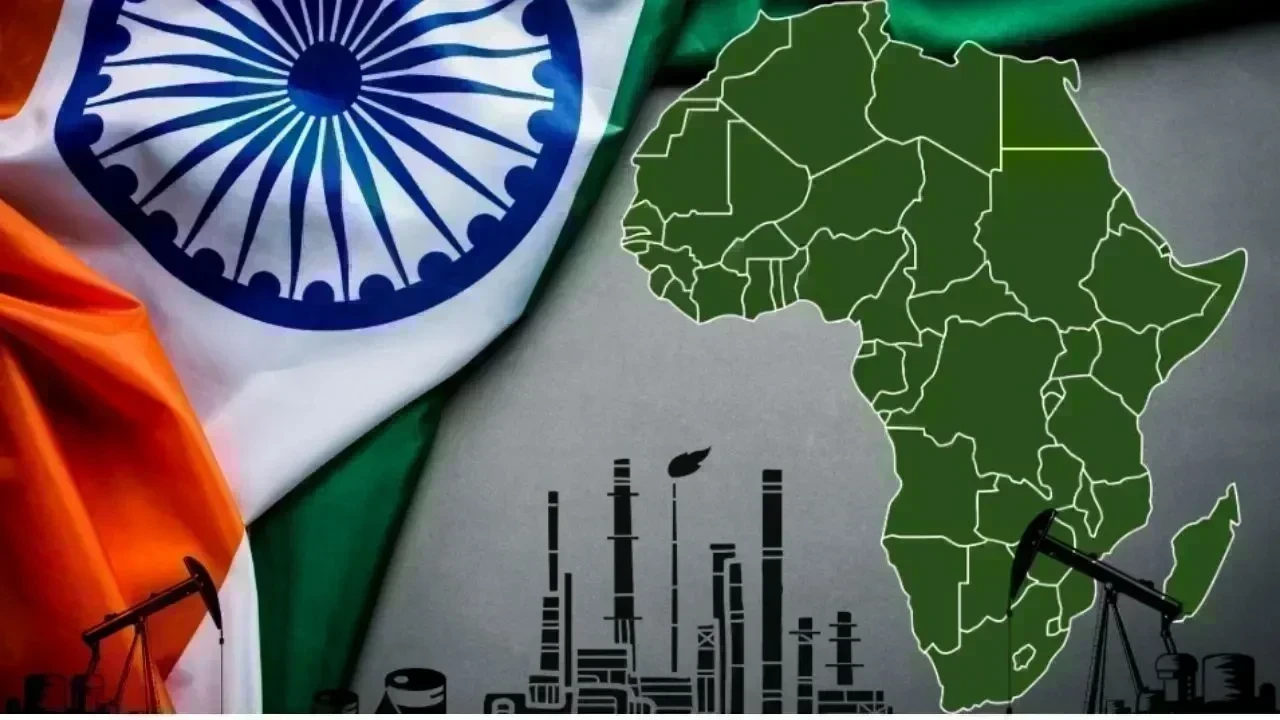
While Africa and India may seem worlds apart, the energy relationship between them is tighter than it appears. Fluctuations in India's fuel prices rarely stem from local issues alone; the global oil landscape connects everything.
Once a mere supplier, Africa is emerging as a key player in the energy sector. With new government leadership and investment initiatives, the region is transforming its approach to oil and gas management. These developments have immediate implications for nations reliant on imported energy, especially India.
In essence, decisions made far away can dictate whether your next fuel bill rises or falls.
Historically, African nations have exported raw materials while importing costly refined fuels. This system, which favored international corporations, is now changing.
Countries across Africa are investing in:
Building local oil refining capabilities
Developing natural gas facilities
Enhancing port infrastructures
Expanding energy storage options
Establishing robust pipeline networks
Creating regional energy alliances
Rather than simply exporting crude oil, many nations are striving to enhance the value of their resources through local refining.
This evolution benefits African economies while reshaping global fuel distribution.
Political stability is key to determining how smoothly oil flows from these regions.
Recent trends have included:
Peace settlements among competing political factions
Shifts in leadership driven by elections
Policy changes that attract investment
National strategies focused on expanding production
In stable governance, production levels can climb, while instability can lead to declines in supply.
The energy market reacts swiftly to political changes; even whispers of unrest can escalate prices.
When news hints at turmoil, traders may predict future supply issues, impacting nations like India.
Oil-producing countries rely on various agreements and regulations. Changes in leadership can prompt renegotiations, while new policies can alter production rates or market access.
Political negotiations affect:
Approval of licenses
Rights to explore resources
Regulations on exports
Structures of ownership
Investor confidence
Easier agreements lead to lower extraction costs, while rising tensions push prices higher.
Africa is not solely focused on oil; its energy strategy encompasses three vital areas:
Emerging projects are contributing fresh oil supplies to global markets, helping stabilize prices.
For India, an increase in supply is crucial, benefiting its import-heavy economy.
Natural gas is quickly becoming a leading export element for Africa.
For India, gas prices are significant as they impact:
Electricity generation costs
Fertilizer production
Industrial fuel and production costs
Distribution of city gas
As gas exports grow and markets stabilize, India can secure favorable contracts.
African nations are also focusing on renewable sources like:
Solar power
Wind energy
Hydroelectric projects
Green hydrogen initiatives
By harnessing cleaner energy locally, Africa can increase fuel exports, resulting in a more substantial global supply and preventing price spikes.
Proximity to vital shipping lanes enhances Africa's energy influence on India.
Oil transport to India traverses strategic chokepoints:
Narrow passages
Coastal routes
Key ports
Rising tensions lead to increased shipping insurance, which escalates freight charges and consequently, fuels prices.
Piracy and unstable port governance raise logistical risks for oil traders.
When risks soar, traders impose premiums that ultimately reach Indian consumers.
While India sources fuel from various global regions, African crude and gas remain pivotal for diversifying its energy import strategy.
Weakening African supplies result in:
Greater dependency on pricier markets
Increased transportation costs
Challenges in refining specific grades
Escalation of trade deficits
Conversely, boosting production from Africa allows India to negotiate better terms and maintain robust strategic reserves.
Energy transactions occur in foreign currencies, making stability in African economies critical.
Rising global fuel prices can inflate India's import bills, weakening its currency and subsequently raising retail fuel costs.
India is pursuing direct partnerships in oil and gas to:
Eliminate middlemen
Establish stable pricing
Ensure a reliable supply over extended periods
Mitigate market volatility
Strong relations with African nations enhance India's negotiating position, while strained ties weaken it.
Fuel costs in India influence various sectors, from transportation to food prices, shaping overall economic dynamics.
An increase of even one rupee per liter can lead to broader inflation effects across the economy.
Inflation may appear arbitrary but often has fuel price spikes at its roots.
The cascading effect begins with increased transport costs, leading to higher prices for consumer goods.
Should investments falter or political instability persist:
Tougher oil supply scenarios
Natural gas shortages
Slowed transport logistics
Recurring energy price surges
In such cases, India would have to contend with competing global powers for limited resources.
Conversely, if Africa succeeds in stabilizing its energy sector:
Prices may stabilize
Negotiations could improve
Long-term agreements for imports become feasible
Private refiners achieve gains
Budget forecasting becomes more manageable
These outcomes render the energy market more predictable and less expensive for consumers.
Energy diplomacy extends beyond the realm of governments; it influences personal finances for everyday citizens.
For instance:
A protest in Africa could hike your fuel bill
An agreement can lower your gas prices
Contracts can stabilize electricity costs
Port disruptions can elevate transport charges
Global energy dialogue determines local retail pricing.
India is actively pursuing strategies that involve:
Securing long-term energy contracts
Investing in overseas energy projects
Boosting strategic fuel reserves
Promoting domestic renewable energy
Diversifying energy partnerships
Notably, diversification must encompass African partnerships for optimal stability.
The narrative of Africa’s energy sector is unfolding.
Current political agreements dictate future fuel pricing structures.
Infrastructure developments will influence availability in coming decades.
Diplomacy today impacts economic stability in upcoming elections.
Though many Indians may never set foot in Africa, the continent's influence permeates daily life through energy supplies.
Through transportation, utilities, and overall costs of living, Africa’s energy decisions impact India's households.
Energy is a borderless issue with significant consequences.
The evolving landscape of Africa’s energy sector will shape India’s economic environment in years to come.
As such, energy encompasses not just resources but governance, pricing dynamics, and ultimately, citizens' livelihoods.
This article is intended for general informational purposes only. It does not constitute financial, investment, geopolitical, or energy-market advice. Readers are encouraged to consult qualified professionals and authoritative sources when making decisions related to energy policy, business, or investments.

US Stocks Slide as AI Fears, Inflation and Oil Surge Weigh
US stocks dropped as AI disruption fears hit tech firms, inflation rose above forecasts, and oil pri

Pacific Prime Wins Top Honors at Cigna Awards 2026
Pacific Prime secured Top Individual Broker and Top SME Broker awards at Cigna’s Annual Broker Award

QatarEnergy Halts LNG Output After Military Attack
QatarEnergy has stopped LNG production after military attacks hit its facilities in Ras Laffan and M

Strong 6.1 Magnitude Earthquake Hits West Sumatra, No Damage
A 6.1 earthquake struck off West Sumatra, Indonesia. No casualties, damage, or tsunami alert reporte

Saudi Confirms Drone Strike on US Embassy Riyadh
Two drones hit the US Embassy in Riyadh, causing a small fire and minor damage. No injuries were rep

UAE Restarts Limited Flights as Regional Airspace Disruptions Continue
UAE restarts limited flights from Dubai as US-Israel attacks on Iran disrupt regional airspace, forc

Asia Faces Energy Shock After Iran Closes Strait
Iran shuts Strait of Hormuz amid US-Israel strikes, sending oil prices higher and raising serious en


Bank of Baroda Faces Abu Dhabi Legal Battle over NMC Collapse
Bank of Baroda’s involvement in Abu Dhabi litigation tied to the NMC Healthcare collapse raises repu

Top Museum Openings of 2026 Set to Transform Global Tourism
From Los Angeles to Abu Dhabi and Brussels, 2026 brings major museum launches—Lucas Museum, Guggenhe

UAE Tour Highlights UAE’s Strength in Hosting Global Sports Events
Abu Dhabi Sports Council says the successful UAE Tour reflects the UAE’s leading role in hosting maj

EU Seeks Clarity from US After Supreme Court IEEPA Ruling
European Commission urges full transparency from the US on steps after Supreme Court ruling, emphasi

SpaceX Launches 53 New Satellites for Expanding Starlink Network
SpaceX launches 53 Starlink satellites in two Falcon 9 missions, breaking reuse records and expandin

RTA Awards Contract for Phase II of Hessa Street Upgrade in Dubai
Phase II of Hessa Street Development to add bridges, tunnel, and upgraded intersections, doubling ca

UAE Gold Prices Today, Monday 16 February 2026: Dubai & Abu Dhabi Updated Rates
Gold prices in UAE on 16 Feb 2026 updated: 24K around AED 599.75/gm, 22K AED 555.25/gm, and 18K AED

Over 25 Ahmedabad Schools Receive Bomb Threat Email, Authorities Investigate
More than 25 schools in Ahmedabad evacuated after bomb threat emails mentioning Khalistan. Authoriti





