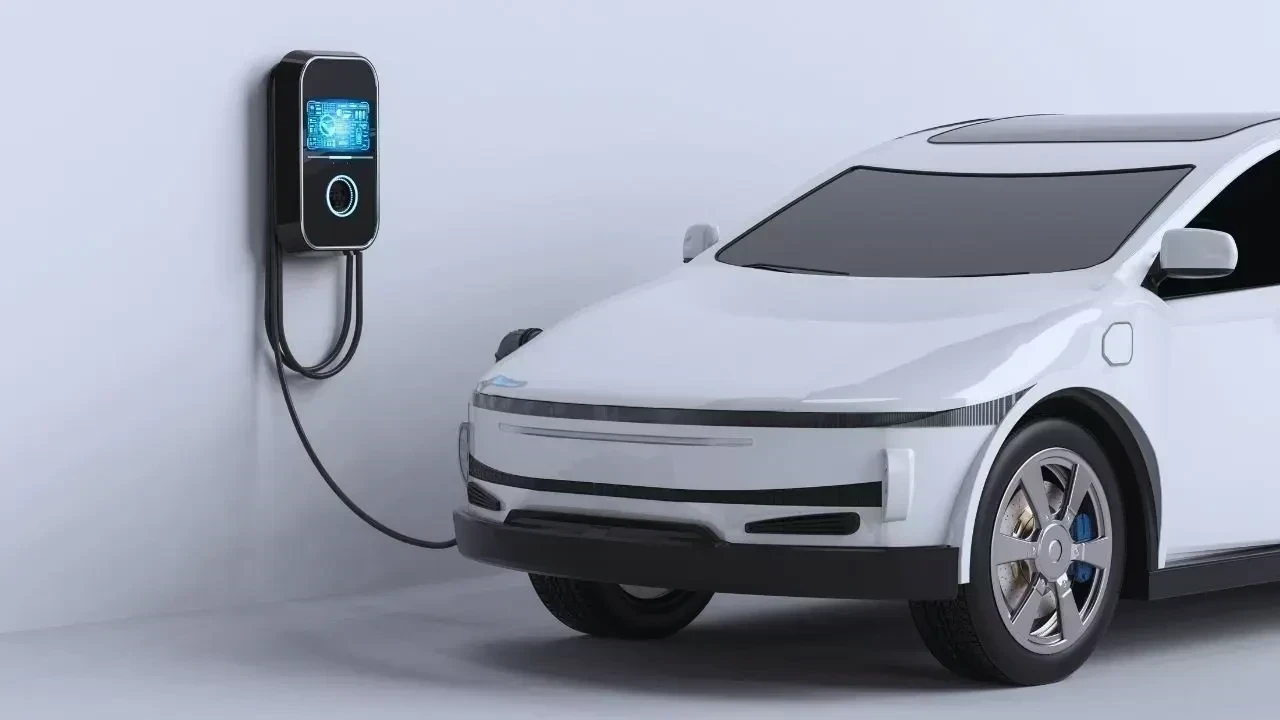
Post by : Anis Karim
Worldwide, electric vehicles are gaining significant traction. In Europe, dealerships report rapid turnover of EV stock. Manufacturers in East Asia are announcing record shipments. In select U.S. regions, EV registrations soared in just one week, surpassing previous monthly figures.
The global auto landscape appears to be pivoting towards electrification.
Nonetheless, the scenario in India is unique.
Our cities are densely populated. Budgets are tight, and infrastructure varies widely. Add to this the unpredictability of local driving conditions, and the global electric surge raises a pivotal question for Indian consumers:
Will international trends effectively transform Indian driving habits?
Several major brands have aggressively cut prices to enhance sales figures. As battery costs decline and competition heightens, prices have dropped significantly in various markets, making EVs more accessible.
Lower pricing has made electric vehicles less of a luxury and more of a mainstream option.
The result? Increased affordability prompts swift adoption.
Countries have rolled out:
Ultra-fast charging stations
Subsidized home charging installations
Public charging that is free of charge
Accessible charging at workplaces
This has alleviated one of the primary concerns: range anxiety.
Logistics firms, taxi services, and delivery companies are:
Switching from petrol to electric vehicles
Securing batches of EVs
Negotiating bulk purchase discounts
Fleet changes lead to sudden spikes in demand.
Cities abroad are:
Imposing fines on diesel vehicles
Introducing congestion fees
Restricting petrol vehicle registrations
Implementing deadlines for zero emissions
This has made conventional fuel options less practical.
While many countries offer substantial subsidies for EV buyers, India is different:
Some incentives are available
Yet, upfront costs remain a hurdle
Affordable EV choices are scarce
Financing options are rigorous
Most EVs remain pricier than what average urban families can comfortably spend.
Some Indian cities boast a robust charging network, while others lack:
Public charging stations
Home charger restrictions in apartment complexes
Inconvenient parking areas
Faulty charging stations
Long wait times for charging
Dependence on a mature charging network is critical for global EV adoption.
Conditions such as frequent braking, severe traffic, high temperatures, rough roads, and voltage fluctuations can impair battery efficiency.
A vehicle optimized for European conditions may struggle in Indian traffic.
An electric vehicle stalling in Europe usually means nearby charging accessibility, whereas in India, it can mean:
Complications in towing
Long waits for service
High repair costs
The stress of uncertainty over convenience
The prevalence of petrol pumps relative to charging stations poses a dilemma.
Electric scooters and motorcycles are outpacing the growth of electric cars.
Why?
Lower costs
Easier charging solutions
Swift battery swaps
Minimal parking requirements
Cheaper maintenance
In India, the electric journey starts with two-wheelers, not four.
In major cities, taxi services are discreetly transitioning to electric.
Operators enjoy:
Predictable running expenses
Government support
Reduced maintenance costs over time
As drivers adopt EVs, passengers grow familiar and comfortable with them.
Indian automakers are:
Creating batteries resistant to heat
Speeding up charging solutions
Testing durability on Indian roads
Offering extended warranties
Minimizing service gaps
Global best practices are influencing local designs.
Local battery production enables:
Reduced import reliance
Lower cost per unit
Less supply chain delays
By producing batteries at home, the prices of EVs will naturally decline.
Without the ability to charge in high-density living spaces:
Owning an EV remains impractical
Overnight charging becomes unreliable
Infrastructure growth stagnates
Resident associations hold the key to this issue.
Electric vehicles need to:
Match petrol vehicle prices
Boast similar EMIs
Show clear long-term savings
Until this threshold is met, interest in EVs will remain lukewarm.
Many potential buyers worry about:
"What if the battery fails?"
Until:
Replacement expenses drop
Warranty perks expand
Options for upgrades are available
Concerns still hinder purchases.
EV regulations differ significantly from one state to another in India.
This leads to confusion among consumers.
A cohesive policy environment would build trust.
Indeed — but the motivation will be economic rather than emotional.
Automakers look to new markets:
Enhance profit margins
Improve production processes
Attract investment
If global sales of EVs increase, technological advancements will follow suit.
With technological evolution, cost-efficiency rises, benefiting consumers in India indirectly.
More charging stations are emerging, tax incentives are evolving, and import duties are fluctuating.
Policy directions are present, but change unfolds slowly.
India is not one for rapid shifts; it values steady progress.
Many urban consumers express:
EVs look appealing
However, they feel risky
They're exciting
But remain costly
They hold potential
Yet uncertainty looms
Emotions and practical realities are at odds.
Absolutely.
It will accelerate:
Innovation in battery technology
Scaling production
Reducing costs
Advancing charging innovations
Prioritizing sustainability
India will not lag behind; it will adapt in its own time.
Not immediately.
However, it will happen sooner than anticipated.
Three determining factors will be:
Cost efficiencies
Accessibility of charging stations
Consumer confidence
When all align, petrol will become just an option.
Electric will become the clear choice.
You lack access to charging
You frequently drive long distances
You own a new petrol vehicle
Highway travel is essential
You reside in an urban area
You have secure parking
You predominantly drive in the city
You seek lower running costs
You aim for long-term ownership
Not every successful approach abroad applies to India.
Nevertheless, international developments will shape the Indian landscape.
The question isn't "if" EVs will gain popularity in India, but rather "when".
While global growth may appear rapid, India's path will be distinct.
The worldwide surge in EV sales hastens innovation.
India will benefit, albeit gradually, before a swift transition occurs.
When affordability meets infrastructure and trust meets access, the quiet hum of electric motors will replace the noise of traditional engines.
Not out of fashion, but out of necessity.
This article serves as general information and should not be construed as automotive, financial, or investment advice. Automotive policies and incentives are in constant flux. Readers are encouraged to consult official sources and local dealers before making purchasing commitments.

US Stocks Slide as AI Fears, Inflation and Oil Surge Weigh
US stocks dropped as AI disruption fears hit tech firms, inflation rose above forecasts, and oil pri

Pacific Prime Wins Top Honors at Cigna Awards 2026
Pacific Prime secured Top Individual Broker and Top SME Broker awards at Cigna’s Annual Broker Award

QatarEnergy Halts LNG Output After Military Attack
QatarEnergy has stopped LNG production after military attacks hit its facilities in Ras Laffan and M

Strong 6.1 Magnitude Earthquake Hits West Sumatra, No Damage
A 6.1 earthquake struck off West Sumatra, Indonesia. No casualties, damage, or tsunami alert reporte

Saudi Confirms Drone Strike on US Embassy Riyadh
Two drones hit the US Embassy in Riyadh, causing a small fire and minor damage. No injuries were rep

UAE Restarts Limited Flights as Regional Airspace Disruptions Continue
UAE restarts limited flights from Dubai as US-Israel attacks on Iran disrupt regional airspace, forc

Asia Faces Energy Shock After Iran Closes Strait
Iran shuts Strait of Hormuz amid US-Israel strikes, sending oil prices higher and raising serious en


Bank of Baroda Faces Abu Dhabi Legal Battle over NMC Collapse
Bank of Baroda’s involvement in Abu Dhabi litigation tied to the NMC Healthcare collapse raises repu

Top Museum Openings of 2026 Set to Transform Global Tourism
From Los Angeles to Abu Dhabi and Brussels, 2026 brings major museum launches—Lucas Museum, Guggenhe

UAE Tour Highlights UAE’s Strength in Hosting Global Sports Events
Abu Dhabi Sports Council says the successful UAE Tour reflects the UAE’s leading role in hosting maj

EU Seeks Clarity from US After Supreme Court IEEPA Ruling
European Commission urges full transparency from the US on steps after Supreme Court ruling, emphasi
SpaceX Launches 53 New Satellites for Expanding Starlink Network
SpaceX launches 53 Starlink satellites in two Falcon 9 missions, breaking reuse records and expandin

RTA Awards Contract for Phase II of Hessa Street Upgrade in Dubai
Phase II of Hessa Street Development to add bridges, tunnel, and upgraded intersections, doubling ca

UAE Gold Prices Today, Monday 16 February 2026: Dubai & Abu Dhabi Updated Rates
Gold prices in UAE on 16 Feb 2026 updated: 24K around AED 599.75/gm, 22K AED 555.25/gm, and 18K AED

Over 25 Ahmedabad Schools Receive Bomb Threat Email, Authorities Investigate
More than 25 schools in Ahmedabad evacuated after bomb threat emails mentioning Khalistan. Authoriti