
Post by : Anis Karim
The major Cloudflare outage that unfolded this week became one of the most talked-about digital disruptions in recent memory, affecting millions of users and hundreds of services around the world. What began as an internal systems malfunction quickly spiraled into a global slowdown, exposing how deeply the modern internet depends on a handful of behind-the-scenes infrastructure providers.
From social networks and AI tools to gaming platforms and transport services, the ripple effects lasted hours, leaving many wondering how a single fault could have such a sweeping impact. This article examines what happened, why it happened, how it affected different sectors, and what lessons businesses and everyday users must draw from an event that temporarily shook the digital landscape.
Cloudflare, one of the world’s most widely used internet infrastructure companies, experienced a sizeable outage triggered by an unexpected internal configuration issue. The disruption began with a sudden spike in network errors, which caused websites relying on Cloudflare to either load extremely slowly or stop responding altogether.
The incident unfolded during a busy weekday, making the disruption more visible. Users across continents reported that several of their most-used platforms were either offline or showing error messages. While outages are not new to the digital world, the scale and speed at which this one propagated made it stand out.
Cloudflare later clarified that the disruption was not caused by a cyberattack or hostile intrusion. Instead, it stemmed from a routine internal update that unintentionally generated a massive system file. This oversized file quickly propagated through Cloudflare’s global network, overloading systems and creating widespread interruptions in traffic routing.
The outage lasted several hours before Cloudflare implemented a fix and gradually restored normal service. But while the company resolved the problem on the same day, the incident left a lasting impact on public perception of digital reliability.
To understand the scale of the disruption, it’s important to recognise the central role Cloudflare plays in everyday internet usage. Though users rarely interact with it directly, Cloudflare operates as the protective and performance-enhancing layer for millions of websites worldwide.
Its responsibilities range from managing traffic flows and defending against attacks to speeding up website loading times. For businesses, using Cloudflare means faster services, protection from cyber threats, and stable global performance.
That means when Cloudflare malfunctions, the effects cascade far beyond a single company. A large portion of the internet relies on its systems—so a glitch in its network affects countless services simultaneously.
This outage demonstrated how the digital world’s reliance on a few major infrastructure providers can create a concentration of risk. When one provider goes down, vast segments of the internet are exposed.
While Cloudflare did not face an attack, the root cause was unusually technical. A change in database permissions led to the creation of an unexpectedly large feature file used in the company’s bot-management system.
This file, which should have been small, became unusually large and was pushed to systems across the network. The propagation triggered a chain reaction, causing servers to struggle with processing and routing global traffic.
Because Cloudflare’s systems are highly interconnected, a single misconfigured component had the power to disrupt multiple layers of the network. This is the inherent complexity of large-scale infrastructure: each piece connects to several others, and even a minor glitch can snowball into a widespread outage if conditions align unfavourably.
The company’s engineers eventually rolled back the problematic changes and stabilised the network, but the disruption highlighted the fragility of tightly interconnected digital ecosystems.
The outage’s impact was felt across several major industries and digital platforms, making it more than a niche technical failure. Businesses and users across sectors realised how dependent they were on Cloudflare without even knowing it.
One of the first major services affected was X (formerly Twitter). Users reported being unable to load timelines, access profiles, or post updates. Millions experienced delays, errors, and partial service failures. Because social media is a primary information source for many, the disruption became highly visible very quickly.
AI-powered websites experienced significant downtime. Many users attempting to access conversational AI tools were greeted with error screens. Since these platforms serve both everyday users and professionals, the failure affected work, communication, and research workflows across the globe.
Digital design platforms, content-creation sites, and collaboration tools were also impacted. Offices trying to complete daily tasks found themselves slowed down, delaying productivity during peak working hours.
Online gaming services struggled as well. Popular titles saw login issues, game lobbies became unresponsive, and matchmaking servers faltered. For many gamers, the outage was reminiscent of large-scale disruptions usually associated with cyberattacks, even though this wasn’t the case here.
The outage also affected public-sector platforms. Some transit systems experienced website downtime, making it harder for commuters to access schedules, alerts, or ticketing information. When digital portals stall, real-world operations can suffer, even if physical services remain functional.
Small and medium-sized websites that depend on Cloudflare’s content delivery and protection services experienced sudden downtime as well. Many online stores, blogs, and service providers found themselves unable to handle customer queries or orders during the outage, highlighting how the event affected more than just the digital giants.
The Cloudflare incident ignited global conversation because it reminded people that the internet’s resilience is not guaranteed. Much of the digital world runs on layers of infrastructure that remain invisible until something goes wrong.
The outage raised questions about the centralisation of digital power. When a handful of companies control critical segments of the internet, a disruption in one significantly impacts the world. This sparked debates on whether more redundancy and decentralisation should be encouraged.
Cloudflare’s quick acknowledgment of the error was appreciated, but the outage still challenged public trust. With businesses and users relying so heavily on such companies, transparency in addressing failures becomes a crucial element of digital responsibility.
Many companies learned that if their service provider goes down, they go down with it. Even businesses with no internal issues faced complaints, downtime, and financial loss because their infrastructure was interlinked with Cloudflare.
Companies realised that relying on one infrastructure partner can create a single point of failure. This outage has prompted renewed interest in multi-provider strategies and redundancy planning.
Even if a business maintains its own servers, it likely still depends on external providers for security, speed, or traffic routing. A failure in any link affects the whole chain. Organisations must now reassess the set of external dependencies that support their digital operations.
Many companies struggled to communicate with customers during the outage because their usual communication channels were down. Businesses must develop off-platform communication routes to keep users informed in case of such disruptions.
Cloudflare itself has promised stronger internal checks and safeguards. Beyond this incident, the industry may begin to emphasise stricter practices to avoid repeat scenarios. Infrastructure providers may also face greater scrutiny from regulators.
Cloudflare’s team is expected to publish a more detailed technical breakdown of the incident, outlining the steps it will take to prevent similar failures. Other infrastructure providers will likely study the outage carefully to assess whether they are susceptible to similar cascading failures.
Moreover, the outage may prompt discussions at policy levels regarding the resilience of the world’s digital backbone. Governments, regulators and major corporations are increasingly aware that internet infrastructure forms the foundation of economic, social and administrative activity.
If a single infrastructure provider’s issue can disrupt so many sectors, the conversation about digital resilience may soon become more urgent.
The Cloudflare outage was more than an inconvenience—it was a global wake-up call. It showed how interconnected and fragile the digital ecosystem can be, and how a seemingly minor internal update can have worldwide consequences when executed at scale.
For everyday users, the event revealed how many of their favourite services rely on invisible layers of infrastructure. For businesses, it underlined the need for stronger contingency plans, diversification, and transparency.
Most importantly, it highlighted the need for global resilience in the digital infrastructure that powers modern life. As the world becomes increasingly dependent on fast, reliable, and secure online systems, ensuring that infrastructure is robust becomes a shared responsibility.
This article is based on information from the latest available events, official statements, and credible industry reports. It aims to provide a clear and factual summary of the Cloudflare outage and its implications.

US Stocks Slide as AI Fears, Inflation and Oil Surge Weigh
US stocks dropped as AI disruption fears hit tech firms, inflation rose above forecasts, and oil pri

Pacific Prime Wins Top Honors at Cigna Awards 2026
Pacific Prime secured Top Individual Broker and Top SME Broker awards at Cigna’s Annual Broker Award

QatarEnergy Halts LNG Output After Military Attack
QatarEnergy has stopped LNG production after military attacks hit its facilities in Ras Laffan and M

Strong 6.1 Magnitude Earthquake Hits West Sumatra, No Damage
A 6.1 earthquake struck off West Sumatra, Indonesia. No casualties, damage, or tsunami alert reporte

Saudi Confirms Drone Strike on US Embassy Riyadh
Two drones hit the US Embassy in Riyadh, causing a small fire and minor damage. No injuries were rep

UAE Restarts Limited Flights as Regional Airspace Disruptions Continue
UAE restarts limited flights from Dubai as US-Israel attacks on Iran disrupt regional airspace, forc
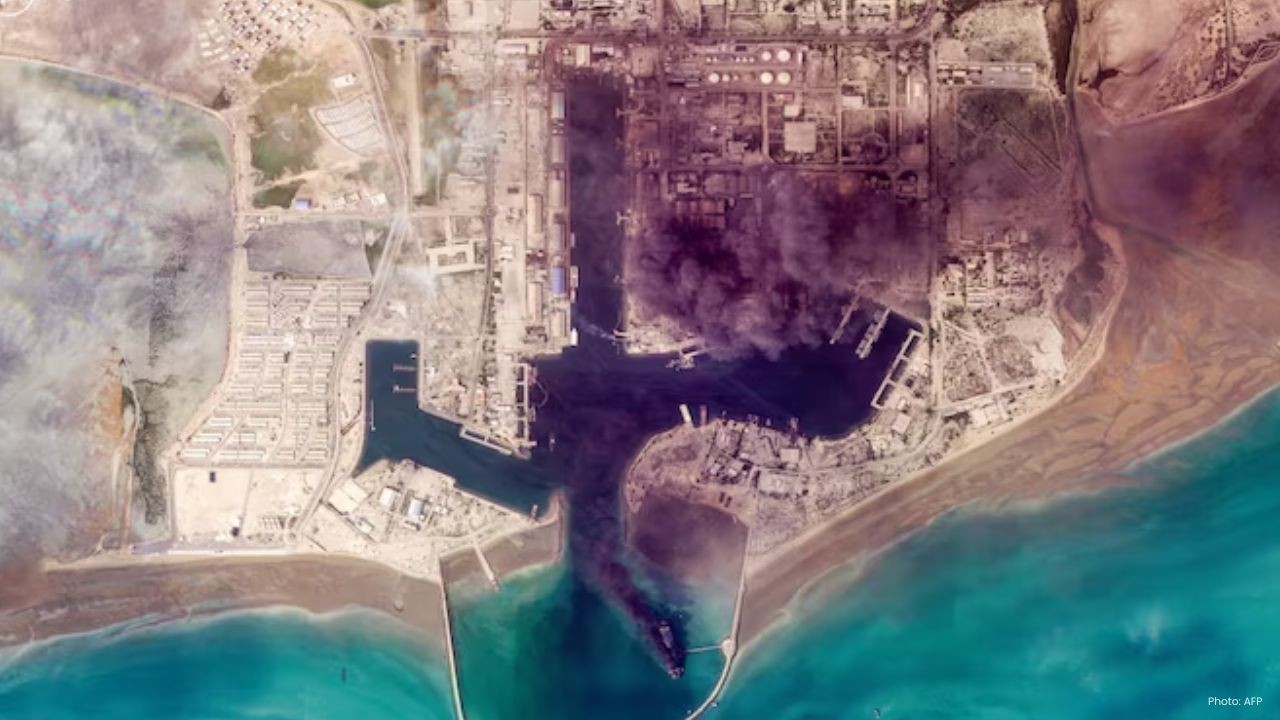
Asia Faces Energy Shock After Iran Closes Strait
Iran shuts Strait of Hormuz amid US-Israel strikes, sending oil prices higher and raising serious en


Bank of Baroda Faces Abu Dhabi Legal Battle over NMC Collapse
Bank of Baroda’s involvement in Abu Dhabi litigation tied to the NMC Healthcare collapse raises repu

Top Museum Openings of 2026 Set to Transform Global Tourism
From Los Angeles to Abu Dhabi and Brussels, 2026 brings major museum launches—Lucas Museum, Guggenhe

UAE Tour Highlights UAE’s Strength in Hosting Global Sports Events
Abu Dhabi Sports Council says the successful UAE Tour reflects the UAE’s leading role in hosting maj

EU Seeks Clarity from US After Supreme Court IEEPA Ruling
European Commission urges full transparency from the US on steps after Supreme Court ruling, emphasi
SpaceX Launches 53 New Satellites for Expanding Starlink Network
SpaceX launches 53 Starlink satellites in two Falcon 9 missions, breaking reuse records and expandin

RTA Awards Contract for Phase II of Hessa Street Upgrade in Dubai
Phase II of Hessa Street Development to add bridges, tunnel, and upgraded intersections, doubling ca

UAE Gold Prices Today, Monday 16 February 2026: Dubai & Abu Dhabi Updated Rates
Gold prices in UAE on 16 Feb 2026 updated: 24K around AED 599.75/gm, 22K AED 555.25/gm, and 18K AED

Over 25 Ahmedabad Schools Receive Bomb Threat Email, Authorities Investigate
More than 25 schools in Ahmedabad evacuated after bomb threat emails mentioning Khalistan. Authoriti