
Post by : Sam Jeet Rahman
Financial planning during stable times focuses on growth, predictable income, and long-term targets. In uncertain markets, the priorities shift. Volatility, inflation, geopolitical risks, job insecurity, and changing interest rates force individuals and businesses to rethink how money is earned, saved, invested, and protected. Financial planning in such times is less about chasing returns and more about building resilience, flexibility, and control.
Uncertain markets do not mean financial paralysis. They demand smarter, more intentional planning that balances safety with growth and prepares for multiple outcomes rather than a single forecast.
Market uncertainty refers to periods where future economic conditions are difficult to predict. This may include inflation spikes, recession fears, stock market volatility, currency fluctuations, or policy changes.
Income stability becomes unpredictable
Investment values fluctuate sharply
Cost of living increases faster than income
Credit becomes expensive or limited
Long-term goals feel harder to plan
Financial planning during such periods focuses on damage control first, growth second.
Traditional planning assumes steady income, predictable returns, and linear growth. Uncertain markets require a different mindset.
Instead of maximizing returns, planning prioritizes capital preservation, liquidity, and downside protection.
Plans must adapt quickly to changing conditions, rather than following fixed assumptions.
Planning is based on conservative assumptions, not best-case scenarios.
This shift is not about fear—it is about preparedness.
In uncertain markets, an emergency fund is not a suggestion—it is a non-negotiable financial buffer.
Salaried individuals: 6–9 months of expenses
Business owners/freelancers: 9–12 months of expenses
This fund should be:
Easily accessible
Low-risk
Not linked to market performance
Emergency funds prevent forced liquidation of investments during downturns.
During uncertain times, cash flow matters more than paper wealth.
Expenses continue even when income slows
Market losses do not hurt unless money is withdrawn
Liquidity provides decision-making freedom
Track monthly inflow and outflow
Reduce fixed expenses where possible
Delay non-essential commitments
Convert variable expenses into predictable ones
Strong cash flow absorbs shocks without panic.
Debt behaves differently in uncertain markets.
Credit cards, personal loans, and short-term borrowing magnify financial stress when income fluctuates.
Prioritizing repayment of high-interest debt
Avoiding new unnecessary borrowing
Renegotiating loan terms if possible
Maintaining strong credit health
Reducing debt increases financial flexibility and mental peace.
Investment strategy must evolve with market conditions.
A diversified mix of:
Equity
Debt
Cash equivalents
Safe instruments
reduces overall portfolio risk.
Short-term goals need stability
Long-term goals can tolerate volatility
Panic selling during downturns often causes more damage than market losses.
Market uncertainty does not eliminate the need for long-term investing.
Holding only low-return instruments may feel safe but erodes purchasing power over time.
Markets recover over long periods. Staying invested allows participation in recovery phases.
The key is not abandoning long-term plans, but adjusting expectations and allocation.
Diversification spreads risk across assets, income sources, and geographies.
Multiple investment instruments
Different risk profiles
Balanced exposure
Side income
Freelance skills
Passive income streams
Multiple income sources reduce dependency on a single paycheck.
Uncertainty increases the financial impact of emergencies.
Health insurance with adequate coverage
Term life insurance for dependents
Business insurance for entrepreneurs
Insurance protects financial plans from unexpected setbacks.
In uncertain markets, planning becomes goal-specific rather than wealth-centric.
Goals define time horizon
Time horizon defines risk
Risk defines investment choice
Examples include:
Emergency readiness
Children’s education
Home purchase
Retirement security
Clear goals prevent emotional decisions during volatility.
The biggest threat in uncertain markets is not volatility—it is emotional decision-making.
Panic selling during downturns
Overreacting to headlines
Chasing short-term trends
Freezing financial decisions
Regular reviews, not constant monitoring
Sticking to asset allocation
Ignoring daily market noise
Calm behavior protects long-term outcomes.
Inflation changes the real value of money.
Regular expense reviews
Increasing savings rates gradually
Investing in growth-oriented assets for long-term goals
Ignoring inflation is a hidden financial risk.
Focus on skill-building, emergency funds, and long-term investing discipline.
Balance growth with protection, manage liabilities, and diversify income.
Preserve capital, increase stable income, and reduce volatility exposure.
Uncertainty affects each stage differently, requiring tailored planning.
For entrepreneurs and small business owners, uncertainty multiplies risks.
Strong cash reserves
Lower fixed costs
Conservative expansion
Scenario-based forecasting
Business financial planning must prepare for slowdowns without killing growth potential.
Uncertain markets evolve constantly.
Regular reviews
Adjustments based on life changes
Updating assumptions
Monitoring risk exposure
Static plans fail in dynamic environments.
The purpose of financial planning during uncertainty is not to predict the future—it is to remain stable regardless of what happens.
A good plan:
Absorbs shocks
Maintains lifestyle stability
Protects long-term goals
Reduces financial anxiety
Confidence comes from preparation, not certainty.
Uncertain markets test discipline, patience, and planning quality. Those who adapt their financial strategies early gain control while others react emotionally. Financial planning during uncertainty is about staying flexible, protecting fundamentals, and allowing time to work in your favor.
Stability is not the absence of risk—it is the ability to handle it.
This article is for informational purposes only and does not constitute financial advice. Individual financial situations vary. Consult a qualified financial advisor before making decisions.

US Stocks Slide as AI Fears, Inflation and Oil Surge Weigh
US stocks dropped as AI disruption fears hit tech firms, inflation rose above forecasts, and oil pri

Pacific Prime Wins Top Honors at Cigna Awards 2026
Pacific Prime secured Top Individual Broker and Top SME Broker awards at Cigna’s Annual Broker Award

QatarEnergy Halts LNG Output After Military Attack
QatarEnergy has stopped LNG production after military attacks hit its facilities in Ras Laffan and M
Strong 6.1 Magnitude Earthquake Hits West Sumatra, No Damage
A 6.1 earthquake struck off West Sumatra, Indonesia. No casualties, damage, or tsunami alert reporte

Saudi Confirms Drone Strike on US Embassy Riyadh
Two drones hit the US Embassy in Riyadh, causing a small fire and minor damage. No injuries were rep

UAE Restarts Limited Flights as Regional Airspace Disruptions Continue
UAE restarts limited flights from Dubai as US-Israel attacks on Iran disrupt regional airspace, forc
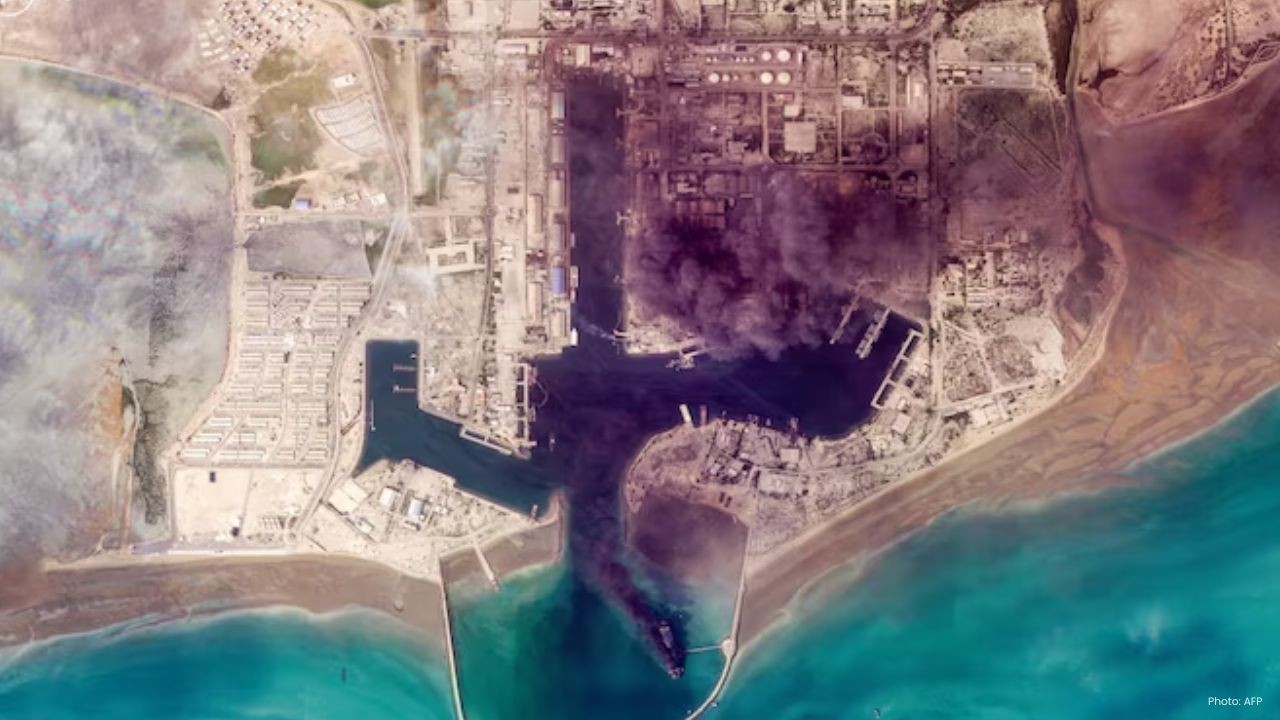
Asia Faces Energy Shock After Iran Closes Strait
Iran shuts Strait of Hormuz amid US-Israel strikes, sending oil prices higher and raising serious en


Bank of Baroda Faces Abu Dhabi Legal Battle over NMC Collapse
Bank of Baroda’s involvement in Abu Dhabi litigation tied to the NMC Healthcare collapse raises repu

Top Museum Openings of 2026 Set to Transform Global Tourism
From Los Angeles to Abu Dhabi and Brussels, 2026 brings major museum launches—Lucas Museum, Guggenhe

UAE Tour Highlights UAE’s Strength in Hosting Global Sports Events
Abu Dhabi Sports Council says the successful UAE Tour reflects the UAE’s leading role in hosting maj
EU Seeks Clarity from US After Supreme Court IEEPA Ruling
European Commission urges full transparency from the US on steps after Supreme Court ruling, emphasi

SpaceX Launches 53 New Satellites for Expanding Starlink Network
SpaceX launches 53 Starlink satellites in two Falcon 9 missions, breaking reuse records and expandin

RTA Awards Contract for Phase II of Hessa Street Upgrade in Dubai
Phase II of Hessa Street Development to add bridges, tunnel, and upgraded intersections, doubling ca

UAE Gold Prices Today, Monday 16 February 2026: Dubai & Abu Dhabi Updated Rates
Gold prices in UAE on 16 Feb 2026 updated: 24K around AED 599.75/gm, 22K AED 555.25/gm, and 18K AED

Over 25 Ahmedabad Schools Receive Bomb Threat Email, Authorities Investigate
More than 25 schools in Ahmedabad evacuated after bomb threat emails mentioning Khalistan. Authoriti