Post by : Anis Karim
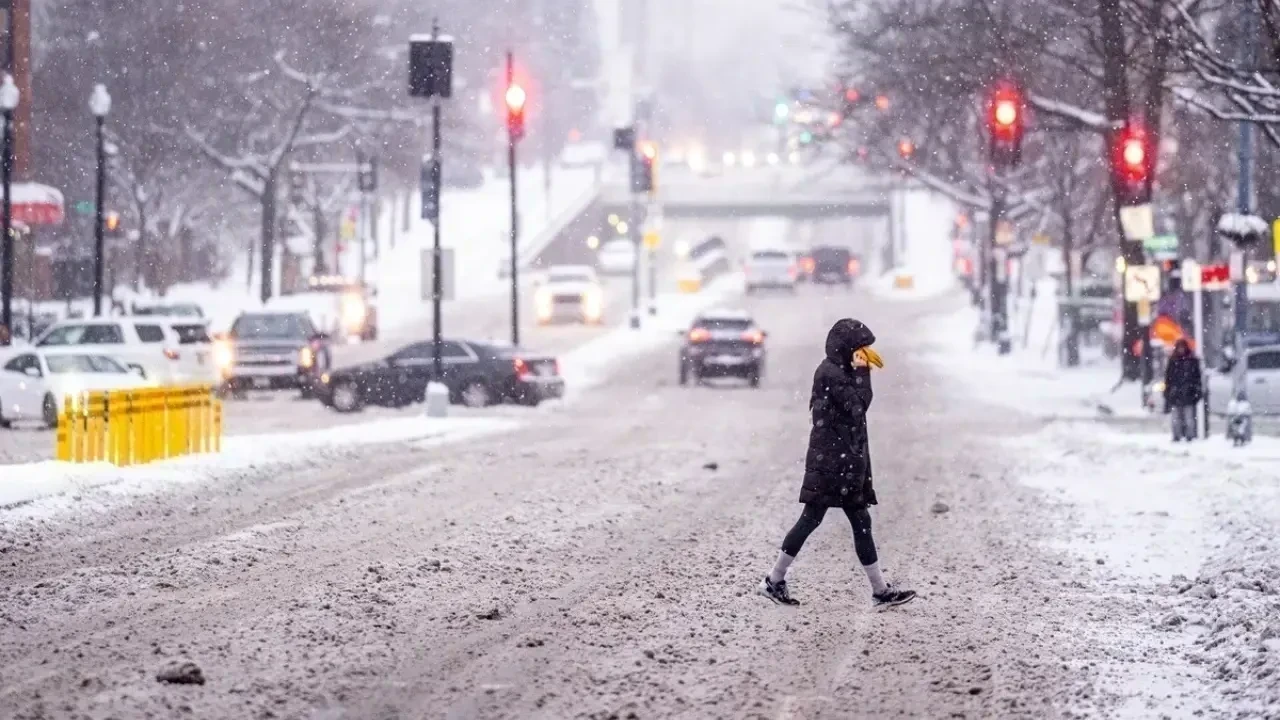
Ice storms represent some of the most perilous weather phenomena across the United States. Unlike snowstorms that primarily drop snow, ice storms envelop everything in layers of freezing rain which can lead to treacherous conditions. These storms can wreak havoc by causing massive power outages, blocking roadways, and inflicting damage that can total billions of dollars. Their unpredictable nature — forming quickly during marginal temperatures — makes ice storms especially dangerous and difficult to prepare for.
In recent years, catastrophic ice storms have prompted changes in community preparedness and investment in forecasting technologies while exposing vulnerabilities in critical infrastructure. Their unique ability to create substantial layers of ice presents health risks, leads to infrastructure failures, and dramatically alters the landscape of affected areas.
Meteorologists assess the severity of ice storms based on several crucial factors:
Ice Build-Up: The quantity of freezing rain that creates a solid layer upon contact, often measured in inches.
Duration of Freezing: The length of time that freezing conditions persist, allowing the ice to accumulate.
Effect on Infrastructure: Damage to trees, power lines, and road closures.
Impact on People: Casualties, injuries, and the number of individuals affected.
Economic Costs: Financial losses related to damage to homes, businesses, and emergency responses.
These elements aid in identifying some of the most transformative ice storms in U.S. history.
The New Year’s Ice Storm of 1961 in northern Idaho was one of the earliest significant ice occurrences. Over a span of three days, freezing rain led to remarkable accumulations of ice reaching up to eight inches. This resulted in extensive power failures and destruction of local infrastructure.
The storm's impact was especially profound in small, rural communities, outlining the dangers of ice accumulation even in sparsely populated areas.
Late January 2000 saw a paralyzing ice storm sweep through the southeastern United States, affecting states from Alabama to the Carolinas. Just before the Super Bowl, this storm left many residents stranded and challenged logistical operations.
With over half a million residents losing power, and damages exceeding $1.2 billion (adjusted for inflation), this event revealed how unprepared southern infrastructure is for extended ice conditions.
On New Year's Eve 1978, a severe ice event struck north-central Texas. With ice accumulation reaching two inches across major roads, traffic was halted and holiday plans were disrupted.
This storm caused significant utility and tree damage, leading to unexpected power outages and showcasing the region's lack of preparedness for such severe icing.
In December 2000, an impactful ice storm affected areas from Texas to Oklahoma over the Christmas holiday, leaving over 500,000 residents without power. Authorities labeled the event one of the worst in local history.
This storm highlighted the vulnerability of southern states to severe winter events without prior preparations common in northern states.
In January 1994, Mississippi encountered one of its most severe ice storms, prompting officials in Clarksdale to use 200,000 gallons of de-icing chemicals to combat the crisis.
The storm caused major disruptions in transportation, property damages, and highlighted the region’s need for improved resilience against such ice phenomena.
Persistent freezing rain descended on northern Arkansas and Kentucky in late January 2009, with ice layers over two inches crippling transportation and causing widespread power outages.
The devastation was termed the worst modern weather event in Kentucky, leading to the mobilization of the National Guard to assist with the aftermath.
Historically significant, the Great Ice Storm of 1951 devastated an extensive region from Louisiana to the Ohio Valley. Numerous infrastructures were damaged leading to financial losses over $100 million (in historical terms).
The impact on agriculture was profound, affecting livestock and crop yields alongside the power sectors.
A massive ice storm struck the Northeastern U.S. in December 2008, leaving over 1.7 million people without power due to fallen wires and extensive infrastructure damage.
Considered one of the worst ice events in decades, recovery faced delays, severely affecting travel in urban areas.
The late January 2026 ice and snow storm, dubbed Winter Storm Fern, is already known for its widespread impact, covering over 30 states from the South to the Northeast.
The storm resulted in major outages affecting over a million customers and significant disruptions to travel and essential services.
While many historical storms occurred in the 20th century, records consistently cite the combination of the 2000 Atlanta storm and the January 2026 event as among the most severe in terms of power outages, geographic impact, and financial losses.
Experts emphasize that when ice builds above critical levels—typically exceeding a quarter-inch—the likelihood of emergencies escalates, resulting in infrastructure breakdowns.
Ice storms remain a contemporary threat, reshaping how communities and agencies prepare for winter. The extensive damage reinforces the crucial need for:
Enhanced forecasting and early warning systems
Strengthened utility infrastructures and tree maintenance
Public education on safety and preparedness
Coordination among agencies for effective response strategies
With climate change amplifying weather patterns, proactive measures are crucial to mitigate the human and economic impacts of future ice storms.
Disclaimer: This article is based on historical weather analysis and recent reporting on winter storms. It is for educational purposes and does not replace professional climate or emergency preparedness guidance.

US Stocks Slide as AI Fears, Inflation and Oil Surge Weigh
US stocks dropped as AI disruption fears hit tech firms, inflation rose above forecasts, and oil pri

Pacific Prime Wins Top Honors at Cigna Awards 2026
Pacific Prime secured Top Individual Broker and Top SME Broker awards at Cigna’s Annual Broker Award

QatarEnergy Halts LNG Output After Military Attack
QatarEnergy has stopped LNG production after military attacks hit its facilities in Ras Laffan and M

Strong 6.1 Magnitude Earthquake Hits West Sumatra, No Damage
A 6.1 earthquake struck off West Sumatra, Indonesia. No casualties, damage, or tsunami alert reporte

Saudi Confirms Drone Strike on US Embassy Riyadh
Two drones hit the US Embassy in Riyadh, causing a small fire and minor damage. No injuries were rep

UAE Restarts Limited Flights as Regional Airspace Disruptions Continue
UAE restarts limited flights from Dubai as US-Israel attacks on Iran disrupt regional airspace, forc
Asia Faces Energy Shock After Iran Closes Strait
Iran shuts Strait of Hormuz amid US-Israel strikes, sending oil prices higher and raising serious en


Bank of Baroda Faces Abu Dhabi Legal Battle over NMC Collapse
Bank of Baroda’s involvement in Abu Dhabi litigation tied to the NMC Healthcare collapse raises repu

Top Museum Openings of 2026 Set to Transform Global Tourism
From Los Angeles to Abu Dhabi and Brussels, 2026 brings major museum launches—Lucas Museum, Guggenhe

UAE Tour Highlights UAE’s Strength in Hosting Global Sports Events
Abu Dhabi Sports Council says the successful UAE Tour reflects the UAE’s leading role in hosting maj

EU Seeks Clarity from US After Supreme Court IEEPA Ruling
European Commission urges full transparency from the US on steps after Supreme Court ruling, emphasi

SpaceX Launches 53 New Satellites for Expanding Starlink Network
SpaceX launches 53 Starlink satellites in two Falcon 9 missions, breaking reuse records and expandin

RTA Awards Contract for Phase II of Hessa Street Upgrade in Dubai
Phase II of Hessa Street Development to add bridges, tunnel, and upgraded intersections, doubling ca

UAE Gold Prices Today, Monday 16 February 2026: Dubai & Abu Dhabi Updated Rates
Gold prices in UAE on 16 Feb 2026 updated: 24K around AED 599.75/gm, 22K AED 555.25/gm, and 18K AED

Over 25 Ahmedabad Schools Receive Bomb Threat Email, Authorities Investigate
More than 25 schools in Ahmedabad evacuated after bomb threat emails mentioning Khalistan. Authoriti