Post by : Sam Jeet Rahman
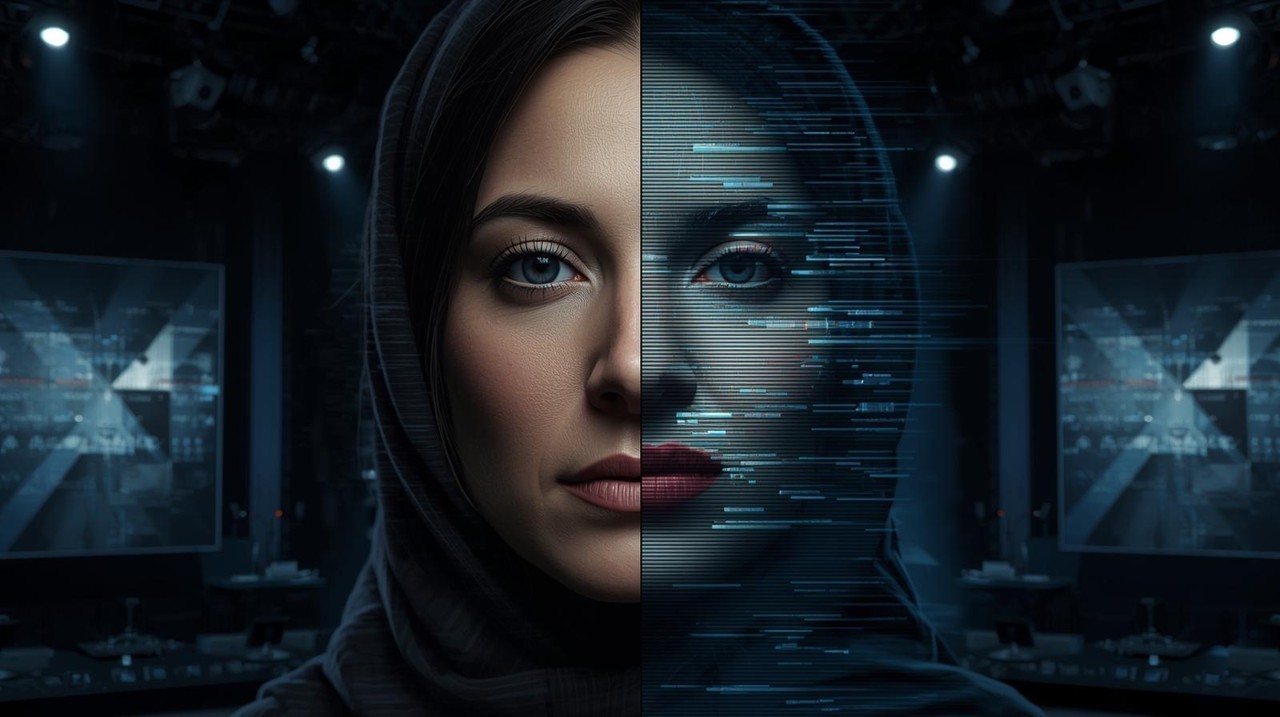
As technology advances, so do the methods used to shape public opinion — and not always for the better. Among the most alarming innovations is the rise of deepfakes: hyper-realistic videos, audios, and images generated by artificial intelligence that can convincingly mimic real people. While deepfakes have creative and entertainment value, their potential misuse poses a serious threat to democracy, especially during election periods when trust and truth are already fragile.
Let’s explore how synthetic media is reshaping political communication, what dangers it poses to democratic processes, and what can be done to defend truth in the digital era.
Deepfakes are AI-generated synthetic media that use machine learning (particularly deep learning algorithms) to create fake but realistic videos, images, or voices. By training on large datasets of a person’s facial movements or speech, AI can produce a video or audio clip that appears to show them saying or doing things they never actually did.
The technology behind deepfakes, known as Generative Adversarial Networks (GANs), pits two neural networks against each other — one creating fake content and the other detecting it — resulting in increasingly convincing results over time.
While this has legitimate applications in film, education, and accessibility (like voice cloning for the disabled), it also opens the door for political manipulation, misinformation, and fraud.
In an era when social media is a dominant source of information, deepfakes can spread false narratives faster than fact-checkers can respond. A convincing fake video of a political leader making a controversial statement or appearing intoxicated could influence voter perception within hours — even if it’s later proven false.
The key dangers include:
Voter Manipulation: Misleading content could alter public sentiment, especially close to election day.
Character Assassination: Deepfakes can damage reputations of political candidates, journalists, or activists.
Erosion of Trust: As deepfakes become more common, people may start doubting even authentic content — creating a “liar’s dividend” where truth itself loses value.
Foreign Interference: State-sponsored misinformation campaigns can use deepfakes to destabilize democratic elections abroad.
Although large-scale deepfake attacks on major elections are still relatively rare, smaller incidents are already surfacing worldwide:
In India, deepfake videos of political leaders have circulated during state elections, showing fabricated speeches in local languages.
In the U.S., concerns have grown after AI-generated robocalls and voice fakes were used to mimic political figures, urging voters to take misleading actions.
In Eastern Europe and Africa, deepfake propaganda has been detected spreading false narratives to influence public opinion.
These examples show that synthetic media is no longer a future concern — it’s a present-day challenge.
The human brain tends to trust what it sees and hears. Even after learning that a video was fake, people may subconsciously retain the emotional impact of what they watched — a phenomenon known as the “continued influence effect.”
This makes deepfakes particularly effective tools for disinformation campaigns, as they appeal to emotions rather than facts. A shocking fake clip may go viral faster than any correction ever could.
The result? A more polarized, skeptical, and confused electorate — the very opposite of what democracy depends on.
Fighting deepfakes is a technological arms race. As AI generation improves, so must AI detection.
Researchers and tech companies are developing AI-powered deepfake detectors that analyze inconsistencies in lighting, blinking, voice tone, or facial expressions. Platforms like YouTube, Meta, and X (formerly Twitter) have introduced content authenticity checks, labeling systems, and watermarking technologies to flag manipulated media.
However, no system is foolproof. The best defense remains digital literacy — helping the public recognize red flags and verify content before sharing.
Governments worldwide are racing to regulate synthetic media. Some key developments include:
European Union: The EU’s AI Act classifies deepfakes as “high-risk AI applications,” requiring transparency and labeling.
United States: Several states have passed laws criminalizing malicious political deepfakes within a certain period before elections.
India & UAE: Both have begun exploring frameworks to penalize creators and distributors of fake digital content that misleads voters.
Yet, the challenge lies in balancing freedom of expression with protection against disinformation — a line that becomes blurrier with advancing AI.
Media organizations, journalists, and tech influencers play a critical role in shaping public awareness. Verified reporting, prompt debunking, and responsible sharing practices can limit deepfakes’ reach.
Moreover, AI ethics committees and digital policy experts are calling for mandatory watermarking and content provenance standards, ensuring users can trace a video’s origin before trusting it.
Social media platforms must also take responsibility for detecting and labeling deepfakes proactively rather than reactively.
Ultimately, defending democracy from deepfakes begins with an informed public. Citizens should:
Always check the source of a video or audio before believing or sharing it.
Use reverse image searches or verification tools like InVID or Google Lens.
Follow fact-checking outlets and credible journalists.
Question content that seems “too shocking to be true” — it often is.
Educating voters about how synthetic media works is just as important as developing the tools to detect it.
Some experts envision a world where blockchain technology and digital watermarks are used to authenticate every piece of video or audio content.
Imagine a system where every legitimate recording from political campaigns or news outlets carries a digital signature of authenticity. Such infrastructure could dramatically reduce misinformation, though it would require global collaboration among tech companies, governments, and media organizations.
Deepfakes are a powerful reminder that technology, while transformative, can also threaten the foundations of truth and democracy if left unchecked. As we approach more elections worldwide, the stakes couldn’t be higher.
Protecting democratic integrity requires a three-pronged approach — robust laws, smarter detection tools, and an alert, educated public.
In the end, technology created the problem — but it can also be part of the solution. The future of democracy depends on whether we can adapt faster than the lies can spread.

US Stocks Slide as AI Fears, Inflation and Oil Surge Weigh
US stocks dropped as AI disruption fears hit tech firms, inflation rose above forecasts, and oil pri

Pacific Prime Wins Top Honors at Cigna Awards 2026
Pacific Prime secured Top Individual Broker and Top SME Broker awards at Cigna’s Annual Broker Award

QatarEnergy Halts LNG Output After Military Attack
QatarEnergy has stopped LNG production after military attacks hit its facilities in Ras Laffan and M

Strong 6.1 Magnitude Earthquake Hits West Sumatra, No Damage
A 6.1 earthquake struck off West Sumatra, Indonesia. No casualties, damage, or tsunami alert reporte

Saudi Confirms Drone Strike on US Embassy Riyadh
Two drones hit the US Embassy in Riyadh, causing a small fire and minor damage. No injuries were rep

UAE Restarts Limited Flights as Regional Airspace Disruptions Continue
UAE restarts limited flights from Dubai as US-Israel attacks on Iran disrupt regional airspace, forc

Asia Faces Energy Shock After Iran Closes Strait
Iran shuts Strait of Hormuz amid US-Israel strikes, sending oil prices higher and raising serious en


Bank of Baroda Faces Abu Dhabi Legal Battle over NMC Collapse
Bank of Baroda’s involvement in Abu Dhabi litigation tied to the NMC Healthcare collapse raises repu

Top Museum Openings of 2026 Set to Transform Global Tourism
From Los Angeles to Abu Dhabi and Brussels, 2026 brings major museum launches—Lucas Museum, Guggenhe

UAE Tour Highlights UAE’s Strength in Hosting Global Sports Events
Abu Dhabi Sports Council says the successful UAE Tour reflects the UAE’s leading role in hosting maj

EU Seeks Clarity from US After Supreme Court IEEPA Ruling
European Commission urges full transparency from the US on steps after Supreme Court ruling, emphasi

SpaceX Launches 53 New Satellites for Expanding Starlink Network
SpaceX launches 53 Starlink satellites in two Falcon 9 missions, breaking reuse records and expandin

RTA Awards Contract for Phase II of Hessa Street Upgrade in Dubai
Phase II of Hessa Street Development to add bridges, tunnel, and upgraded intersections, doubling ca

UAE Gold Prices Today, Monday 16 February 2026: Dubai & Abu Dhabi Updated Rates
Gold prices in UAE on 16 Feb 2026 updated: 24K around AED 599.75/gm, 22K AED 555.25/gm, and 18K AED

Over 25 Ahmedabad Schools Receive Bomb Threat Email, Authorities Investigate
More than 25 schools in Ahmedabad evacuated after bomb threat emails mentioning Khalistan. Authoriti





