Post by : Mina Saadi
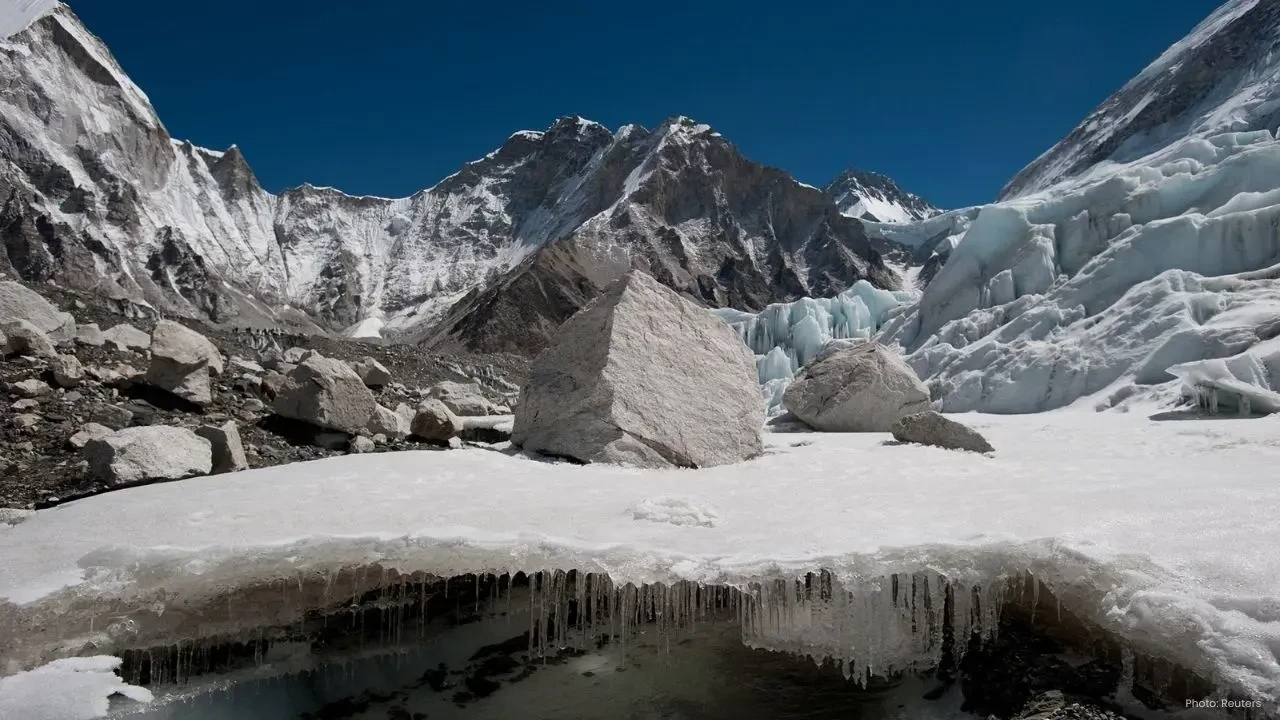
Meteorologists have noted a significant reduction in winter snowfall across the Himalayas, leaving numerous peaks exposed and rocky during the season when they are typically blanketed in snow. Recent data shows that snowfall has frequently dipped below the long-term average logged from 1980 to 2020 over the past five years.
The continuing rise in temperatures is quickening the melt of the limited snow that does accumulate, while lower elevations are increasingly experiencing rainfall rather than snowfall, a shift linked to global warming. This phenomenon is now being referred to as a “snow drought” that impacts substantial regions of the Himalayas.
The swift melting of glaciers due to escalating temperatures has been a longstanding worry for Himalayan states in India and nearby countries. Experts caution that diminishing winter snow exacerbates this ongoing crisis. The decreasing snow and ice drastically alter the mountains’ landscape and affect millions of people depending on these vital water sources and fragile ecosystems.
As winter snowpack gradually melts during spring, it nourishes rivers that are crucial for drinking water, irrigation, and hydropower. A decline in snowfall poses a threat to this essential supply, while diminished winter precipitation raises the likelihood of forest fires due to drier conditions.
Moreover, glaciers and snow serve as natural stabilizers for mountainous regions. Their gradual disappearance results in an increase in natural disasters, such as rockfalls, landslides, glacial lake outbursts, and debris flows.
Meteorologists underscore that this downturn in snowfall is part of a broader trend rather than an isolated event. The Indian Meteorological Department reported minuscule rainfall or snowfall in northern India throughout December. Predictions suggest that from January to March, northwest India—including Uttarakhand, Himachal Pradesh, Jammu, Kashmir, and Ladakh—could see precipitation levels plunge by up to 86% compared to the long-period average (LPA).
LPA indicates rainfall and snowfall measurement over a 30 to 50-year period to classify current weather conditions as typical, excessive, or deficient. For North India, the LPA from 1971 to 2020 stood at 184.3 millimeters.
According to Kieran Hunt, a principal research fellow in tropical meteorology at the University of Reading in the UK, “This reduction in winter precipitation is evident across various datasets.” His study, set for 2025 and covering the years 1980 to 2021, indicated a decline in winter precipitation across the western and central Himalayas.
Using ERA-5 reanalysis datasets, Hemant Singh, a research fellow at the Indian Institute of Technology in Jammu, revealed that snowfall in the northwestern Himalayas has decreased by 25% over the last five years in comparison to the average from 1980 to 2020.
Nepal, housing the central Himalayas, has also seen notable declines. “There has been virtually no rainfall since October, and this winter is predicted to remain largely dry—this pattern has been consistent for the last five years,” noted Binod Pokharel, associate professor at Tribhuvan University in Kathmandu.
While some winters have witnessed heavy snowfall in select areas, these instances are outliers rather than the steady, uniform snowfalls typical of prior decades, meteorologists observed.

US Stocks Slide as AI Fears, Inflation and Oil Surge Weigh
US stocks dropped as AI disruption fears hit tech firms, inflation rose above forecasts, and oil pri

Pacific Prime Wins Top Honors at Cigna Awards 2026
Pacific Prime secured Top Individual Broker and Top SME Broker awards at Cigna’s Annual Broker Award

QatarEnergy Halts LNG Output After Military Attack
QatarEnergy has stopped LNG production after military attacks hit its facilities in Ras Laffan and M
Strong 6.1 Magnitude Earthquake Hits West Sumatra, No Damage
A 6.1 earthquake struck off West Sumatra, Indonesia. No casualties, damage, or tsunami alert reporte

Saudi Confirms Drone Strike on US Embassy Riyadh
Two drones hit the US Embassy in Riyadh, causing a small fire and minor damage. No injuries were rep

UAE Restarts Limited Flights as Regional Airspace Disruptions Continue
UAE restarts limited flights from Dubai as US-Israel attacks on Iran disrupt regional airspace, forc
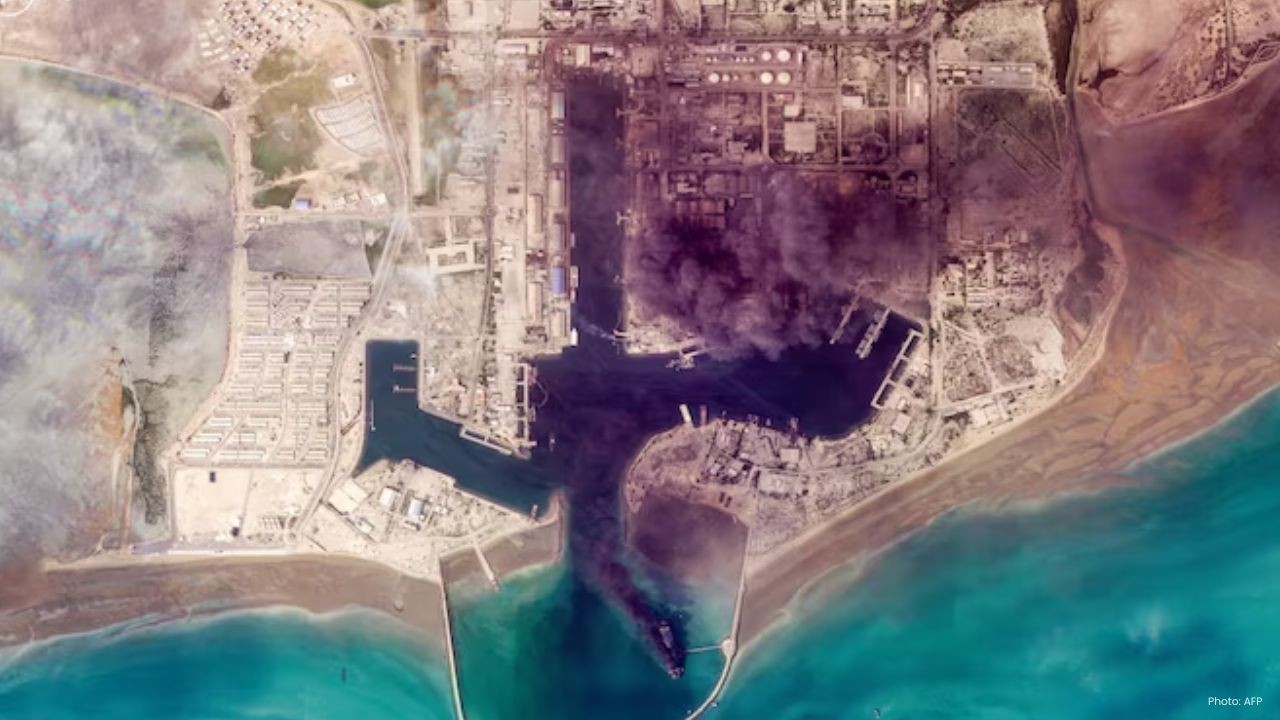
Asia Faces Energy Shock After Iran Closes Strait
Iran shuts Strait of Hormuz amid US-Israel strikes, sending oil prices higher and raising serious en


Bank of Baroda Faces Abu Dhabi Legal Battle over NMC Collapse
Bank of Baroda’s involvement in Abu Dhabi litigation tied to the NMC Healthcare collapse raises repu

Top Museum Openings of 2026 Set to Transform Global Tourism
From Los Angeles to Abu Dhabi and Brussels, 2026 brings major museum launches—Lucas Museum, Guggenhe

UAE Tour Highlights UAE’s Strength in Hosting Global Sports Events
Abu Dhabi Sports Council says the successful UAE Tour reflects the UAE’s leading role in hosting maj

EU Seeks Clarity from US After Supreme Court IEEPA Ruling
European Commission urges full transparency from the US on steps after Supreme Court ruling, emphasi
SpaceX Launches 53 New Satellites for Expanding Starlink Network
SpaceX launches 53 Starlink satellites in two Falcon 9 missions, breaking reuse records and expandin

RTA Awards Contract for Phase II of Hessa Street Upgrade in Dubai
Phase II of Hessa Street Development to add bridges, tunnel, and upgraded intersections, doubling ca

UAE Gold Prices Today, Monday 16 February 2026: Dubai & Abu Dhabi Updated Rates
Gold prices in UAE on 16 Feb 2026 updated: 24K around AED 599.75/gm, 22K AED 555.25/gm, and 18K AED

Over 25 Ahmedabad Schools Receive Bomb Threat Email, Authorities Investigate
More than 25 schools in Ahmedabad evacuated after bomb threat emails mentioning Khalistan. Authoriti