Post by : Anis Karim
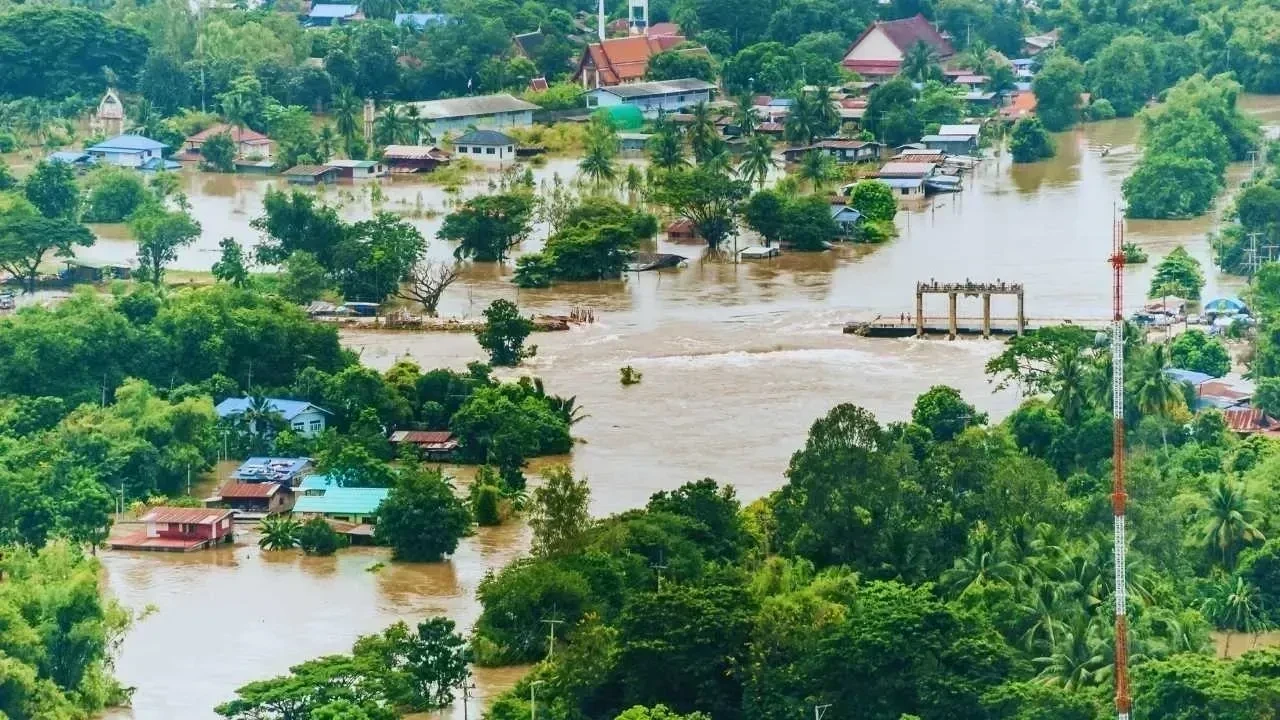
For ages, coastal communities thrived alongside the ocean, benefiting from its resources and trade. Now, the very waters that once nurtured them are becoming menacing. Across Asia, the sea no longer behaves predictably; it rises higher, arrives earlier, and leaves destruction in its wake.
From submerged villages in Sri Lanka to flood-affected cities in Indonesia, the narrative is repeating. Heavy rainfall and swelling rivers overwhelm outdated systems and fragile structures. The visuals—stranded vehicles, flooded streets, and emergency rescue teams—are increasingly familiar yet deeply concerning.
What was once deemed uncommon is now a usual occurrence.
India, home to extensive coastlines and millions living mere meters above sea level, is not immune to the escalating threat. The hard-won lessons from neighboring countries represent valuable insights invested with loss and hardship.
We no longer ponder if flooding will worsen; the pressing question is whether we are equipped to confront it.
Flooding events have evolved beyond isolated occurrences, contributing to a widespread regional catastrophe.
Monsoon systems and tropical weather are behaving unpredictably. Rain is no longer evenly distributed; storms linger rather than dissipate, and rising seas reflect effects from melting ice across the globe.
Conditions in coastal regions now include:
Extended rain durations
Increased intensity of storm surges
Higher tides encroaching inland
Accelerated erosion of coastlines
Sudden river overflow
The landscape remains unchanged; it's the climate that has shifted.
Cities have rapidly proliferated along the coasts, with infrastructure established without regard for flood dynamics.
Development often:
Impeded natural drainage systems
Narrowed water channels
Displaced mangrove forests
Replaced wetlands with concrete structures
As a result, floodwaters have limited escape routes.
During heavy rains, streets morph into rivers.
Sri Lanka's recent flood crisis exposed critical vulnerabilities.
Alerts reached the authorities, yet evacuations faltered. Many rural areas lacked sufficient shelters, and transport routes were rendered useless. Vital supplies struggled to reach affected regions swiftly.
Despite availability of information, preparedness was sorely lacking.
Emergency signals don’t save lives when roads are impassable.
Numerous individuals resided in areas vulnerable to flooding with:
Fragile walls
Metal roofs
Inefficient drainage systems
Floors at ground level
Within hours, floodwaters ruined everything—personal papers, electronics, crops, and furniture.
The aftermath was about more than just emotional toll; it represented a financial crisis.
Assistance did not arrive seamlessly; logistics were obstructed by damaged infrastructure and displaced populations.
The harsh lesson learned was that infrastructure serves as the backbone of effective relief.
Without stable roads, evacuation centres, and storage solutions, no rescue initiative can function effectively.
Indonesia showcases a different, yet similarly alarming experience.
Cities located on low-lying terrain face challenges such as:
Land sinking due to subsidence
Rising ocean levels
Collapse of groundwater supplies
Coastal erosion risks
Structures lean, roads crack, and ports flood even during usual tidal events.
In certain locales, the ocean is reclaiming man-made territory.
Decades-old drainage frameworks are inadequate against current rainfall levels.
Water encounters:
No available drainage options
Numerous obstructed outlets
Absence of natural flood plains
Urban floods can now occur in minutes after rainfall begins.
Before individuals even open their umbrellas, basements are already submerged.
Whole neighborhoods are relocating from flood-prone areas.
What used to be theory has now transformed into action.
Policymakers are recognizing that rebuilding on the same vulnerable land is not recovery; it's merely a cycle.
India shares both geographical and climatic vulnerabilities with its South Asian peers.
Flood risks are no different here, and similar errors are prevailing.
While meteorological agencies may provide accurate rain forecasts, survival hinges on a community’s preparedness.
India must transition beyond mere predictions.
It should establish:
Local evacuation strategies
Flood resilient shelters
Emergency medical support
Resource identification
Community outreach systems
Data alone doesn’t mobilize communities.
Planning does.
Vulnerable populations residing in flood-prone zones experience significant risk.
Flood-resistant housing policies are essential, involving:
Regulating construction areas
Implementing elevated structures
Encouraging materials resistant to floods
Promoting safe housing redesigns
Preventative measures are more cost-effective than post-disaster reconstruction.
Both Sri Lanka and Indonesia learned a harsh truth:
Where mangroves were preserved, impacts from floods were less severe.
Where they were eradicated, the damage was extensive.
India needs to emphasize:
Restoring mangrove forests
Safeguarding coastal wetlands
Controlling beachfront development
Natural ecosystems buffer disasters better than concrete solutions alone.
Urban areas need to:
Redesign stormwater drainage
Clear waterways
Introduce permeable pavement
Protect waterways from encroachment
Water cannot simply be ignored.
It must be effectively managed.
People will evacuate only when there are:
Clear guidance
Safe evacuation routes
Trust in authorities
Assured resources upon arrival
Sri Lanka’s experience illustrated a vital lesson:
People will seek safety only when it’s convincingly presented.
India must cultivate not just infrastructure but also community confidence.
Coastal residents are adjusting their lifestyles:
Stockpiling emergency supplies
Elevating household items
Avoiding travel at night
Monitoring weather alerts regularly
Investing in flood insurance
Flood seasons are prompting behavioral changes.
Neglecting planning is no longer an option.
Floods bring devastation beyond physical structures.
They disrupt:
Local markets
Fishing industries
Agricultural output
Tourism sectors
Job availability
Recovery is slow while entire sectors come to a standstill.
Financial compensation cannot replace a community's livelihoods.
Floods leave behind a slew of health concerns:
Contaminated water sources
Outbreaks of mosquito-borne diseases
Injuries
Infections
Psychological distress
The repercussions of disasters persist long after the waters recede.
Cleaning efforts are merely the tip of the iceberg.
Healing requires significantly more time.
After a disaster, the instinct may be to rebuild swiftly.
However, constructing without change merely reestablishes risks.
Genuine recovery means:
Shifting communities away from hazardous zones
Redesigning urban layouts
Raising infrastructure standards
Innovating building regulations
Rebuild intelligently, not just quickly.
Community networks are crucial for survival.
Local volunteers often save more lives than distant aid organizations.
India must enable:
Community-led rescue teams
Local emergency training
Leadership from volunteers
Disaster preparedness education in schools
Prepared citizens achieve more than sluggish systems.
Apps, sensors, and satellites may assist.
However, they cannot replace human effort.
Genuine safety relies on:
Reliable roadways
Safe shelters
Operational boats
Medical response units
Effective logistical frameworks
Technology complements resilience efforts.
Infrastructure ensures survival.
India's development is outpacing its disaster readiness.
Ports expand,
Cities grow,
Housing spreads.
But protective measures lag behind.
Every new construction today has the potential to be:
Either a haven for safety,
Or a future statistic of loss.
Citizens must advocate for:
Transparent risk analysis
Incentives for sustainable housing
Improving insurance access
Drills for emergency response
Sustainable management of coastal areas
Ignoring these concerns only invites disaster.
From Sri Lanka to Indonesia, a pattern emerges:
Floods disregard borders, economies, or regulatory documents.
They challenge leadership, cooperation, and readiness.
Coastal India cannot afford to be complacent.
It stands at a crossroads unless immediate action is taken.
Flooding across Asian regions delivers an urgent message in the language of loss:
Adapt—or succumb to ignorance.
Government policies must evolve.
Development strategies need reassessment.
Communities must prepare for the future.
The ocean waits for no one.
Disclaimer:
This article is strictly for informational purposes and should not be construed as legal, medical, or disaster-management guidance. Readers should always heed official governmental advisories and local emergency services during times of natural crisis.

US Stocks Slide as AI Fears, Inflation and Oil Surge Weigh
US stocks dropped as AI disruption fears hit tech firms, inflation rose above forecasts, and oil pri

Pacific Prime Wins Top Honors at Cigna Awards 2026
Pacific Prime secured Top Individual Broker and Top SME Broker awards at Cigna’s Annual Broker Award

QatarEnergy Halts LNG Output After Military Attack
QatarEnergy has stopped LNG production after military attacks hit its facilities in Ras Laffan and M

Strong 6.1 Magnitude Earthquake Hits West Sumatra, No Damage
A 6.1 earthquake struck off West Sumatra, Indonesia. No casualties, damage, or tsunami alert reporte

Saudi Confirms Drone Strike on US Embassy Riyadh
Two drones hit the US Embassy in Riyadh, causing a small fire and minor damage. No injuries were rep

UAE Restarts Limited Flights as Regional Airspace Disruptions Continue
UAE restarts limited flights from Dubai as US-Israel attacks on Iran disrupt regional airspace, forc
Asia Faces Energy Shock After Iran Closes Strait
Iran shuts Strait of Hormuz amid US-Israel strikes, sending oil prices higher and raising serious en


Bank of Baroda Faces Abu Dhabi Legal Battle over NMC Collapse
Bank of Baroda’s involvement in Abu Dhabi litigation tied to the NMC Healthcare collapse raises repu

Top Museum Openings of 2026 Set to Transform Global Tourism
From Los Angeles to Abu Dhabi and Brussels, 2026 brings major museum launches—Lucas Museum, Guggenhe

UAE Tour Highlights UAE’s Strength in Hosting Global Sports Events
Abu Dhabi Sports Council says the successful UAE Tour reflects the UAE’s leading role in hosting maj

EU Seeks Clarity from US After Supreme Court IEEPA Ruling
European Commission urges full transparency from the US on steps after Supreme Court ruling, emphasi
SpaceX Launches 53 New Satellites for Expanding Starlink Network
SpaceX launches 53 Starlink satellites in two Falcon 9 missions, breaking reuse records and expandin

RTA Awards Contract for Phase II of Hessa Street Upgrade in Dubai
Phase II of Hessa Street Development to add bridges, tunnel, and upgraded intersections, doubling ca

UAE Gold Prices Today, Monday 16 February 2026: Dubai & Abu Dhabi Updated Rates
Gold prices in UAE on 16 Feb 2026 updated: 24K around AED 599.75/gm, 22K AED 555.25/gm, and 18K AED

Over 25 Ahmedabad Schools Receive Bomb Threat Email, Authorities Investigate
More than 25 schools in Ahmedabad evacuated after bomb threat emails mentioning Khalistan. Authoriti