Post by : Anis Karim
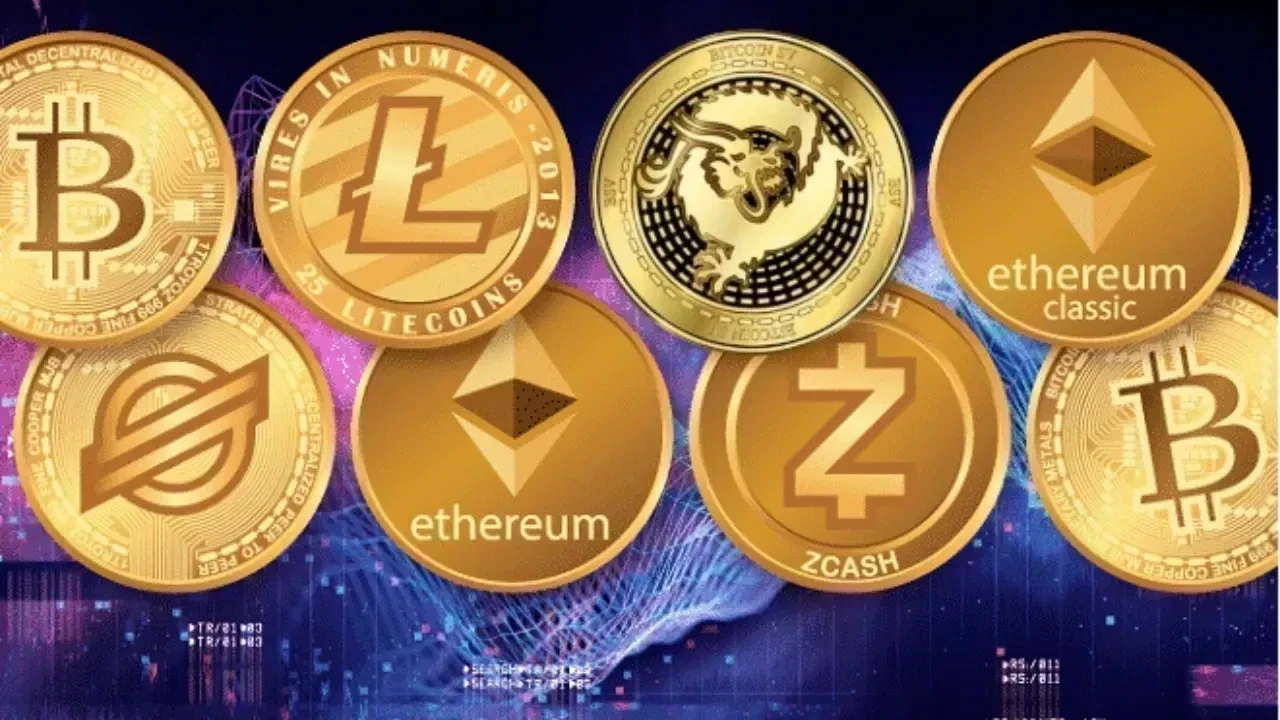
Cryptocurrency represents a type of digital currency that only exists online, utilizing cryptography to secure transactions. These assets generally operate without a central entity, such as a bank or government, relying on blockchain technology to maintain a secure and transparent transaction record.
Initially, the term “cryptocurrency” was synonymous with Bitcoin, the first and most prominent digital currency. Today, the digital ecosystem comprises thousands of currencies, each designed with various goals and functionalities. Their variation highlights the expanding applications of blockchain technology, ranging from digital currency to programmable contracts and decentralized finance.
Bitcoin (BTC) emerged as the first cryptocurrency in 2009 and retains its position as the most recognized and highly valued digital currency. Primarily designed as digital money, it serves as a decentralized medium for exchange and a store of value without intermediaries.
Primary use: Peer-to-peer transactions and a reliable long-term store of value.
Key feature: Decentralization and a capped supply of 21 million BTC.
Market role: Referred to as “digital gold,” it serves as a benchmark in the crypto market.
Bitcoin’s impact has shaped the cryptocurrency landscape, giving rise to various alternatives known as “altcoins.”
Altcoins refer to all cryptocurrencies excluding Bitcoin. Initially describing early competitors, the term now encompasses a variety of digital assets with differing functionalities.
Altcoins can fulfill various roles, including:
Peer-to-peer money alternatives akin to Bitcoin.
Smart contract platforms that empower decentralized applications.
Utility tokens that provide access to specific services.
Governance tokens that enable holders to participate in decision-making processes.
Ethereum (ETH) is a notable example, functioning as a platform for decentralized apps and smart contracts, among others targeting specialized niches within the crypto space.
Certain cryptocurrencies go beyond mere currency to play pivotal roles in expansive blockchain networks facilitating programmable logic, decentralized finance, and applications.
Ethereum stands out as a leading example, operating not only as a currency but also as the native token of a smart contract platform. It allows developers to build decentralized applications (dApps) and automated protocols.
Primary use: Acts as fuel for contract execution and transactions on the Ethereum network.
Key innovation: Facilitates DeFi, NFTs, and decentralized applications.
Other smart contract platforms aim to surpass Ethereum in terms of efficiency, cost, or capabilities.
The emergence of stablecoins marks a significant advancement in cryptocurrency, designed to maintain a stable value by pegging to an asset, typically a fiat currency like the U.S. dollar, resulting in reduced volatility compared to Bitcoin or other cryptocurrencies.
Stablecoins play crucial roles in the crypto economy, such as:
Enabling daily transactions devoid of volatility.
Serving as a medium of exchange in decentralized markets.
Offering a stable bridge between crypto and fiat.
Notable examples include USDC, closely pegged to the U.S. dollar and used extensively for transactions and trading.
In the realm of cryptocurrency, a significant distinction exists between coins and tokens:
Coins function on their own blockchain (e.g., Bitcoin, Ethereum).
Tokens operate on another blockchain, representing utilities, assets, or alternative values.
Tokens include:
Utility tokens offering access to platform services.
Governance tokens enabling voting on protocol decisions.
Asset-backed tokens representing ownership of tangible assets.
Non-fungible tokens (NFTs) that signify unique ownership in the digital realm.
These categories showcase that crypto assets transcend mere currencies, evolving into programmable digital assets with distinct purposes.
Decentralized finance (DeFi) encompasses blockchain-based financial services that exclude traditional intermediaries. Tokens affiliated with DeFi platforms are essential components of financial protocols. Aave (AAVE) exemplifies a token associated with a DeFi lending ecosystem, enabling users to earn interest or secure loans without the involvement of banks.
DeFi tokens frequently provide:
Access to liquidity pools.
Opportunities to earn yield from deposited assets.
Participation in governance of protocol rules.
Access to decentralized financial products.
DeFi continues to evolve, serving as a crucial aspect of token utility.
An additional, often overlooked category comprises privacy-centric cryptocurrencies, designed to obscure transaction specifics such as sender, receiver, or amounts. Protocols like CryptoNote support privacy coins such as Monero that prioritize anonymity.
Despite controversies surrounding privacy risks, these cryptocurrencies emphasize how varied architectures can meet diverse user needs.
Some national governments have adopted digital assets influenced by blockchain that may not feature in standard cryptocurrency lists. An example is the Crypto Rial, introduced by Iran’s central bank and tied to the national rial. These digital currencies blend crypto technology with traditional monetary policy.
Unlike decentralized cryptocurrencies, they are:
Managed and issued by a central authority.
Aimed at substituting or supplementing fiat currency in a digital format.
This underscores the influence of digital currency concepts on central banks.
In decentralized ecosystems, you may encounter wrapped tokens, which represent one cryptocurrency on another blockchain (like Wrapped Bitcoin on Ethereum). These serve to facilitate inter-chain asset interactions, enhancing liquidity and broader DeFi engagement.
Although they are not traditional cryptocurrencies, wrapped assets enrich the interconnectedness of crypto assets across various ecosystems.
Certain cryptocurrencies signify a stake in real-world assets rather than being solely financial tokens. Known as equity tokens, these digital representations denote ownership in a business, real estate, or other tangible valuables recorded on the blockchain.
This fusion of traditional finance with blockchain infrastructure promotes fractional ownership and wider access for investors.
Cryptocurrency encompasses a broad spectrum of assets. From pure digital currency like Bitcoin, stablecoins pegged to fiat, to programmable platforms hosting decentralized applications, and tokens indicating ownership or functionality, alongside privacy-focused coins and digital assets in line with national policies.
Grasping these various types clarifies not only what cryptocurrency is but also highlights the nuanced, dynamic nature of this technology. Digital assets have evolved beyond speculative tools; they are diverse technological innovations pivotal in payments, finance, ownership, governance, and creative advancements.
Disclaimer: This article serves educational and informational purposes and is not financial advice. Conduct thorough research or seek professional counsel before investing in cryptocurrencies.

US Stocks Slide as AI Fears, Inflation and Oil Surge Weigh
US stocks dropped as AI disruption fears hit tech firms, inflation rose above forecasts, and oil pri

Pacific Prime Wins Top Honors at Cigna Awards 2026
Pacific Prime secured Top Individual Broker and Top SME Broker awards at Cigna’s Annual Broker Award

QatarEnergy Halts LNG Output After Military Attack
QatarEnergy has stopped LNG production after military attacks hit its facilities in Ras Laffan and M

Strong 6.1 Magnitude Earthquake Hits West Sumatra, No Damage
A 6.1 earthquake struck off West Sumatra, Indonesia. No casualties, damage, or tsunami alert reporte

Saudi Confirms Drone Strike on US Embassy Riyadh
Two drones hit the US Embassy in Riyadh, causing a small fire and minor damage. No injuries were rep

UAE Restarts Limited Flights as Regional Airspace Disruptions Continue
UAE restarts limited flights from Dubai as US-Israel attacks on Iran disrupt regional airspace, forc

Asia Faces Energy Shock After Iran Closes Strait
Iran shuts Strait of Hormuz amid US-Israel strikes, sending oil prices higher and raising serious en


Bank of Baroda Faces Abu Dhabi Legal Battle over NMC Collapse
Bank of Baroda’s involvement in Abu Dhabi litigation tied to the NMC Healthcare collapse raises repu

Top Museum Openings of 2026 Set to Transform Global Tourism
From Los Angeles to Abu Dhabi and Brussels, 2026 brings major museum launches—Lucas Museum, Guggenhe

UAE Tour Highlights UAE’s Strength in Hosting Global Sports Events
Abu Dhabi Sports Council says the successful UAE Tour reflects the UAE’s leading role in hosting maj

EU Seeks Clarity from US After Supreme Court IEEPA Ruling
European Commission urges full transparency from the US on steps after Supreme Court ruling, emphasi

SpaceX Launches 53 New Satellites for Expanding Starlink Network
SpaceX launches 53 Starlink satellites in two Falcon 9 missions, breaking reuse records and expandin

RTA Awards Contract for Phase II of Hessa Street Upgrade in Dubai
Phase II of Hessa Street Development to add bridges, tunnel, and upgraded intersections, doubling ca

UAE Gold Prices Today, Monday 16 February 2026: Dubai & Abu Dhabi Updated Rates
Gold prices in UAE on 16 Feb 2026 updated: 24K around AED 599.75/gm, 22K AED 555.25/gm, and 18K AED

Over 25 Ahmedabad Schools Receive Bomb Threat Email, Authorities Investigate
More than 25 schools in Ahmedabad evacuated after bomb threat emails mentioning Khalistan. Authoriti