Post by : Anis Karim
Once heralded as a modern marvel, plastic's versatility and cost-effectiveness shifted the landscape of everyday items. However, this celebrated material has stealthily infiltrated our ecosystems and, alarmingly, our bodies.
What once stayed in packaging has emerged in alarming new places: rain, soil, and even the human bloodstream. Plastic has become a ubiquitous part of our lives, now recorded in unexpected areas such as our organs and, frighteningly, in unborn children.
This isn't a fictional tale; it's a stark reality of contemporary living.
The peril lies not in the noticeable forms of plastic, which we can see, but rather in the minuscule particles that blend seamlessly into our food and air supplies. Plastic won't react violently; it quietly diminishes and embeds itself into our biology, concealing its impact until many years have passed.
Plastic's prolonged presence alters not just our environment but our fundamental physiological processes.
Our bodies are not equipped to deal with plastic, leading to accumulation through eating, breathing, and skin contact.
Once inside, plastic cannot be eliminated or broken down.
It builds up, functioning as an unwelcome invader. The immune system responds, yet these foreign particles remain, resulting in chronic interior exposure.
Inside the human body, plastic compounds become:
Inflammation triggers
Carriers of toxic agents
Disruptors of endocrine function
Stresses on vital organs
Long-term contributors to health issues
Plastic doesn’t cause instant harm; it exhausts the body slowly.
Plastic doesn't just vanish; it diminishes into smaller forms.
These fragments eventually manifest as:
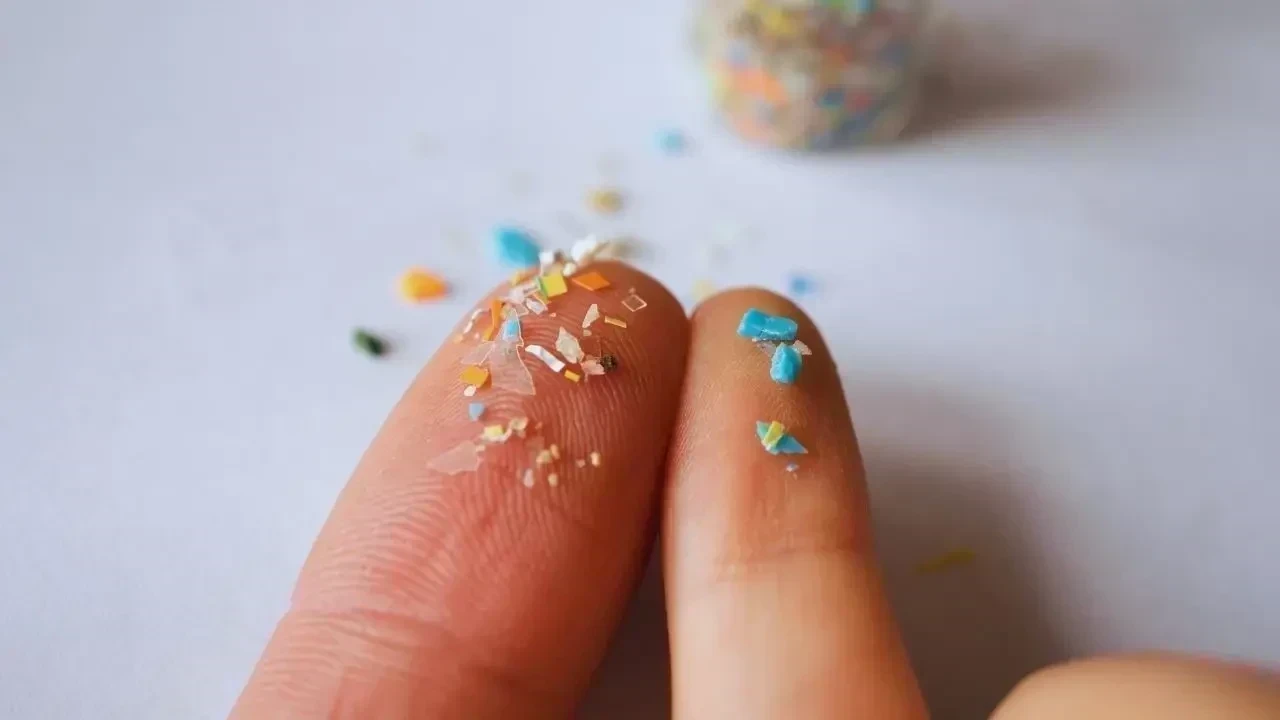
Microplastics (smaller than a grain of sand)
Nanoplastics (beyond cellular size)
These tiny particles invade:
Blood circulation
Critical organs
The central nervous system
The embryo within the womb
At this microscopic level, plastic transitions from waste to a severe toxin, effortlessly passing through biological barriers.
Its effects embed silently within us.
As sponges, plastics soak up harmful substances from their surroundings. Upon entering the body, they release these toxins straight into tissues.
This elevates plastics from mere debris to slow-acting chemical threats.
Manufactured items such as packaging, containers, and kitchen tools leak fragments into meals.
Heat accelerates the breakdown of plastics. Hot meals plus plastic lead to chemical transfer.
Even our bottled water carries plastic residue.
Plastic is no longer merely alongside food; it has integrated itself.
Indoor environments harbor plastic fibers from:
Carpets
Drapes
Sofas
Synthetic garments
Inhaling indoor air exposes our lungs to plastic particles, while outdoor conditions spread fibers from industrial byproducts.
The inhalation of plastic has become a commonality rather than a concern.
Many personal care products contain microbeads and synthetic substances.
While skin absorbs slowly, it does so continually, introducing plastic into the body directly.
Presence of plastic within the bloodstream prompts ongoing immune reactions.
It's treated as an invader
The body attacks infinitely
But it never wins
Consequently, we face:
Persistent inflammation
Immunodeficiency
Damage to tissues
Hormonal imbalances
Certain plastics release substances that mimic or inhibit natural hormones.
This affects:
Growth patterns
Reproductive health
Metabolic functions
Puberty processes
Emotional balance
Hormones are vital for life; plastics disrupt them.
Kidneys and livers continuously filter tainted blood.
This burden over an extended period may lead to:
Kidney failure
Liver deterioration
Heart disease
The heart's job is to circulate blood, yet plastic forces it to exert extra effort.
Worldwide, plastic exposure is associated with reproductive challenges.
In men, issues include:
Reduced sperm count
Sperm quality concerns
Hormonal fluctuations
In women, factors affected include:
Menstrual cycle irregularities
Ovarian performance
Pregnancy outcomes
The surge in infertility rates is alarming. Plastic, while not the sole factor, poses a significant threat.
Particles of plastic have been found within placental tissue.
Unborn children thus face exposure before their first breaths.
When toxins infiltrate fetal development,
Organ growth becomes compromised
Brain development is jeopardized
Future immunity is weakened
Plastic is no longer a sign of affluence; it represents a biological liability.
Exposure to plastics enhances cellular strain.
This may lead over time to:
Genetic damage
Uncontrollable cellular growth
Tumors developing
Cancer is not a sudden arrival; it forms with gradual agreement.
Plastic writes this agreement silently.
Plastic isn't contained by borders.
It transcends:
Geographic borders
Climate variations
Legislative frameworks
It travels through:
Commercial channels
Wind currents
Bodies of water
Food chains
Human migration
One country’s waste is another's health crisis.
The World Health Organization recognizes the health risks posed by environmental pollutants, including plastic.
This is a stark fact, not conjecture.
Plastic proliferated faster than regulatory measures could catch up.
While corporations expedited production, governmental response lagged, and consumers adapted without awareness.
A global framework governing plastic production was nonexistent in its early phases, making remediation significantly more challenging today.
Recycling initiatives help but fall short of keeping pace with growing consumption.
Plastic doesn’t adhere to sustainability promises; it follows the profit-driven paradigms.
Each time plastic is reused, it degrades.
Eventually, it becomes:
Lower in quality
Less amenable to recycling
More hazardous
Recycling without curtailing production resembles attempting to sweep away flooding with a broom.
It merely postpones the accumulation; it fails to stop exposure.
Initially adopted for its:
Affordability
Strength
Versatility
Now it extracts a price on:
Health
Lifespan
Fertility
Ecological stability
Nothing free remains so indefinitely.
Convenience has a price, one that is paid through personal health.
Children:
Breathe more rapidly
Consume more food relative to body weight
Possess developing systems
Have diminished detoxification capabilities
Exposure to plastic may result in:
Learning limitations
Hormonal complications
Increased behavioral risks
Autoimmune disorders
The child of today bears the burdens of tomorrow.
Beyond physical disadvantages, plastic brings about psychological distress.
Consumers increasingly question the safety of:
Personal care items
Beverage containers
Packaged foods
Everyday goods
This breeds a constant mental burden, a lingering fear of unseen harm.
Trust in convenience products dissipates.
Avoid heating food in plastics
Utilize glass or stainless steel
Limit processed food consumption
Ensure safe storage of leftovers
Steer clear of plastic bottles
Opt for glass or metal containers
Utilize filtered water
Select natural textiles
Limit polyester use
Ensure proper ventilation while doing laundry
Reduce product usage
Avoid products with microbeads
Limit layering of products
Children mirror adult behaviors.
When adults adapt, children learn.
Plastic exposure transcends personal responsibility.
It necessitates:
Reforms in production
Bans on harmful ingredients
Accountability in manufacturing
Proper labeling of products
Investment in waste management solutions
Individual efforts matter.
However, systematic action is paramount.
Its impact is evident:
Beaches reveal its presence.
Marine life carries its burden.
The sky traps its byproducts.
And our bodies now contain it.
Plastic isn't merely present; it has integrated into life itself.
Plastic accumulation outpaces policy development.
Healthcare systems face overwhelming challenges.
Rates of chronic illness rise.
Medical expenses soar.
Life expectancy dwindles.
Future generations inherit harm alongside their birthrights.
Decisions regarding plastic use transcend environmental issues.
They have evolved into health matters.
Every bottle selected,
every food package opened,
and every item heated is a health choice.
Daily life transforms into an ongoing health trial.
While plastic has facilitated urban growth, it simultaneously transforms our cells.
It has generated savings, yet now threatens our quality of life.
Plastic streamlined everyday tasks but has made biological processes far more complex.
The repercussions are immediate.
The obligation to change lies with us.
Plastic has no place within our blood, breaths, or births.
Without significant shifts in consumption habits, plastic will continue reshaping our existence from the inside out, both biologically and ethically.
Disclaimer:
This article aims to elevate public understanding and is not a replacement for professional healthcare guidance. For personal health inquiries, consult a certified medical provider.

Predictheon Wins WHX Xcelerate Innovation Champion 2026
Predictheon won WHX 2026 Xcelerate, earning US$12,000, WHX 2027 space and global exposure for its AI

Omantel Launches Otech to Drive Oman’s Future Tech Vision
Omantel launches Otech to accelerate Oman’s digital transformation, strengthen data sovereignty, exp

Daimler Truck MEA Honors Top Distributors at EliteClass 2025
Daimler Truck MEA hosted EliteClass Awards 2025 in Dubai, honoring top distributors across 19 catego

King Mohammed VI Launches Safran Landing Gear Plant in Morocco
Morocco strengthens its aerospace leadership as King Mohammed VI launches Safran’s €280M landing gea

Qatar Emir Sheikh Tamim Arrives in UAE on Fraternal Visit
Qatar’s Emir Sheikh Tamim bin Hamad Al Thani arrived in Abu Dhabi on Saturday. UAE President Sheikh

Shaidorov Wins Stunning Olympic Gold as Malinin Falters
Kazakhstan’s Mikhail Shaidorov won men’s figure skating gold after US star Ilia Malinin fell twice.

Shakira’s 5-Show El Salvador Residency Boosts Bukele Image
Shakira’s five sold-out concerts in San Salvador highlight El Salvador’s security shift under Bukele

Why Drinking Soaked Chia Seeds Water With Lemon and Honey Before Breakfast Matters
Drinking soaked chia seeds water with lemon and honey before breakfast may support digestion hydrati

Morning Walk vs Evening Walk: Which Helps You Lose More Weight?
Morning or evening walk Learn how both help with weight loss and which walking time suits your body

What Really Happens When You Drink Lemon Turmeric Water Daily
Discover what happens to your body when you drink lemon turmeric water daily including digestion imm

DXB News Network Presents “Ctrl+Alt+Wim”, A Bold New Satirical Series Starring Global Entertainer Wim Hoste
DXB News Network premieres Ctrl+Alt+Wim, a bold new satirical micro‑series starring global entertain
High Heart Rate? 10 Common Causes and 10 Natural Ways to Lower It
Learn why heart rate rises and how to lower it naturally with simple habits healthy food calm routin

10 Simple Natural Remedies That Bring Out Your Skin’s Natural Glow
Discover simple natural remedies for glowing skin Easy daily habits clean care and healthy living ti

Mattel Revamps Masters of the Universe Action Figures for Upcoming Film
Mattel is set to revive Masters of the Universe action figures in sync with their new movie, ignitin

China Executes 11 Members of Infamous Ming Family Behind Myanmar Scam Operations
China has executed 11 Ming family members, linked to extensive scams and gambling in Myanmar, causin