Post by : Anis Karim
When a salamander loses its tail or a starfish loses an arm, it doesn’t panic. Within weeks, a brand-new limb grows back, almost indistinguishable from the original. For humans, however, the story is very different — we can heal a cut, but if we lose a limb, it’s gone forever. This difference has fascinated scientists for centuries, and recent research is bringing us closer to understanding why limb regeneration works so well in certain species and whether humans might one day unlock this dormant potential.
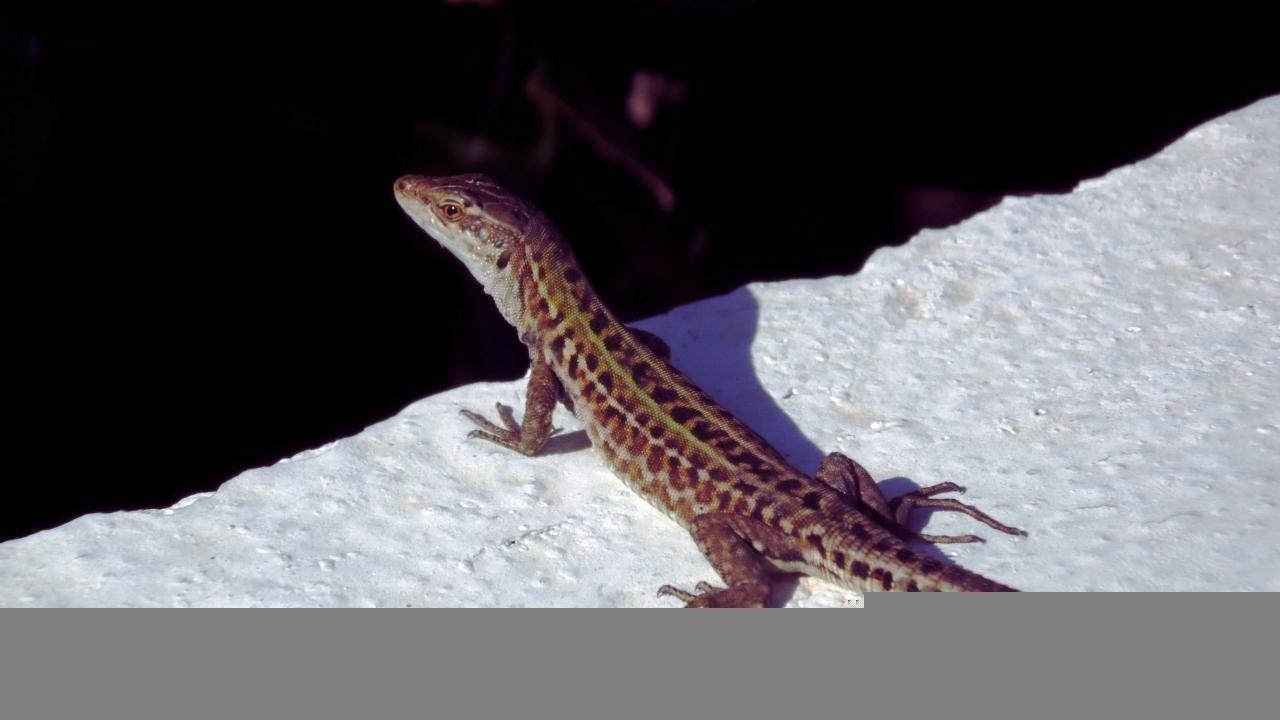
Some animals seem to defy nature’s limits when it comes to healing. Salamanders are perhaps the most famous — they can regrow entire legs, tails, spinal cords, and even parts of their hearts and eyes. Starfish can regenerate multiple arms, and planarian flatworms can regrow their entire bodies from tiny fragments. Crustaceans like crabs and lobsters can replace claws over time, and certain lizards can regrow tails after losing them as a defense mechanism.
These abilities aren’t just lucky accidents; they’re the result of millions of years of evolutionary adaptation. For these creatures, regeneration offers a survival advantage — an injured salamander can escape predators and recover fully, while a crab without a claw might struggle to feed or defend itself until regeneration restores its strength.
Humans do have regenerative capabilities — just not on the same level. Our skin repairs itself after injury, our livers can regenerate portions of lost tissue, and children under the age of seven can sometimes regrow fingertips. But when it comes to complex structures like arms or legs, our bodies hit a biological roadblock.
One major reason lies in the difference between scar tissue formation and regenerative growth. In animals like salamanders, after an injury, the wound doesn’t immediately scar over. Instead, a special group of cells gathers at the injury site to form a blastema — a mass of undifferentiated cells capable of becoming any tissue type, much like stem cells. In humans, our immune system jumps into emergency repair mode, creating scar tissue that seals the wound but prevents new complex structures from forming.
Stem cells are at the heart of regeneration. In regenerative species, these cells remain highly active and versatile throughout their lives. In humans, however, our regenerative stem cell activity declines after early development. Scientists believe this is partly because our bodies evolved to prioritize quick wound closure over slower, more complex tissue regrowth — a trade-off that reduces infection risk but sacrifices the ability to replace lost body parts.
Recent advances in induced pluripotent stem cells (iPSCs) — adult cells reprogrammed to act like embryonic stem cells — are opening the door to potential human regeneration therapies. By studying how salamanders reprogram cells to create a blastema, researchers hope to replicate the process in humans.
It turns out our immune system might be both our greatest protector and our biggest obstacle to regeneration. In salamanders, immune cells like macrophages play a regenerative role, signaling tissues to regrow rather than scar over. In humans, the immune system often triggers an inflammatory response that promotes scarring.
Some scientists are experimenting with ways to “retrain” the immune response so that, after injury, it supports regenerative growth instead of blocking it. This could involve manipulating specific immune cells or temporarily dampening certain inflammation pathways.
If there’s one animal stealing the spotlight in regeneration research, it’s the axolotl — a type of Mexican salamander that can regrow entire limbs multiple times over its lifespan without losing functionality. Axolotls don’t just regrow bones and muscles; they also rebuild nerves, blood vessels, and skin in perfect coordination.
Genetic studies on axolotls have identified hundreds of regeneration-related genes, some of which humans also have — but ours are inactive or only partially functional. The challenge now is figuring out how to “switch them back on” without causing uncontrolled growth, which could lead to cancer.
Interestingly, ancient myths and folklore often touched on regeneration. From the Greek legend of Prometheus, whose liver grew back daily after being eaten by an eagle, to the Hindu stories of deities restoring lost limbs, the concept of regrowth has long fascinated humanity. These tales may have been inspired by observing regenerating animals in nature.
In modern medicine, limb regeneration has been a long-standing dream. Advances in prosthetics have allowed amputees to regain mobility, but they still can’t replace the living, self-repairing functionality of a real limb.
Several cutting-edge studies are exploring regeneration in mammals. For example:
Bioengineered Scaffolds: These provide a structure for cells to grow on, potentially guiding the regrowth of complex tissues.
Gene Activation Therapy: Switching on dormant regenerative genes in human cells.
Electrical Stimulation: Using low-level electrical currents to encourage tissue growth at injury sites.
Wound Microenvironment Control: Replicating the chemical and physical environment of a salamander’s blastema in human injuries.
In 2022, researchers managed to partially regenerate a frog’s leg using a cocktail of growth factors applied within a special silicone cap. While frogs aren’t natural limb regenerators like salamanders, this experiment proved that with the right biological cues, regeneration can be jump-started in non-regenerative species.
As promising as regeneration research is, it comes with ethical challenges. Manipulating stem cells and gene expression carries risks, including tumor formation. There are also concerns about access — if human limb regeneration becomes possible, will it be affordable, or will it remain a luxury for the wealthy?
Additionally, researchers must navigate the moral boundaries of experimenting on animals and, eventually, human subjects. Striking a balance between scientific progress and ethical responsibility is critical.
If scientists crack the regeneration code, the potential applications are enormous:
Limb Restoration for Amputees: Soldiers, accident victims, and those with congenital limb loss could benefit.
Organ Regrowth: Eliminating the need for organ transplants.
Degenerative Disease Treatment: Replacing damaged tissues in conditions like Parkinson’s or heart disease.
Some futurists even speculate about enhanced regeneration — not just restoring what was lost but improving it, such as regrowing stronger bones or more flexible joints. This raises philosophical questions about where healing ends and human enhancement begins.
While regeneration research is advancing rapidly, fully restoring a human limb remains one of biology’s most complex challenges. A limb isn’t just one tissue type — it’s a perfectly coordinated network of bones, muscles, tendons, blood vessels, skin, and nerves. All these components must regrow in harmony and reconnect seamlessly to the brain’s control system.
The reality is that, even with breakthroughs, it could take decades before human limb regeneration becomes routine medical practice. In the meantime, hybrid approaches — combining advanced prosthetics with regenerative medicine — may bridge the gap.
The dream of regrowing human limbs is no longer confined to science fiction. By studying salamanders, axolotls, and other natural regenerators, scientists are piecing together a blueprint for restoring lost human tissues. Each discovery brings us one step closer to a future where losing a limb doesn’t mean losing it forever.
The information provided in this article is intended for general understanding and educational purposes only. While every effort has been made to ensure accuracy, ongoing scientific research means that findings and conclusions may change over time. Readers should consult medical professionals or trusted research sources before making decisions based on the topics discussed. DXB News Network does not offer medical advice or claim expertise in regenerative medicine.

Dubai AI Week 2026: Global AI Leaders Gather in Dubai
Dubai AI Week 2026, under Sheikh Hamdan, brings global AI experts, CEOs, and innovators to discuss A

Thales Plans 9,000 Global Hires in 2026, 150 in Middle East
French aerospace giant Thales to recruit 9,000 staff worldwide in 2026, including 60 in UAE, 30 in S

Engineering the Perfect Yes: How Ankur Bagga Redefined Luxury Proposals in Dubai
How Ankur Bagga transformed Dubai proposals into cinematic luxury experiences backed by precision an

Russia-Ukraine Geneva Talks Begin Amid Missile Strikes
Russia and Ukraine start US-mediated talks in Geneva as both sides launch fresh missile and drone st
US Judge Blocks Deportation of Palestinian Student Mahdawi
Immigration judge stops U.S. from deporting Mohsen Mahdawi over protests against Israel, citing gove
Dubai Victory Boats Win Global Innovation Awards & F1 Titles
Dubai International Marine Club’s Victory boats earn 3 global innovation awards and dominate F1 & XC

Microsoft to Invest $50B to Expand AI Across Global South
Microsoft announces $50B AI investment to empower countries in the Global South, training millions i


UAE Gold Prices Today, Monday 16 February 2026: Dubai & Abu Dhabi Updated Rates
Gold prices in UAE on 16 Feb 2026 updated: 24K around AED 599.75/gm, 22K AED 555.25/gm, and 18K AED

Over 25 Ahmedabad Schools Receive Bomb Threat Email, Authorities Investigate
More than 25 schools in Ahmedabad evacuated after bomb threat emails mentioning Khalistan. Authoriti

Ukraine Ex-Energy Minister Arrested in Corruption Case
Ukraine’s anti-corruption agency NABU arrested former Energy Minister German Galushchenko while he t

Toxic: A Fairy Tale for Grown-Ups set for worldwide release on March 19, 2026
Toxic: A Fairy Tale for Grown-Ups starring Yash releases worldwide on March 19, 2026, with festive t

Suryakumar Dedicates T20 World Cup Win as India Crush Pakistan by 61 Runs
India defeated Pakistan by 61 runs in the T20 World Cup. Suryakumar Yadav praised Ishan Kishan’s 77

Dhurandhar 2 set to storm theatres on March 19, 2026
Dhurandhar 2, titled Dhurandhar: The Revenge, releases in theatres on March 19, 2026 with a pan-Indi

Dubai Games 2026 Concludes Celebrating Teamwork and Triumph
Dubai Games 2026 ends with Ajman Government, F3, and Czarny Dunajec winning top titles as 1,600 athl

Sheikh Hamdan Honours Arab Hope Maker with AED3 Million Awards
Sheikh Hamdan crowns Fouzia Mahmoudi Arab Hope Maker, awarding AED3 million to top finalists for hum