Post by : Zayd Kamal
History is filled with civilizations that have left an undeniable mark on the world. From their contributions to governance and architecture to their advancements in science and culture, these great societies have shaped modern life in profound ways. The Greatest Civilizations in History and Their Impact Today can be seen in our laws, cities, technologies, and traditions. Let’s explore these influential civilizations and how they continue to shape the present.
Ancient Egypt, one of the earliest and most remarkable civilizations, emerged around 3100 BCE along the fertile banks of the Nile River. This civilization is best known for its majestic pyramids, intricate hieroglyphic writing, and advancements in medicine and engineering. Egyptian rulers, known as pharaohs, were considered divine and played a crucial role in maintaining order and prosperity. Today, Egyptian architectural designs continue to inspire modern structures, from large monuments to sustainable urban planning. Many medical practices, such as surgical techniques and herbal remedies, trace their origins to ancient Egyptian knowledge. The idea of a centralized government and taxation, essential to many modern nations, also has its roots in Egyptian governance.
Mesopotamia, located in present-day Iraq, is often referred to as the "Cradle of Civilization" due to its early developments in writing, law, and astronomy. The Sumerians, Babylonians, and Assyrians introduced cuneiform script, one of the first writing systems, enabling record-keeping, storytelling, and administration. One of the most significant contributions of Mesopotamia is the Code of Hammurabi, one of the first written legal codes that set the foundation for modern judicial systems. The concept of a 60-minute hour and a 360-degree circle, which remains vital in timekeeping and geometry today, originated from Mesopotamian scholars. Additionally, early banking and trade practices established in this region influenced the development of financial systems worldwide.
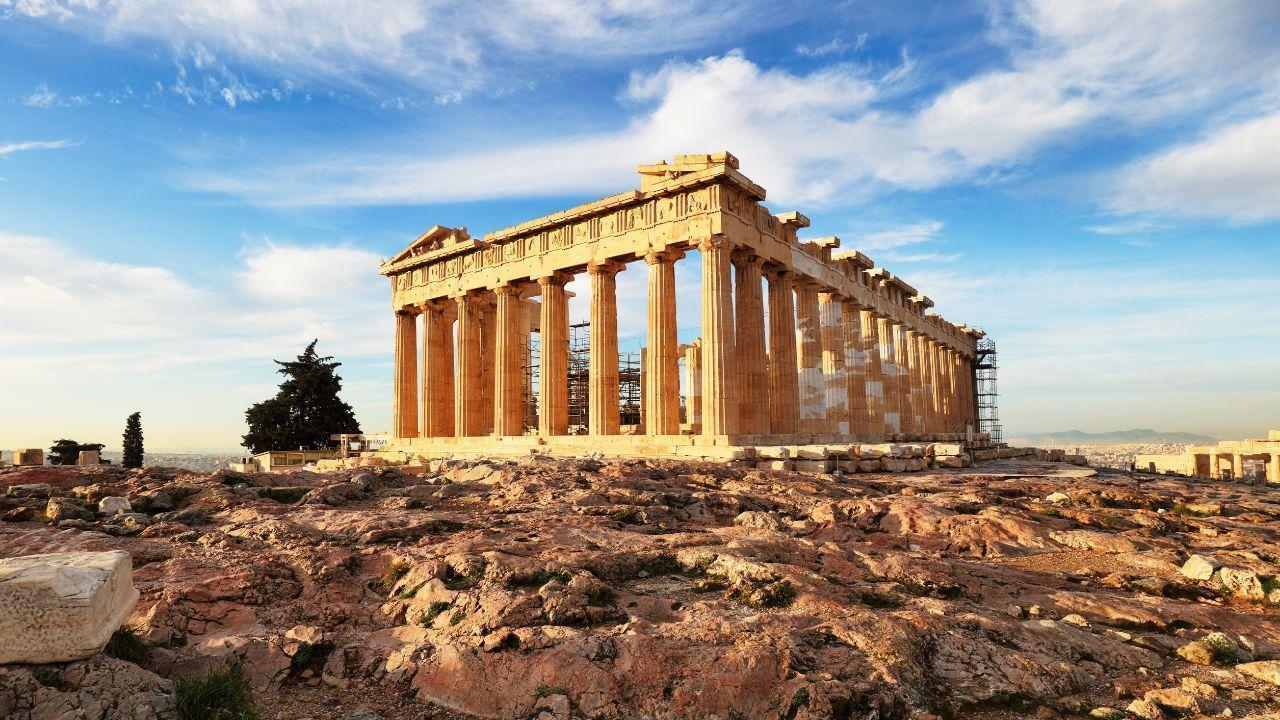
Ancient Greece is regarded as the birthplace of Western philosophy, democracy, and artistic expression. The city-states of Athens and Sparta played a pivotal role in shaping governance, education, and warfare. Greek philosophers such as Socrates, Plato, and Aristotle introduced ideas that continue to influence modern ethics, politics, and science. The democratic governance system pioneered by Athens serves as the model for many political systems around the world, particularly in the United States and Europe. Greek architectural styles, including the use of columns and amphitheaters, remain prominent in modern government buildings and cultural institutions. The Olympic Games, first held in ancient Greece, have evolved into a global sporting event that unites nations.
The Roman Empire, one of the most powerful civilizations in history, ruled vast territories stretching from Britain to North Africa. The Romans were known for their remarkable engineering feats, including aqueducts, roads, and large-scale architectural marvels such as the Colosseum. Roman law, which emphasized justice and legal rights, became the foundation for many legal systems around the world. The Latin language, which was widely spoken in the empire, gave birth to Romance languages such as Spanish, French, and Italian. Even modern urban planning, with its structured road networks and sewage systems, can be traced back to Roman innovations. The influence of Roman governance and legal structures remains deeply embedded in many aspects of contemporary society.
The Islamic Golden Age, spanning from the 8th to the 14th century, was a period of remarkable advancements in science, medicine, mathematics, and philosophy. Scholars from this era, including Al-Khwarizmi and Avicenna, preserved and expanded upon knowledge from earlier civilizations, leading to significant breakthroughs. Algebra, a fundamental branch of mathematics, was pioneered by Islamic mathematicians and remains an essential part of modern education. The medical texts written during this era introduced surgical techniques and disease treatments that shaped modern healthcare. The preservation and translation of Greek and Roman texts by Islamic scholars played a crucial role in the European Renaissance, leading to further advancements in various fields.
China’s dynasties, particularly the Han, Tang, and Ming, were responsible for some of the most groundbreaking inventions in history. Paper, printing, gunpowder, and the compass all originated from ancient China and revolutionized communication, warfare, and navigation. The Great Wall of China, an architectural wonder, showcases the impressive engineering capabilities of the Chinese civilization. Confucianism, which emphasizes ethics, education, and governance, continues to influence social values in many Asian countries. Chinese silk, porcelain, and tea became highly valued trade commodities, shaping global commerce through the Silk Road. The lasting impact of Chinese innovation can be seen in various aspects of modern life, from technology to cultural traditions.
The Maya and Aztec civilizations flourished in Mesoamerica long before European colonization, leaving behind remarkable achievements in astronomy, agriculture, and architecture. The Mayans developed an intricate calendar system and were skilled mathematicians, influencing modern timekeeping and seasonal predictions. Their vast cities, including Tikal and Chichen Itza, feature impressive pyramids and temples that continue to fascinate historians and tourists alike. The Aztecs, known for their capital city of Tenochtitlán, introduced innovative agricultural techniques such as chinampas, or floating gardens, to maximize crop production. Many traditional Mesoamerican foods, including maize, chocolate, and chili peppers, remain widely consumed around the world today. The study of Mayan hieroglyphs has helped scholars uncover the rich history of early American civilizations.
At its height, the British Empire was the largest empire in history, spanning multiple continents and shaping global politics, language, and economics. English, which originated from Britain, has become the most widely spoken language in the world and is used in business, technology, and diplomacy. The British legal and parliamentary system has influenced the governance structures of many nations, including India, Canada, and Australia. The Industrial Revolution, which began in Britain, led to groundbreaking technological advancements that transformed industries and economies worldwide. Today, the remnants of British influence can be seen in cultural traditions, legal institutions, and economic systems across the globe.
The Greatest Civilizations in History and Their Impact Today explores how ancient societies shaped modern life. From Ancient Egypt’s pyramids and medical advancements to Mesopotamia’s early legal codes, each civilization left a lasting mark. Greece’s democracy and philosophy continue to influence politics, while Rome’s engineering and legal systems shaped global governance. The Islamic Golden Age advanced science and medicine, and China’s dynasties pioneered innovations like printing and gunpowder. The Maya and Aztecs contributed to astronomy and agriculture, and the British Empire spread its language, governance, and industrial progress. These civilizations’ contributions remain deeply woven into today’s society, shaping technology, law, culture, and governance.
This article is for informational purposes only and reflects historical perspectives based on available research. The views expressed do not represent the official stance of any institution. Readers are encouraged to explore additional sources for a deeper understanding. DXB News Network is not responsible for any interpretations or decisions based on this content.

Abu Dhabi Launches New MS Care Guideline
Department of Health – Abu Dhabi issues new MS guideline with NMSS to improve early diagnosis, treat
Abu Dhabi Sees 29% Rise in New Business Licences
Abu Dhabi reports 29% growth in new economic licences in 2025, with strong gains across sectors, reg

Capital Wealth Summit 2026 to Address Wealth Shift
Dubai’s Capital Wealth Summit 2026 will convene global advisors to examine intergenerational wealth

Addleshaw Goddard Appoints Naji Hawayek as UAE Corporate Partner
Addleshaw Goddard appoints Naji Hawayek as UAE Partner, boosting its Middle East corporate and M&A p

BenQ Expands MA Series with 5K and 4K Nano Gloss Monitors for Mac Users
BenQ expands its MA Series with 5K and 4K Nano Gloss monitors tailored for Mac users, offering colou
KEZAD to Host GCC’s First Baby Food Mega Plant
KEZAD and Barakat Group begin building GCC’s first industrial baby food plant with AED150m investmen

Wall Street Closes Higher on Tech Rally; Gold Retreats
US stocks surged on strong tech gains, while gold prices fell from a three-week high amid a stronger


Bank of Baroda Faces Abu Dhabi Legal Battle over NMC Collapse
Bank of Baroda’s involvement in Abu Dhabi litigation tied to the NMC Healthcare collapse raises repu

Top Museum Openings of 2026 Set to Transform Global Tourism
From Los Angeles to Abu Dhabi and Brussels, 2026 brings major museum launches—Lucas Museum, Guggenhe

UAE Tour Highlights UAE’s Strength in Hosting Global Sports Events
Abu Dhabi Sports Council says the successful UAE Tour reflects the UAE’s leading role in hosting maj

EU Seeks Clarity from US After Supreme Court IEEPA Ruling
European Commission urges full transparency from the US on steps after Supreme Court ruling, emphasi

SpaceX Launches 53 New Satellites for Expanding Starlink Network
SpaceX launches 53 Starlink satellites in two Falcon 9 missions, breaking reuse records and expandin

RTA Awards Contract for Phase II of Hessa Street Upgrade in Dubai
Phase II of Hessa Street Development to add bridges, tunnel, and upgraded intersections, doubling ca

UAE Gold Prices Today, Monday 16 February 2026: Dubai & Abu Dhabi Updated Rates
Gold prices in UAE on 16 Feb 2026 updated: 24K around AED 599.75/gm, 22K AED 555.25/gm, and 18K AED

Over 25 Ahmedabad Schools Receive Bomb Threat Email, Authorities Investigate
More than 25 schools in Ahmedabad evacuated after bomb threat emails mentioning Khalistan. Authoriti